

Saturday 15 March 2025
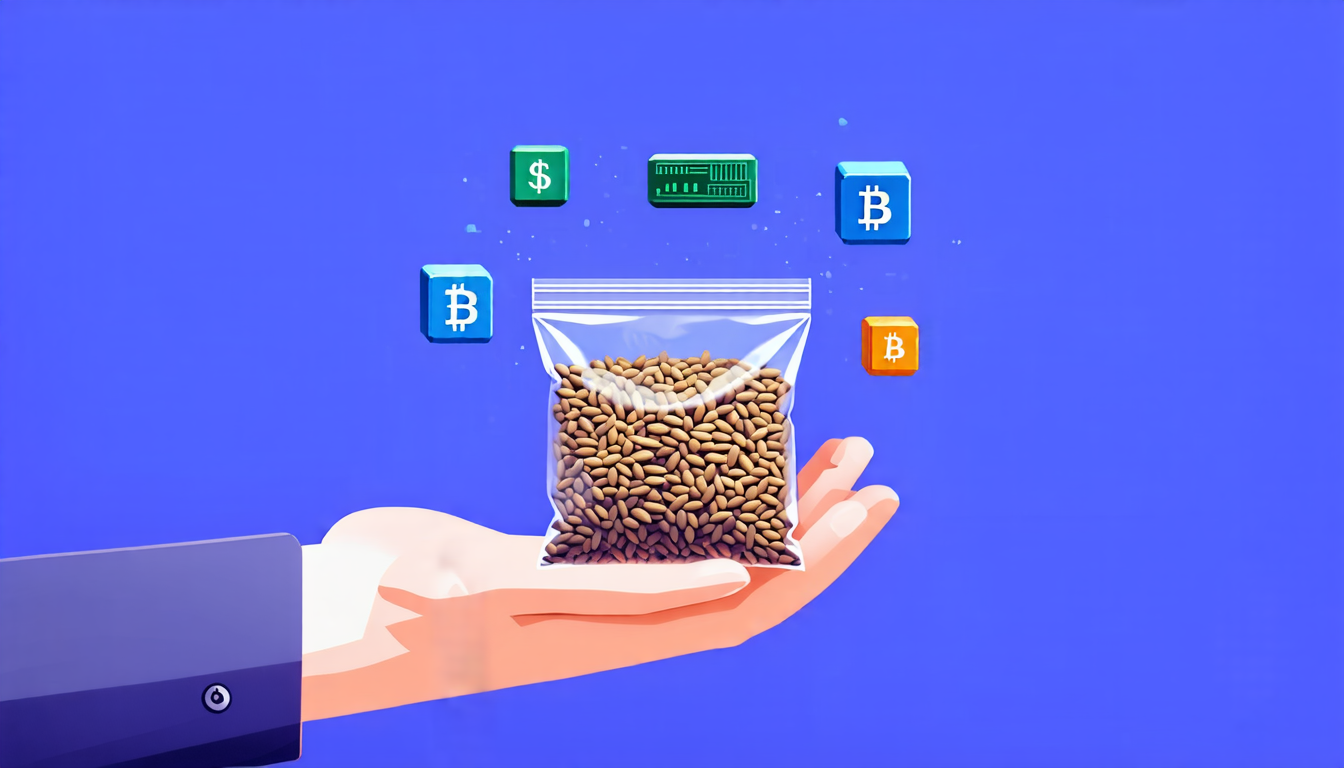
The world’s food supply is in a precarious state, and scientists are scrambling for ways to preserve crop diversity. One innovative solution involves leveraging the humble domestic freezer, typically used for storing frozen dinners and leftovers. Researchers have developed a system that utilizes Internet of Things (IoT) technology and blockchain to create a peer-to-peer network for seed storage.
The concept is simple: households with freezers can participate in a shared economy by dedicating a small portion of their freezer space to store seeds, which are then monitored using IoT sensors. The data collected from these sensors is transmitted to a smart contract on the blockchain, where it’s used to dispense incentives to participants who contribute to the network.
The potential benefits are significant. By distributing seed storage across thousands of households, researchers hope to increase the availability and resilience of crop diversity in the face of climate change, pests, and disease. This decentralized approach also reduces reliance on centralized genebanks, which can be vulnerable to natural disasters or human error.
The system is still in its infancy, but initial results are promising. A proof-of-concept study demonstrated that it’s possible to achieve acceptable subzero conditions in domestic freezers, a crucial factor in seed preservation. The researchers also developed an energy-efficient custom board for the IoT sensors, which can run for over a year on a single battery charge.
One of the most intriguing aspects of this project is its potential to democratize access to seed storage. By involving households from around the world, researchers hope to create a global network that’s more robust and adaptable than traditional genebanks. This could be particularly important for farmers in developing regions who may not have access to formal seed banks.
Of course, there are still many challenges to overcome before this system can become a reality. The researchers need to refine their IoT sensors and develop more efficient methods for data transmission and storage on the blockchain. They also need to address concerns about food safety and security, as well as ensure that participants understand the risks and benefits of participating in the network.
Despite these hurdles, the potential rewards are too great to ignore. By harnessing the power of IoT and blockchain, researchers may have stumbled upon a novel solution to one of humanity’s most pressing problems: ensuring a stable food supply for generations to come.
Cite this article: “Freezer Farm: A Peer-to-Peer Seed Storage Network Utilizing IoT and Blockchain Technology”, The Science Archive, 2025.
Iot, Blockchain, Seed Storage, Crop Diversity, Climate Change, Pests, Disease, Genebanks, Food Supply, Decentralized Network
Reference: Andrea Vitaletti, “Share a Tiny Space of Your Freezer to Preserve Seed Diversity” (2025).





