

Saturday 15 March 2025
A new breed of artificial intelligence (AI) models has been developed that mimics the brain’s ability to organize its functions in a spatially coherent manner, leading to more efficient and effective processing of information.
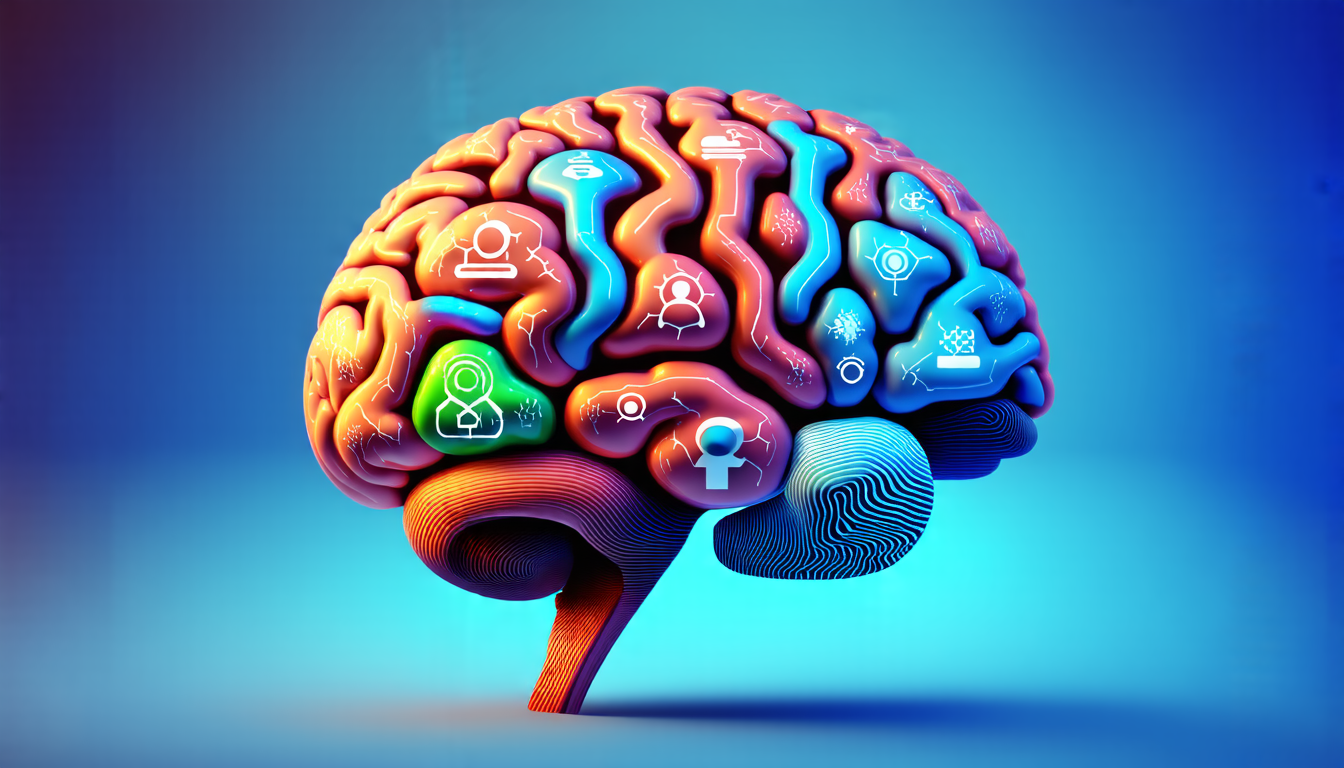
The researchers behind this innovation have created a system called TopoLoss, which is designed to induce topographic organization in AI models. This means that the models are structured in a way that is similar to how different parts of the brain process information. For instance, in the visual cortex, neurons that respond to lines and shapes are clustered together, while those that respond to colors are grouped separately.
By mimicking this spatial organization, TopoLoss enables AI models to learn more efficiently and make better predictions. The system has been tested on various tasks, including image recognition and language processing, with impressive results. For instance, the researchers found that a TopoLoss-enabled model was able to recognize objects in images with higher accuracy than a traditional model.
The benefits of TopoLoss extend beyond just improved performance. The system also enables AI models to learn more effectively from their training data. This is because the spatial organization of the model allows it to identify patterns and relationships between different features that might not be immediately apparent.
One of the key advantages of TopoLoss is its ability to scale up to larger, more complex tasks. Traditional AI models often struggle with these types of tasks due to the sheer amount of data they need to process. However, TopoLoss is designed to handle large datasets with ease, making it a promising tool for applications such as self-driving cars and medical diagnosis.
The researchers behind TopoLoss believe that their system has the potential to revolutionize the field of AI. By mimicking the brain’s spatial organization, they hope to create models that are more intelligent, efficient, and effective. While there is still much work to be done, the early results are promising, and it will be exciting to see how TopoLoss develops in the future.
TopoLoss has been tested on various AI architectures, including convolutional neural networks (CNNs) and transformers. The researchers found that the system improved performance on a range of tasks, from image recognition to language processing. They also demonstrated that TopoLoss-enabled models can learn more effectively from their training data, which could lead to better generalization and transfer learning.
The potential applications of TopoLoss are vast, ranging from self-driving cars and medical diagnosis to natural language processing and computer vision.
Cite this article: “TopoLoss: A Brain-Inspired AI System for Efficient and Effective Processing”, The Science Archive, 2025.
Artificial Intelligence, Spatial Organization, Brain-Inspired, Neural Networks, Convolutional Neural Networks, Transformers, Image Recognition, Language Processing, Machine Learning, Topoloss





