

Saturday 15 March 2025
Transportation is a major contributor to greenhouse gas emissions, accounting for nearly a quarter of Europe’s carbon footprint. In order to meet ambitious climate targets, the European Commission has set a goal to decarbonize the transport sector by 2050. A recent study published in Energy Conversion and Management takes a closer look at how this can be achieved.
The researchers used a complex energy modeling framework called PyPSA-Eur to simulate the transformation of Europe’s transportation system. They considered three different scenarios, each with its own set of assumptions about the role of electric vehicles (EVs), hydrogen fuel cell electric vehicles (FCEVs), and internal combustion engine vehicles (ICEVs).
The study found that rapid electrification of the transport sector is key to reducing emissions. In fact, the most cost-effective path to decarbonization involves prioritizing the adoption of EVs over FCEVs and ICEVs. This may seem counterintuitive, as hydrogen fuel cell technology has gained significant attention in recent years. However, the researchers argue that the high costs and limited infrastructure for hydrogen refueling make it a less viable option for widespread adoption.
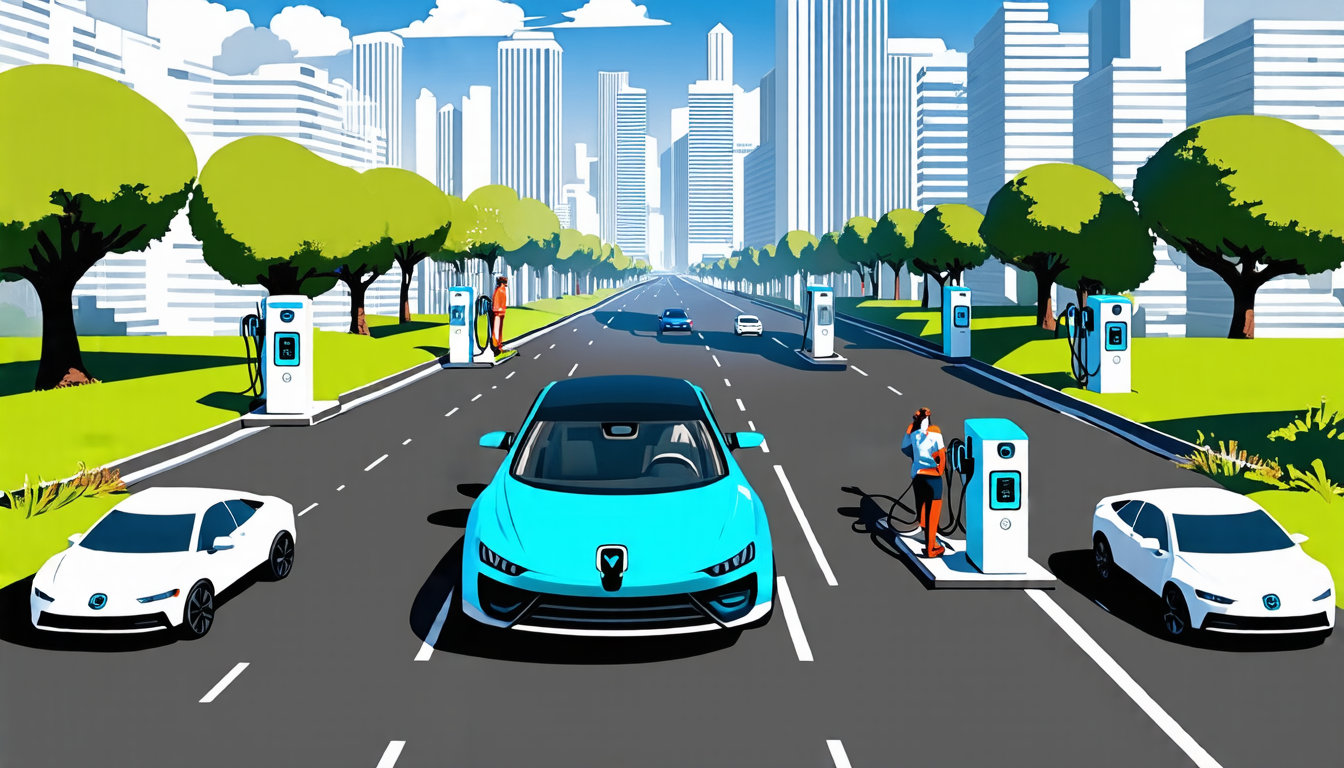
Another important finding was the role of smart charging and vehicle-to-grid (V2G) technology. Smart charging allows EVs to be charged during off-peak hours when electricity demand is lower, reducing strain on the grid. V2G technology enables EVs to act as energy storage devices, feeding electricity back into the grid when needed. The study found that widespread adoption of smart charging and V2G technology could reduce the need for stationary batteries by nearly 40%.
The researchers also explored the impact of varying assumptions about the consumption patterns of FCEVs. They found that if FCEVs are assumed to have a lower energy consumption than currently projected, they become a more viable option for decarbonizing transportation.
The study’s findings have significant implications for policymakers and industry leaders. To achieve the ambitious goal of decarbonizing the transport sector by 2050, widespread adoption of EVs will be necessary. Additionally, investments in smart charging and V2G infrastructure could pay dividends in terms of reduced energy storage needs and grid stability.
The research highlights the need for a coordinated approach to transportation policy, involving both government regulation and industry innovation. By prioritizing electrification and investing in smart charging and V2G technology, Europe can move closer to achieving its climate goals.
Cite this article: “Pathway to Decarbonization: Electrifying Transportation in Europe by 2050”, The Science Archive, 2025.
Transportation, Decarbonization, Electric Vehicles, Hydrogen Fuel Cell, Internal Combustion Engine, Energy Modeling, Pypsa-Eur, Smart Charging, Vehicle-To-Grid, Climate Goals





