

Saturday 15 March 2025
Networks are everywhere, from the internet to social media, and they play a crucial role in our daily lives. But when it comes to security, networks can be vulnerable to attacks and threats. In recent years, researchers have been working on developing new methods to detect and prevent these threats.
One approach is to use machine learning algorithms to analyze network traffic patterns and identify potential security risks. This involves training computers to recognize normal behavior in a network and detecting anomalies that may indicate an attack.
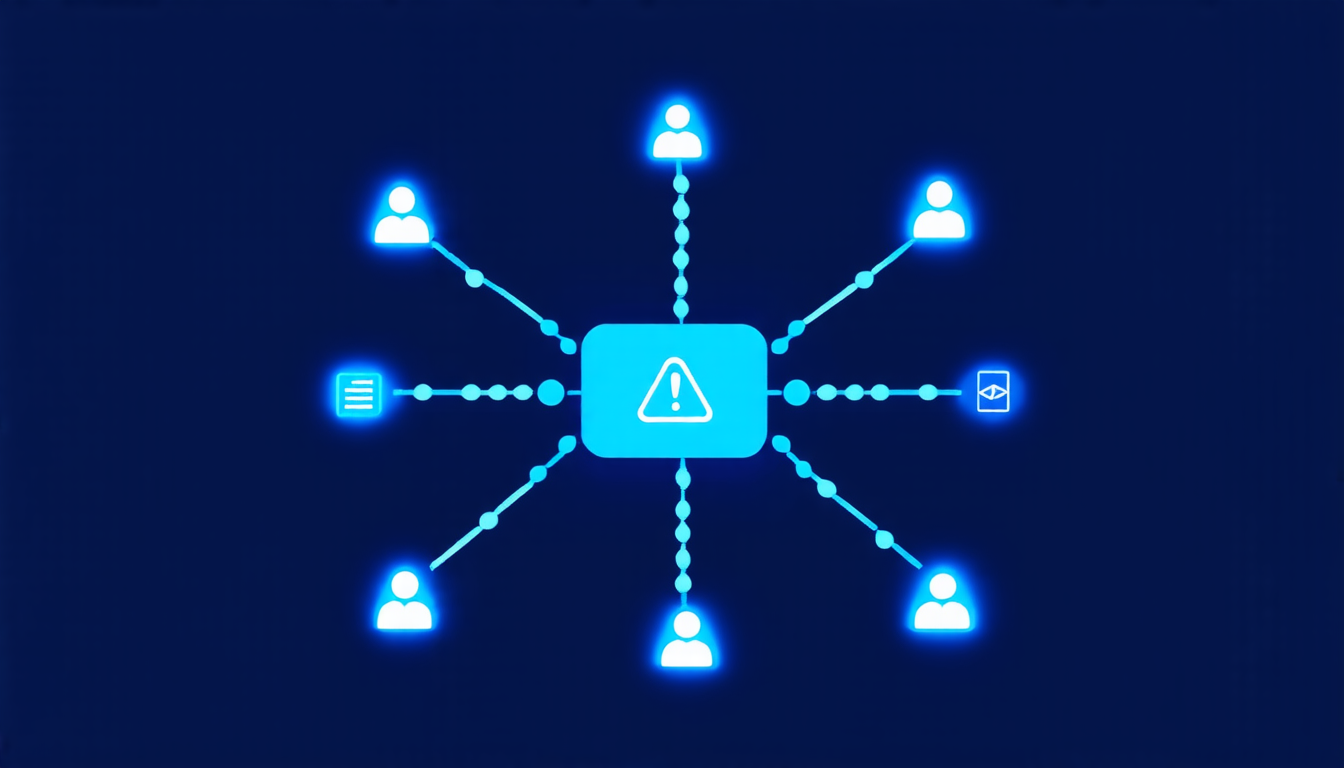
Researchers have also been exploring the use of graph theory, which studies relationships between objects, to understand how networks are structured and how attacks can spread through them. By analyzing these networks, researchers can identify key nodes or connections that could be targeted by attackers.
But there’s another approach that’s gained popularity in recent years: risk estimation. This involves calculating the likelihood of a security threat occurring and taking steps to mitigate it. The idea is to shift from reacting to threats after they occur to proactively preventing them from happening in the first place.
One way to do this is by using probabilistic models, which involve assigning probabilities to different events or outcomes. By analyzing network traffic patterns and other data, researchers can estimate the likelihood of a security threat occurring and take steps to prevent it.
For example, if a researcher detects a sudden increase in network traffic from a particular device, they could use risk estimation to determine whether that traffic is likely to be malicious or not. If the probability of malice is high, they could take action to block the traffic or isolate the device until further investigation can be conducted.
Risk estimation has several advantages over traditional security approaches. For one, it’s more proactive, allowing researchers to prevent threats rather than just reacting to them after they occur. It also provides a more nuanced understanding of network behavior, allowing researchers to identify subtle patterns and anomalies that may not be immediately apparent.
But risk estimation is still a relatively new field, and there are many challenges to overcome before it becomes widely adopted. One of the biggest challenges is dealing with the complexity of networks themselves, which can involve thousands or even millions of devices and connections.
Another challenge is ensuring that risk estimation algorithms are accurate and reliable. This requires large amounts of data and advanced statistical techniques to analyze that data and identify patterns and trends.
Despite these challenges, researchers remain optimistic about the potential of risk estimation to revolutionize network security.
Cite this article: “Enhancing Network Security with Risk Estimation”, The Science Archive, 2025.
Machine Learning, Graph Theory, Network Traffic, Risk Estimation, Probabilistic Models, Security Threats, Network Behavior, Anomalies, Threat Prevention, Network Complexity





