

Saturday 15 March 2025
The quest for stronger and more versatile materials has led scientists to explore the properties of graphene, a material renowned for its exceptional strength and conductivity. Graphene’s unique structure, composed of a single layer of carbon atoms arranged in a hexagonal lattice, makes it an ideal candidate for various applications, from electronics to energy storage.
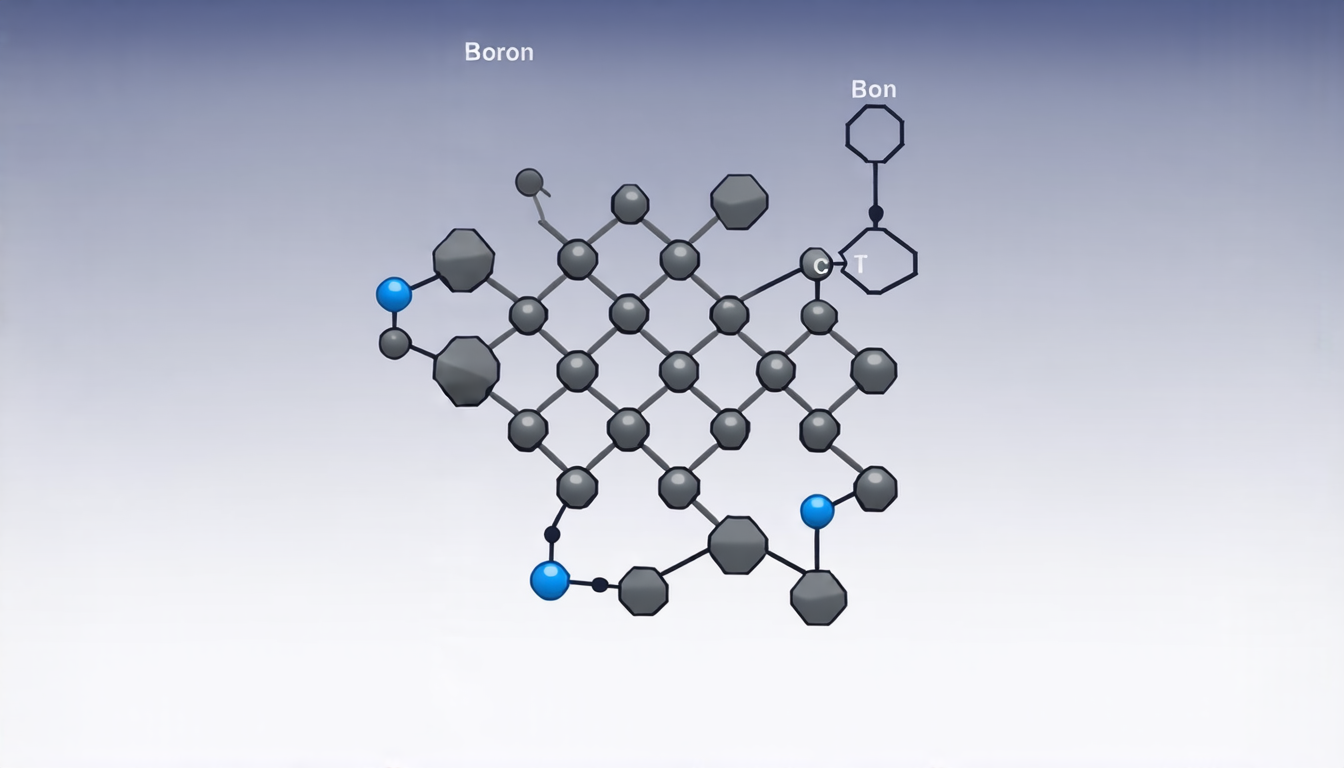
However, when combining graphene with other materials, such as hexagonal boron nitride (hBN), the results are often unpredictable and inconsistent. This is due to the complex interactions between the two materials, which can lead to varying levels of adhesion, relaxation, and strain.
To better understand these interactions, researchers have employed a novel approach using quantum Monte Carlo simulations. By modeling the behavior of graphene on hBN at the atomic level, they have uncovered new insights into the mechanisms governing their relationship.
The study reveals that the adhesion between graphene and hBN is influenced by the misalignment angle between the two materials. When the angle is small, the adhesion potential increases, leading to a stronger bond between the layers. Conversely, larger angles result in weaker interactions, which can lead to delamination or relaxation of the material.
Furthermore, the researchers found that the relaxed structures of graphene and hBN at interfaces exhibit no metastable states, meaning that the materials do not settle into intermediate configurations before reaching their equilibrium state. This finding has significant implications for the development of functional devices, as it ensures a more predictable and consistent behavior.
The simulations also shed light on the electronic properties of graphene-hBN heterostructures. The study shows that minibands in these superlattices are sensitive to the rotation of one of the encapsulating hBN crystals, which can be controlled using external stimuli such as temperature or pressure.
These findings have far-reaching implications for the design and optimization of novel devices, including electronic components, energy storage systems, and optoelectronic devices. By understanding the intricate relationships between graphene and hBN, researchers can create materials with tailored properties that are better suited to specific applications.
The study’s authors used a combination of theoretical models and computational simulations to investigate the interactions between graphene and hBN. Their approach allowed them to probe the behavior of these materials at the atomic scale, providing valuable insights into the underlying mechanisms governing their relationships.
The results of this research have significant implications for the development of new materials and devices, as well as our understanding of the fundamental principles governing their behavior.
Cite this article: “Unlocking the Secrets of Graphene-HBN Interactions”, The Science Archive, 2025.
Graphene, Hexagonal Boron Nitride, Quantum Monte Carlo Simulations, Adhesion, Relaxation, Strain, Electronic Properties, Minibands, Superlattices, Interfaces





