

Saturday 15 March 2025
Researchers have made a significant breakthrough in developing an innovative artificial intelligence model that can accurately identify individuals based on their brain activity patterns, even when they are performing different tasks. This achievement has far-reaching implications for fields such as psychology, medicine, and security.
The new AI system, known as GC-VAE, uses a combination of graph convolutional neural networks (GCNNs) and variational autoencoders (VAEs) to learn the patterns of brain activity associated with different individuals. This is done by analyzing electroencephalography (EEG) data, which records the electrical activity of the brain.
One of the key challenges in developing this system was dealing with the complexity of EEG signals, which can be affected by various factors such as noise and variations in individual brain function. To overcome this, the researchers used a technique called contrastive learning, which involves training the AI model to distinguish between similar but distinct patterns of brain activity.
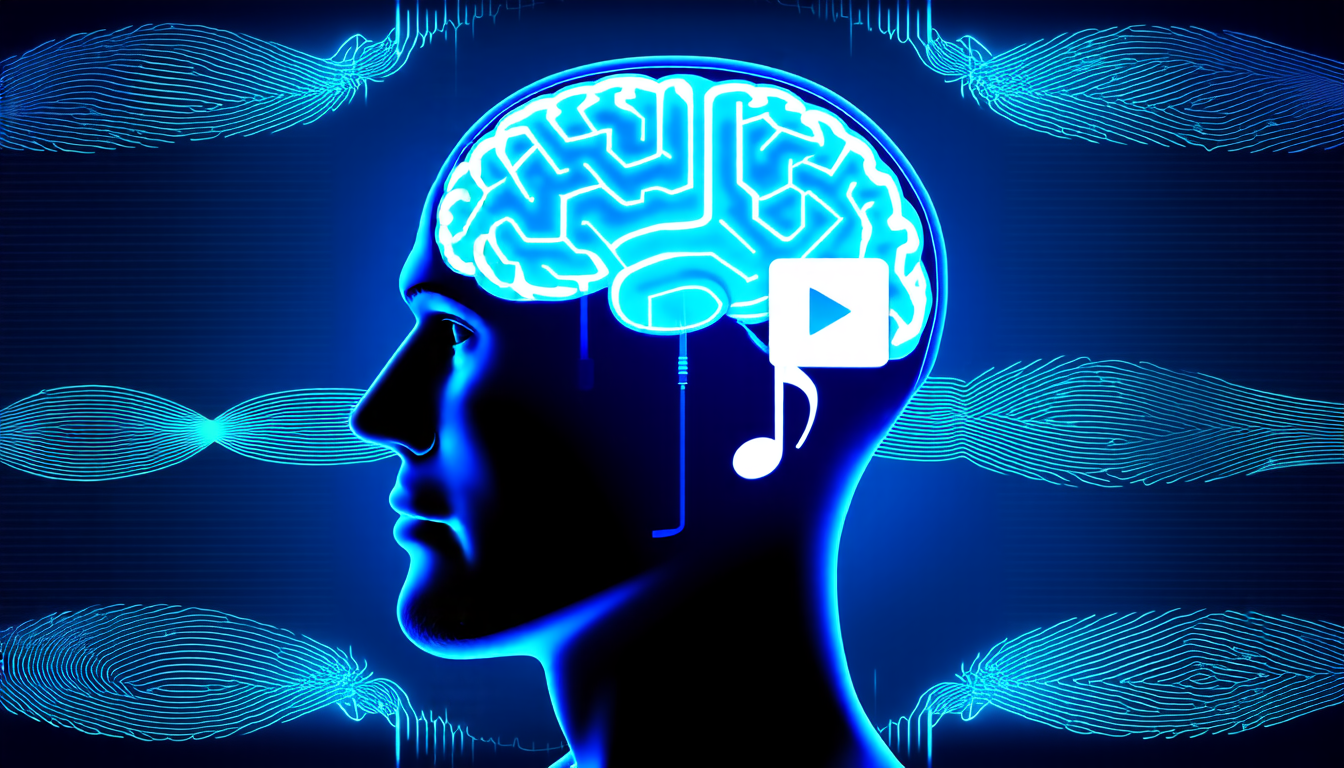
The results are impressive: GC-VAE was able to accurately identify individuals with an accuracy rate of over 89%, even when they were performing different tasks such as listening to music or watching videos. This level of performance has not been achieved before in EEG-based identification systems, and it suggests that the new AI model could have a wide range of practical applications.
One potential application is in psychology, where GC-VAE could be used to study individual differences in brain function and behavior. For example, researchers could use the system to identify patterns of brain activity associated with specific personality traits or cognitive abilities.
Another potential application is in medicine, where GC-VAE could be used to diagnose neurological disorders such as epilepsy or Alzheimer’s disease. The system could also be used to monitor the effectiveness of treatments for these conditions and to develop personalized therapies.
In addition, GC-VAE has implications for security and surveillance. For example, it could be used to identify individuals in a crowd based on their brain activity patterns, which could have applications in law enforcement or border control.
The development of GC-VAE is a significant achievement that highlights the potential of AI to revolutionize our understanding of the human brain and behavior. As researchers continue to refine this technology, it will be exciting to see how it is applied in various fields and what new insights it provides into the workings of the human mind.
Cite this article: “AI Model Accurately Identifies Individuals Based on Brain Activity Patterns”, The Science Archive, 2025.
Artificial Intelligence, Brain Activity, Eeg, Identification, Neural Networks, Psychology, Medicine, Security, Surveillance, Ai Model





