

Sunday 16 March 2025
Recent advancements in language models have led to significant improvements in natural language processing tasks, but understanding how these complex systems work remains a challenge. A team of researchers has made a crucial breakthrough by developing a novel index that can quantify the similarity between weight matrices in large language models.
These weight matrices are essentially the building blocks of the model’s architecture, and their similarity or dissimilarity plays a vital role in determining the model’s performance. However, existing methods for measuring this similarity have limitations. For instance, some indices fail to capture meaningful patterns in the data, while others may be sensitive to noise.
The new index, dubbed DOCS (Distribution of Cosine Similarity), addresses these issues by employing a clever combination of statistical techniques. It first computes the cosine similarity between columns of the weight matrices and then fits a Gumbel distribution to the resulting values. This allows the index to capture the central tendency of extreme similarities while being robust to outliers.
The researchers tested DOCS on various large language models, including some of the most popular ones in the field. The results were striking: DOCS was able to uncover intricate patterns in the weight matrices that were previously unknown or difficult to detect using other methods.
One of the key advantages of DOCS is its ability to identify clusters of similar layers within a model. This can provide valuable insights into how the model is organized and how different components interact with each other. For example, the researchers found that some models exhibited a repetition of certain layer patterns, which may be attributed to specific training strategies or architectural design choices.
Another notable aspect of DOCS is its ability to distinguish between meaningful similarities and noise. This is achieved by computing the Gini coefficient, a statistical measure that quantifies the inequality in the distribution of similarity scores. A higher Gini coefficient indicates a more uneven distribution, which can be indicative of significant similarities between specific layer pairs.
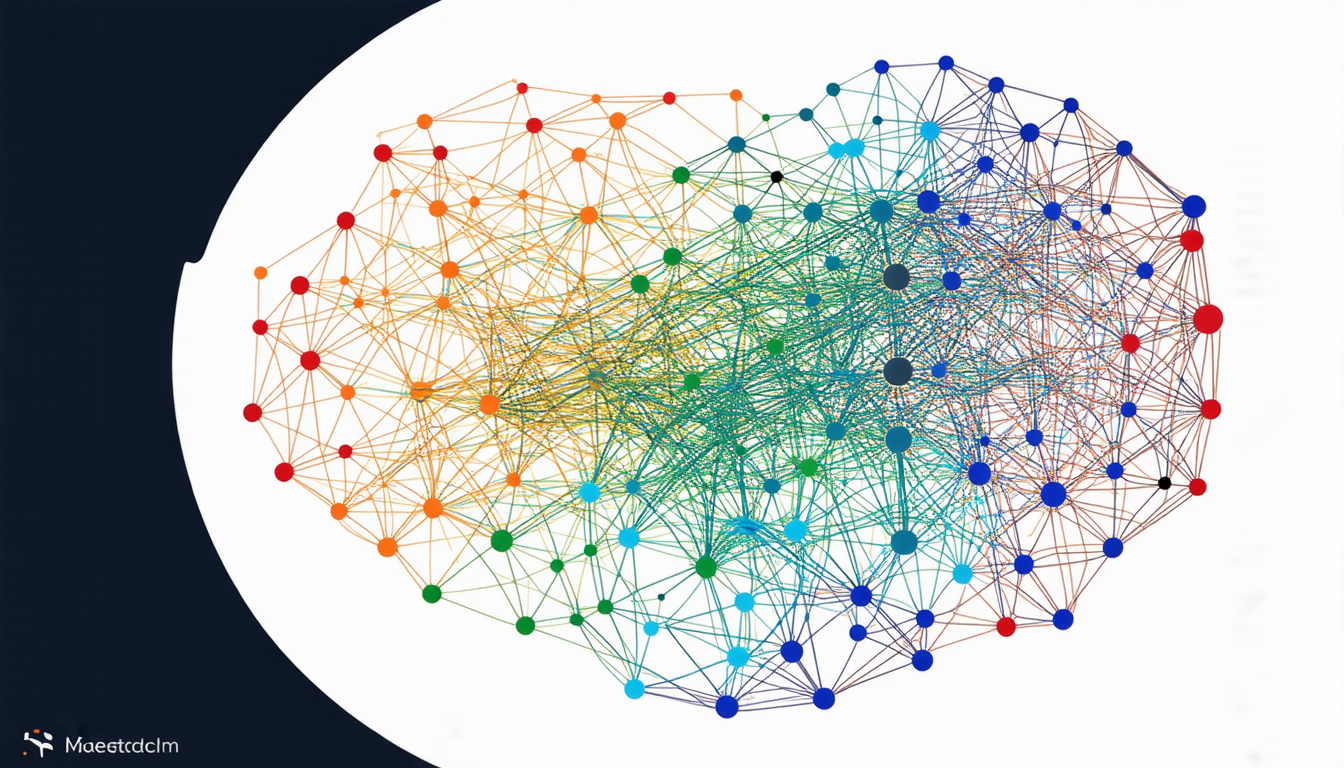
The heatmaps generated using DOCS provide a visually striking representation of these similarities and dissimilarities. By examining these heatmaps, researchers can gain a deeper understanding of how different components within the model are interconnected and how they contribute to its overall performance.
The implications of this work are far-reaching, as it has the potential to revolutionize our understanding of large language models. By analyzing the weight matrices in these models using DOCS, researchers may be able to identify new architectural designs or training strategies that can improve their performance.
Cite this article: “Unlocking the Secrets of Large Language Models: A Novel Index for Weight Matrix Similarity”, The Science Archive, 2025.
Language Models, Weight Matrices, Similarity Indices, Docs, Cosine Similarity, Gumbel Distribution, Statistical Techniques, Large Language Models, Neural Networks, Machine Learning





