

Sunday 16 March 2025
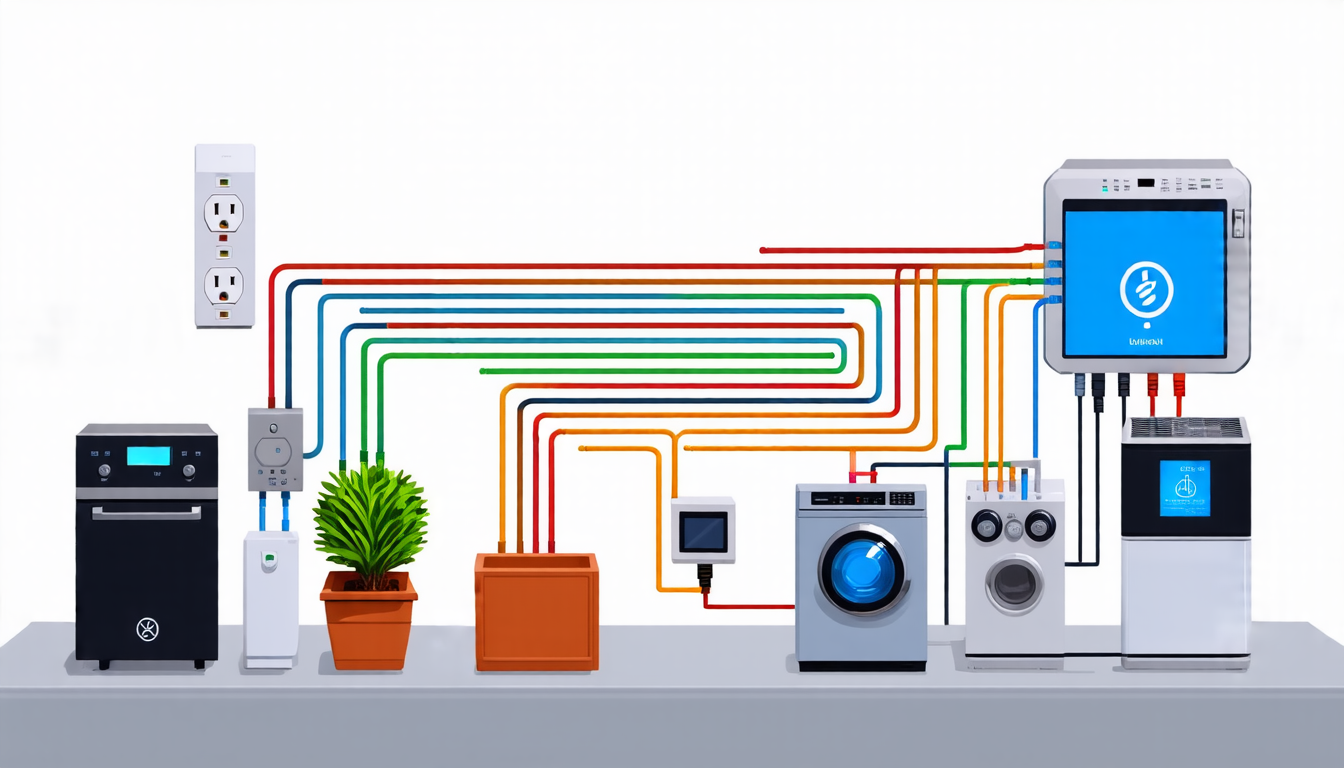
The quest for a more efficient and sustainable energy future has led researchers to develop innovative solutions that can accurately monitor and manage our energy consumption. One such approach is non-intrusive load monitoring (NILM), which involves analyzing aggregate power consumption data from a single point in the electrical grid to identify individual appliances’ energy usage.
A recent study has made significant strides in this area by introducing an explainable NILM framework that can accurately classify appliances and provide insights into their energy consumption patterns. The framework, developed by a team of researchers, combines machine learning with Fourier analysis to extract relevant features from high-frequency data.
The researchers used the PLAID dataset, a comprehensive collection of voltage and current measurements recorded at a sampling rate of 30 kHz, to train and test their model. By analyzing the aggregate power consumption data, the framework was able to accurately identify and classify various appliances, including air conditioners, refrigerators, and lighting devices.
One of the key innovations of this study is its focus on explainability. The researchers used a technique called SHAP (SHapley Additive exPlanations) to provide a clear understanding of how each feature contributes to the model’s predictions. This allows for greater transparency and trust in the results, which is essential for widespread adoption.
The framework’s ability to accurately classify appliances has significant implications for energy management. By identifying areas where energy consumption can be optimized, households and businesses can reduce their energy bills and carbon footprint. Additionally, the framework can help utilities better manage peak demand periods by identifying which appliances are most likely to contribute to high-energy usage.
The study’s findings also highlight the importance of high-frequency data in NILM applications. By analyzing data at a rate of 30 kHz, the researchers were able to capture the unique signatures of each appliance and improve classification accuracy.
While there is still much work to be done in developing more sophisticated NILM frameworks, this study represents an important step forward in the field. As energy consumption continues to rise, innovative solutions like this framework will play a critical role in helping us achieve a more sustainable future.
Cite this article: “Advances in Non-Intrusive Load Monitoring for Efficient Energy Management”, The Science Archive, 2025.
Non-Intrusive Load Monitoring, Nilm, Machine Learning, Fourier Analysis, Energy Consumption, Appliance Classification, Explainability, Shap, High-Frequency Data, Energy Management.





