

Sunday 16 March 2025
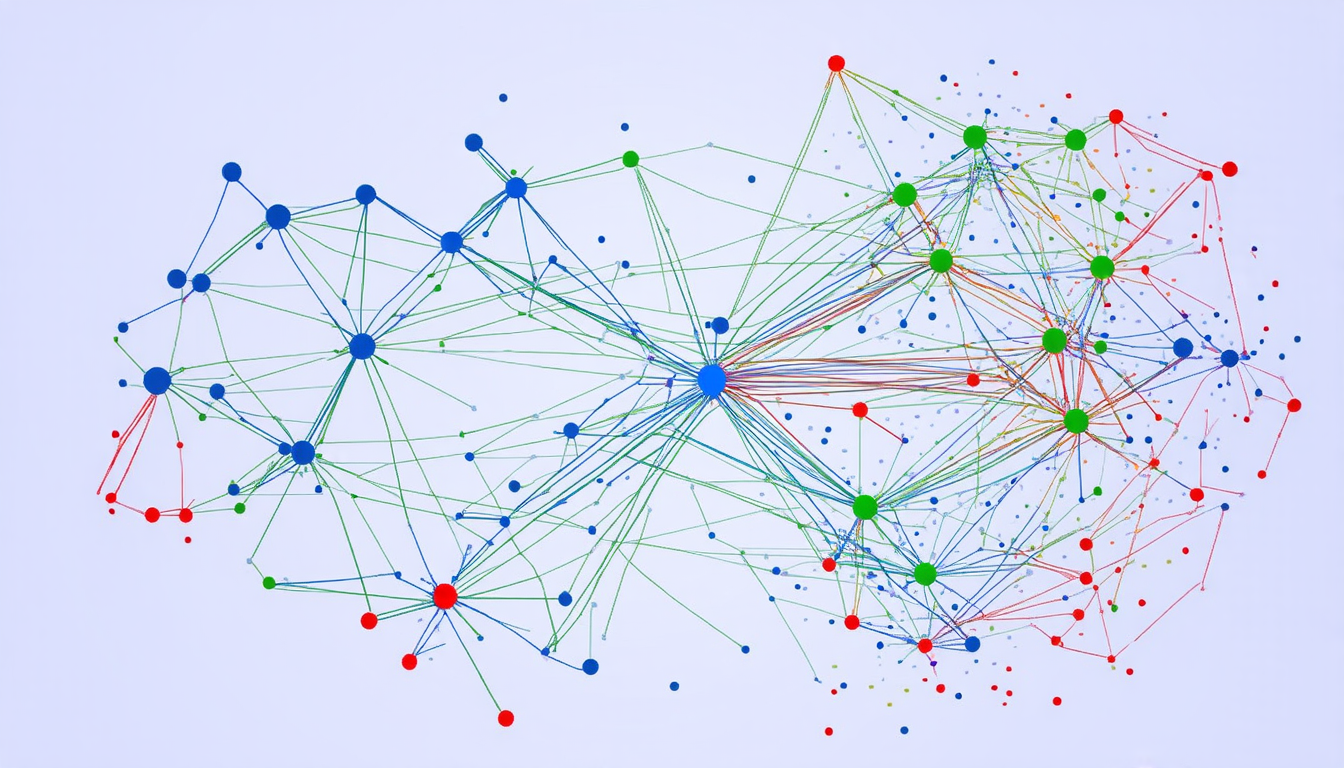
A team of researchers has made significant progress in understanding the behavior of contact processes on one-dimensional random graphs, a type of mathematical model that can be used to study the spread of diseases or information through networks.
Contact processes are a class of interacting particle systems that have been widely used to model various phenomena in physics, biology, and computer science. In these models, particles interact with each other according to certain rules, leading to complex behavior and phase transitions. The one-dimensional random graph is a specific type of network that has received significant attention in recent years due to its simplicity and ability to capture many features of real-world networks.
The researchers used a combination of mathematical techniques and computational simulations to study the contact process on one-dimensional random graphs. They found that the model exhibits a non-trivial phase transition, meaning that there is a critical value of the intensity of the interaction between particles beyond which the system undergoes a qualitative change in its behavior.
One of the key findings of the study is that the phase transition is driven by the presence of cut points, which are special types of vertices on the graph where the degree distribution changes. The researchers showed that these cut points play a crucial role in determining the behavior of the contact process and that they can be used to predict the location of the phase transition.
The study also revealed that the model exhibits a rich structure of phase transitions, with multiple critical values separating different phases of behavior. This complexity arises from the interplay between the interaction between particles and the properties of the underlying graph.
The researchers believe that their results have important implications for our understanding of complex systems and the spread of information or disease through networks. They also hope to apply their findings to real-world problems, such as designing more efficient algorithms for spreading information through social networks or developing new strategies for controlling the spread of diseases.
Overall, the study provides new insights into the behavior of contact processes on one-dimensional random graphs and highlights the importance of cut points in determining the phase transition. The results have significant implications for our understanding of complex systems and the spread of information or disease through networks.
Cite this article: “Phase Transitions on One-Dimensional Random Graphs: Insights into Contact Processes”, The Science Archive, 2025.
Contact Processes, One-Dimensional Random Graphs, Phase Transitions, Interacting Particle Systems, Complex Systems, Network Spread, Disease Control, Information Diffusion, Social Networks, Graph Theory.





