

Sunday 16 March 2025
Researchers have developed a new framework that combines machine learning and physical principles to predict heat transfer in complex systems. The approach, which combines the strengths of both methods, has been shown to accurately model nucleate pool boiling on microchannel structured surfaces.
Nucleate pool boiling is a critical process in many engineering applications, including heat exchangers and power generation systems. However, predicting the heat transfer coefficient – a key metric for evaluating system performance – can be challenging due to the complex interactions between fluid flow, surface roughness, and thermodynamics.
The new framework, dubbed Physics-Informed Machine Learning Aided Framework (PIMLAF), uses machine learning algorithms to model the underlying physical processes that govern nucleate pool boiling. The approach is based on a physics-informed neural network (PINN) architecture, which incorporates prior knowledge of the system’s behavior into the machine learning model.
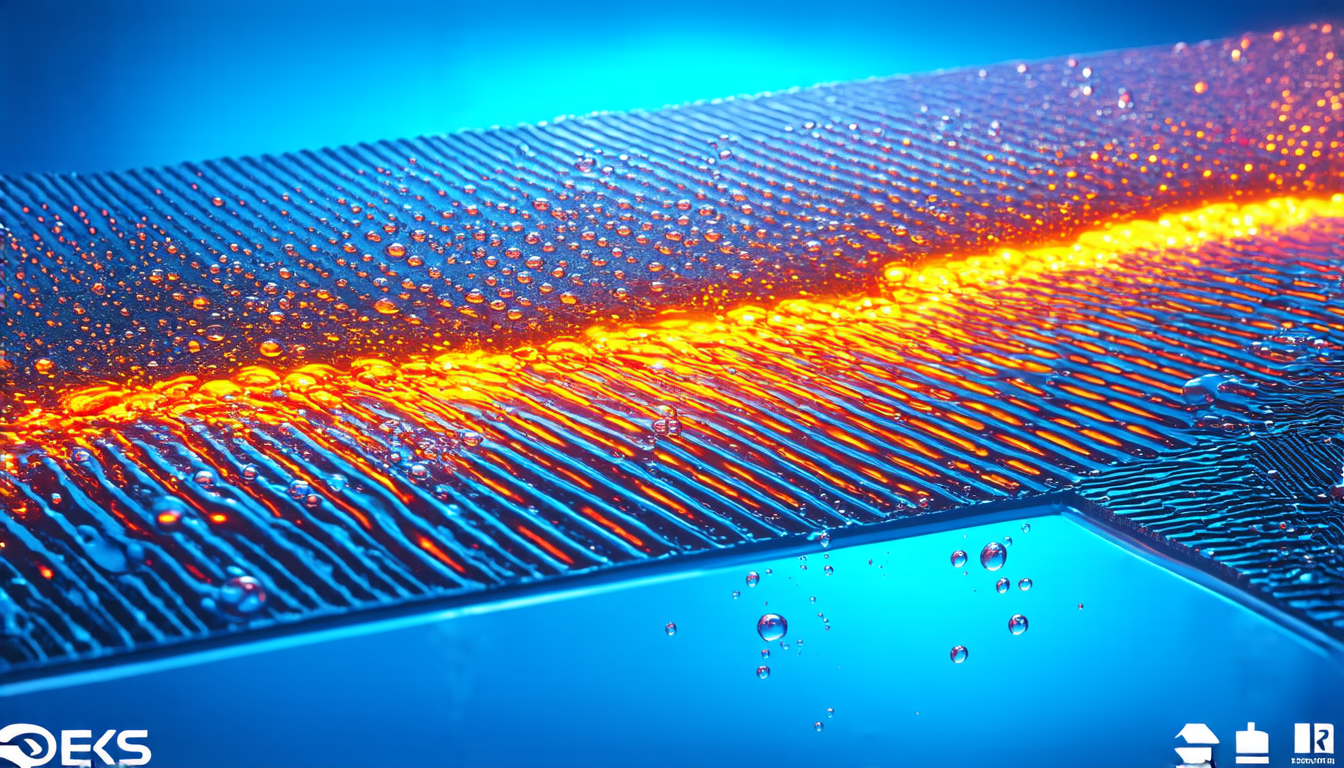
The researchers used PIMLAF to predict heat transfer coefficients for nucleate pool boiling on microchannel structured surfaces, which are designed to enhance heat transfer by creating complex flow patterns. The results showed that the framework was able to accurately capture the effects of surface roughness and fluid flow on heat transfer, even in systems with high levels of complexity.
The approach has significant implications for the development of more efficient and effective heat exchangers. By combining machine learning and physical principles, PIMLAF can help engineers optimize system design and operation for improved performance and reduced energy consumption.
One of the key benefits of PIMLAF is its ability to handle complex systems with multiple interacting components. This is particularly important in nucleate pool boiling, where small changes in surface roughness or fluid flow can have significant effects on heat transfer.
The framework also has potential applications beyond heat exchangers and power generation systems. For example, it could be used to optimize the design of cooling systems for electronic devices or to improve the efficiency of industrial processes such as chemical reactors and distillation columns.
Overall, PIMLAF represents a significant advancement in the field of heat transfer modeling and has the potential to transform our understanding of complex systems. By combining machine learning and physical principles, researchers can develop more accurate and reliable models that enable better design, operation, and optimization of systems critical to energy efficiency and sustainability.
Cite this article: “Machine Learning-Powered Framework Predicts Heat Transfer in Complex Systems”, The Science Archive, 2025.
Machine Learning, Heat Transfer, Nucleate Pool Boiling, Microchannel Structured Surfaces, Physical Principles, Physics-Informed Neural Network, Pinn Architecture, Surface Roughness, Fluid Flow, Thermodynamics.





