

Sunday 16 March 2025
As our world becomes increasingly reliant on technology, we’re seeing a surge in the development of artificial intelligence and machine learning algorithms that can perform tasks once thought impossible. One area where this is particularly evident is in the field of autonomous vehicles.
The idea of self-driving cars has been around for decades, but it’s only recently that the technology has advanced to the point where we’re seeing real-world applications. But what about when these vehicles encounter unexpected obstacles or scenarios? How do they adapt and learn from their experiences?
Researchers have been working on developing algorithms that can help autonomous vehicles navigate complex environments and make decisions in real-time. One approach is to use deep learning networks, which are modeled after the human brain’s neural connections.
These networks are trained on vast amounts of data, allowing them to recognize patterns and make predictions about what will happen next. But when it comes to unexpected situations, these algorithms can struggle to adapt.
That’s where a new approach comes in – one that combines deep learning with traditional machine learning methods. By using a combination of both, researchers have been able to create algorithms that are more robust and adaptable than ever before.
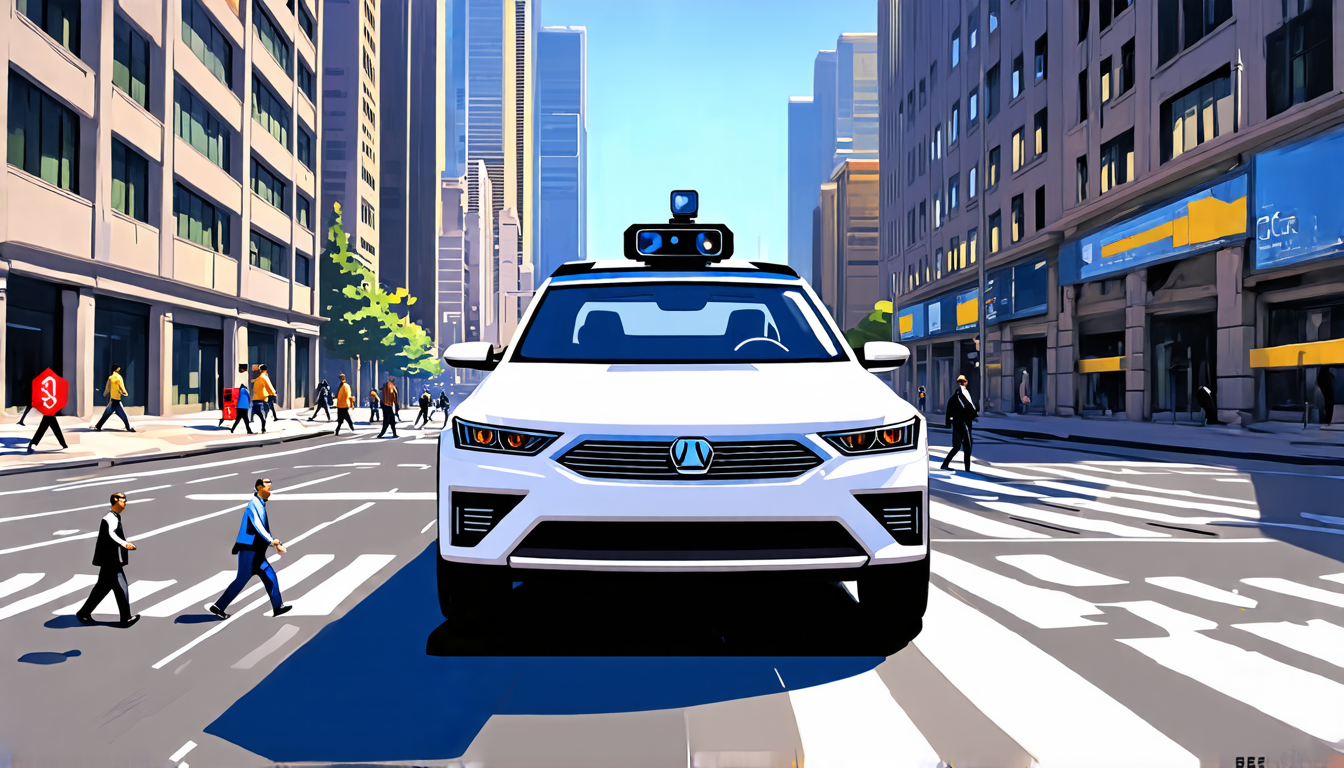
One example is the development of lidar-camera calibration algorithms. Lidar (light detection and ranging) technology uses laser beams to create detailed 3D maps of the environment, while cameras provide visual information. By combining these two sources of data, autonomous vehicles can gain a more complete understanding of their surroundings.
But there’s a catch – the data from these two sensors needs to be aligned correctly in order for the vehicle to make accurate decisions. That’s where the calibration algorithm comes in, using deep learning to match up the lidar and camera data and ensure that they’re working together seamlessly.
Another area where machine learning is being used is in the development of autonomous vehicles’ navigation systems. By analyzing vast amounts of data on traffic patterns, road conditions, and weather, these algorithms can predict what will happen next and make adjustments accordingly.
For example, if a vehicle detects that there’s heavy traffic ahead, it can adjust its speed or route to avoid congestion. This not only improves the driving experience but also reduces the risk of accidents.
Machine learning is also being used in the development of advanced driver-assistance systems (ADAS). These systems use sensors and cameras to detect potential hazards on the road, such as pedestrians or other vehicles, and alert the driver if necessary.
Cite this article: “Artificial Intelligence and Machine Learning in Autonomous Vehicles”, The Science Archive, 2025.
Artificial Intelligence, Machine Learning, Autonomous Vehicles, Deep Learning, Neural Networks, Lidar, Cameras, Calibration Algorithms, Navigation Systems, Advanced Driver-Assistance Systems





