

Sunday 16 March 2025
A new approach to training artificial intelligence (AI) models for medical imaging has been developed, which could revolutionize the way doctors diagnose and treat diseases. The method uses a technique called federated learning, where multiple AI models are trained on different datasets and then combined to create a more accurate and comprehensive model.
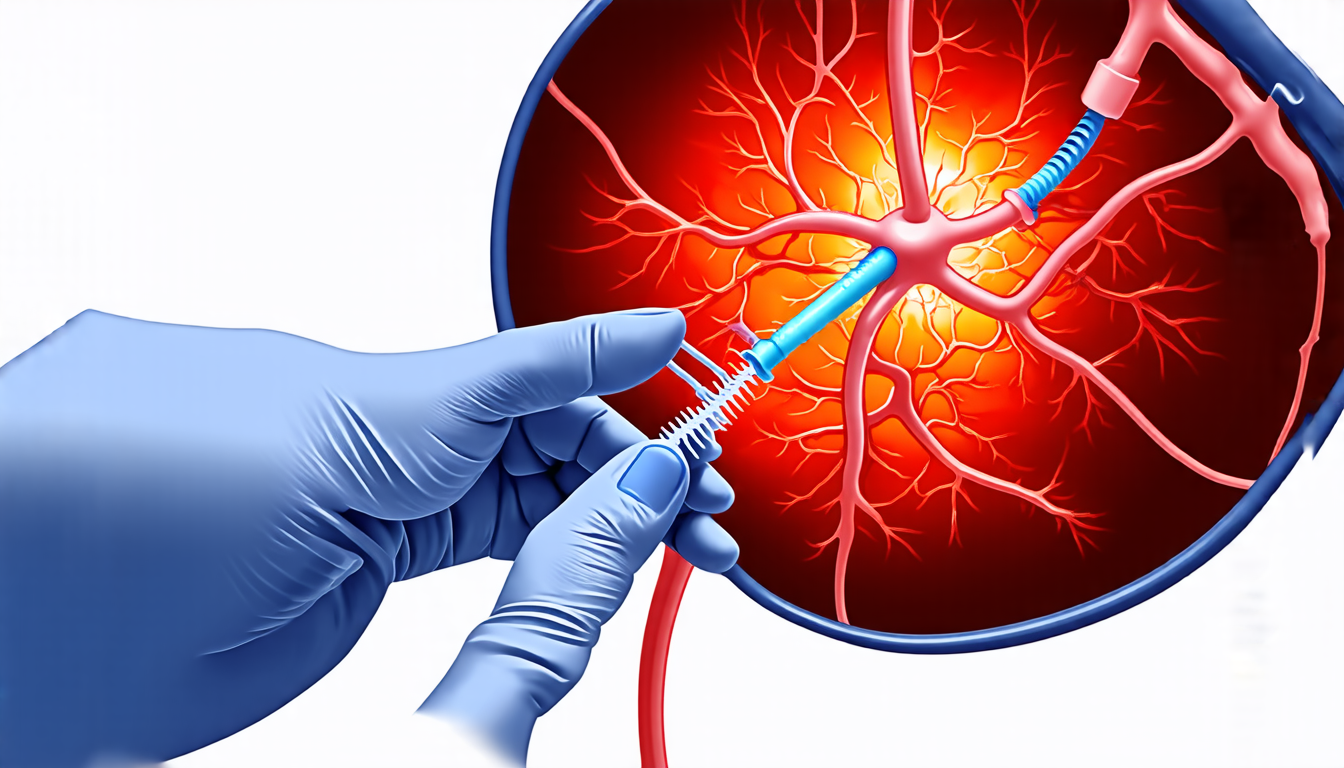
The team behind this innovation used this approach to train an AI model that can accurately identify catheters and guidewires in X-ray images, which is essential for endovascular surgery. Endovascular surgery is a minimally invasive procedure where surgeons use catheters and guidewires to access arteries and diagnose or treat vascular diseases.
The traditional approach to training AI models involves collecting large amounts of data from multiple sources and then using it to train the model. However, this can be challenging in the medical field due to the limited availability of labeled data. Federated learning allows researchers to collect similar-domain data from different institutions and train a single model that can be fine-tuned for specific tasks.
The new AI model uses a technique called knowledge distillation, where the pre-trained model is used as a teacher to guide the training process of the student model. The student model is trained on a smaller dataset than the teacher model, but it still achieves better results due to the guidance from the teacher model.
The researchers tested their AI model on a dataset of X-ray images and found that it was able to accurately identify catheters and guidewires with high precision. They also compared their model with other state-of-the-art models and found that it outperformed them in terms of accuracy and robustness.
This innovation has the potential to revolutionize the field of medical imaging by allowing doctors to quickly and accurately diagnose diseases using AI-powered X-ray images. It could also reduce the need for invasive procedures and improve patient outcomes.
The researchers are now working on applying this approach to other medical imaging tasks, such as detecting tumors in MRI scans and identifying signs of disease in CT scans. They believe that their method has the potential to be used in a wide range of medical applications and could lead to significant advancements in the field of medicine.
This innovative approach to training AI models for medical imaging is an exciting development that could have far-reaching implications for the healthcare industry. By combining multiple AI models trained on different datasets, researchers can create more accurate and comprehensive models that can be used to improve patient care.
Cite this article: “Federated Learning Revolutionizes Medical Imaging with Accurate AI Models”, The Science Archive, 2025.
Artificial Intelligence, Medical Imaging, Federated Learning, Knowledge Distillation, X-Ray Images, Endovascular Surgery, Catheters, Guidewires, Ai Models, Machine Learning





