

Sunday 16 March 2025
For years, scientists have been trying to perfect a way to simulate real-world traffic scenarios in a controlled environment. This is crucial for developing autonomous vehicles that can safely navigate through busy streets and avoid accidents. A team of researchers has made significant progress in this area by developing a new model that can generate realistic simulations of multi-agent behaviors.
The model, called the Unified Mixture Model (UniMM), uses a combination of continuous and discrete models to simulate the behavior of multiple agents, such as cars and pedestrians. This allows for more accurate predictions of how these agents will interact with each other in different scenarios. The UniMM model is also able to learn from data collected from real-world traffic situations, making it even more effective.
One of the key challenges in developing a realistic simulation model is capturing the multimodality of agent behaviors. In other words, agents can exhibit different behaviors depending on various factors such as their speed, direction, and intentions. The UniMM model addresses this challenge by using a mixture of continuous and discrete models to represent these behaviors.
The continuous model allows for smooth transitions between different behaviors, while the discrete model enables the representation of specific events or actions. This combination provides a more comprehensive understanding of agent behavior and can help improve the accuracy of simulations.
Another important feature of the UniMM model is its ability to generate closed-loop samples. In traditional simulation models, agents are typically simulated in an open-loop manner, meaning that they do not interact with each other in real-time. The UniMM model, on the other hand, allows for closed-loop interaction between agents, creating a more realistic and dynamic simulation environment.
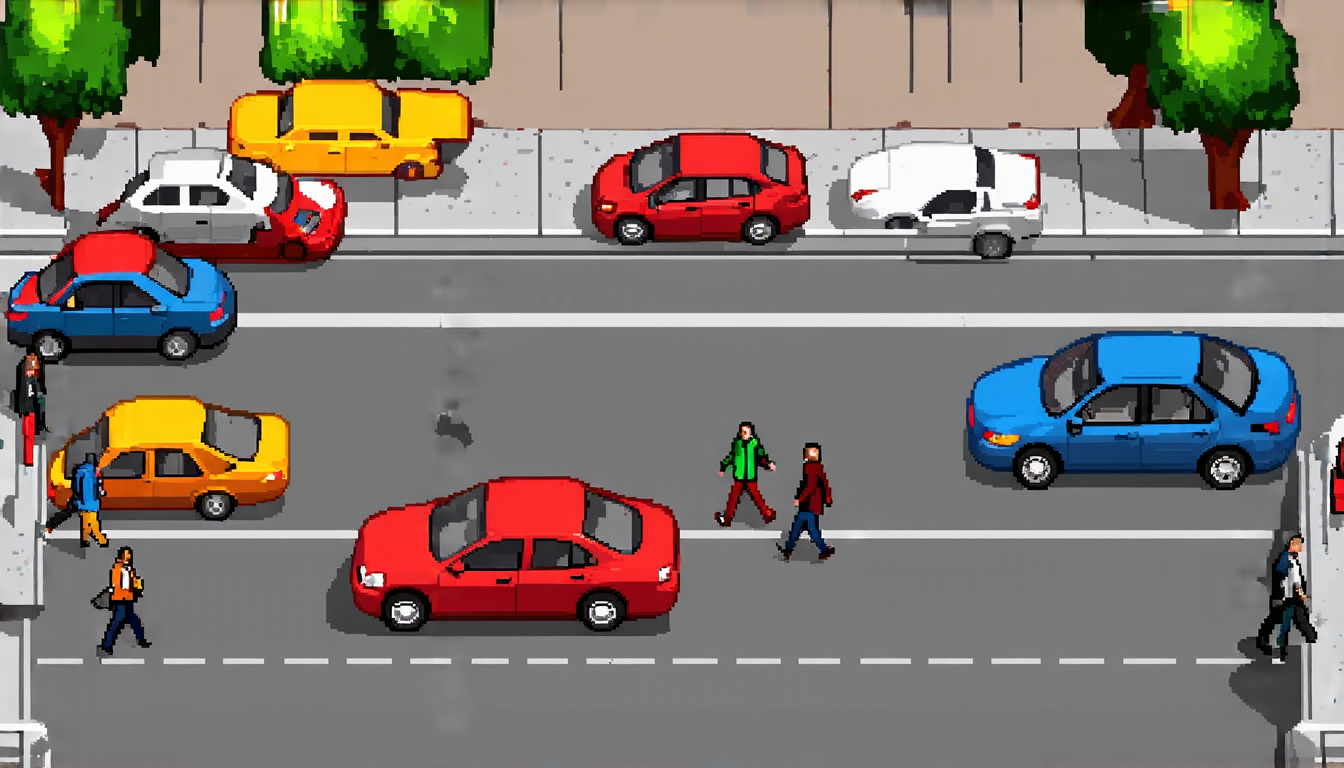
The researchers tested their model using various scenarios, including traffic jams and pedestrian crossings. The results showed that the UniMM model was able to accurately predict the behavior of agents in these scenarios, even when faced with unexpected events or changes in the environment.
The development of the UniMM model has significant implications for the development of autonomous vehicles. With this model, manufacturers can create more realistic simulation environments that allow them to test and refine their self-driving cars before they hit the road. This will help ensure safer and more efficient transportation systems.
In addition, the UniMM model can be applied to other areas such as urban planning and traffic management. By simulating different scenarios and predicting agent behavior, cities can optimize their infrastructure and traffic flow, reducing congestion and improving air quality.
Overall, the UniMM model is a significant step forward in the development of realistic simulation models for multi-agent behaviors.
Cite this article: “Simulating Realistic Traffic Scenarios with the Unified Mixture Model (UniMM)”, The Science Archive, 2025.
Traffic, Simulation, Autonomous Vehicles, Multi-Agent Behavior, Unified Mixture Model, Unimm, Agent Behavior, Real-World Traffic, Pedestrian Crossings, Urban Planning





