

Sunday 16 March 2025
A new study has shed light on the mysterious process of community formation in networks, revealing that even seemingly random connections can lead to the emergence of distinct groups.
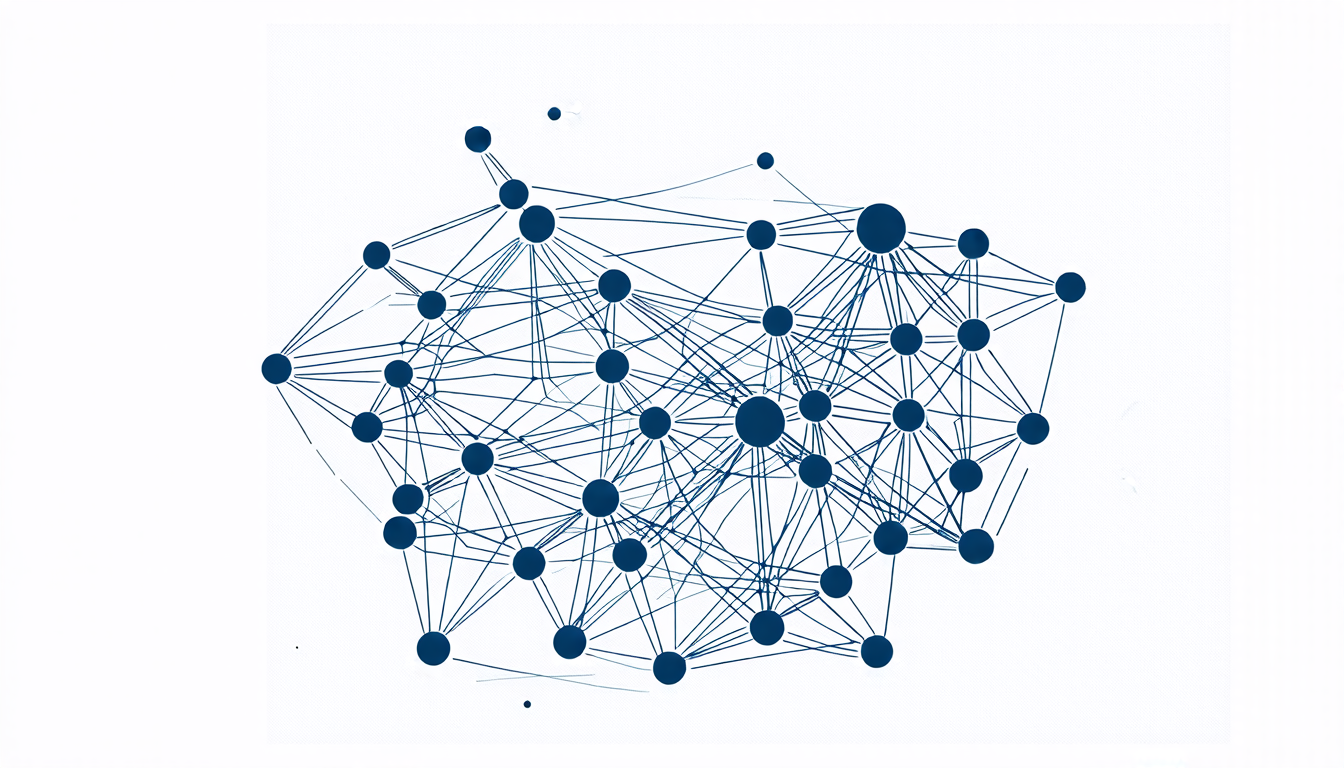
Networks are all around us – from social media platforms to biological systems – and understanding how they form and evolve is crucial for making sense of complex phenomena. One key feature of many networks is the presence of communities: groups of nodes that are more densely connected to each other than to the rest of the network.
For years, researchers have been trying to understand what drives community formation in networks. Some have suggested that it’s a result of node attributes – characteristics such as age, gender or profession – while others propose that it’s simply a matter of chance.
A new study has challenged these assumptions by showing that even random connections can lead to the emergence of communities. The researchers used computer simulations to generate networks with different properties and then applied a statistical method to identify community structures within them.
The results were striking: even in networks where nodes are randomly connected, distinct communities emerged as soon as the network reached a certain size. This suggests that community formation is not solely dependent on node attributes or chance, but rather can arise from the underlying structure of the network itself.
One key finding was that local dynamics – rules that govern how connections form between neighboring nodes – play a crucial role in community emergence. Networks generated by these local dynamics tend to have communities with almost certainty, even when there is no inherent node heterogeneity or randomness.
This has significant implications for our understanding of complex systems and how they evolve over time. It suggests that the structure of networks can drive the formation of communities, which in turn can influence the behavior and properties of the nodes within them.
The study’s findings also have practical applications in fields such as social network analysis, where understanding community structure is critical for predicting behavior and designing interventions.
In the future, researchers will likely continue to explore the intricacies of community formation in networks, using a combination of theoretical models and empirical data to shed light on this complex phenomenon. As our understanding of networks grows, so too will our ability to analyze and predict their behavior – with significant potential benefits for fields such as sociology, biology, and beyond.
Cite this article: “Random Connections Can Lead to Emergence of Distinct Communities in Networks”, The Science Archive, 2025.
Networks, Community Formation, Node Attributes, Chance, Computer Simulations, Statistical Method, Local Dynamics, Complex Systems, Social Network Analysis, Community Structure
Reference: Alexei Vazquez, “Emergence of network communities driven by local rules” (2025).





