

Sunday 16 March 2025
Scientists have made a significant breakthrough in developing a new technique for solving complex mathematical problems, particularly those involving hyperbolic conservation laws and Cartesian meshes. These types of equations are used to model various phenomena in physics, such as the behavior of fluids, gases, and plasmas.
The problem with these equations is that they can be notoriously difficult to solve, especially when dealing with complex geometries and boundary conditions. In the past, researchers have relied on low-order extrapolation techniques, which often lead to inaccurate results and a loss of precision near boundaries.
The new technique, developed by a team of mathematicians and computer scientists, involves using high-order Lagrange interpolation to extrapolate information from the interior of the computational domain to ghost cells outside. This approach allows for the detection of discontinuities and abrupt changes in data, enabling more accurate solutions.
One of the key advantages of this method is its ability to capture complex phenomena, such as shock waves and turbulence, with high precision. This is particularly important in fields like aerodynamics, where small errors can have significant consequences.
To test the technique, researchers simulated a range of scenarios using a Cartesian grid, including the flow of air around an aircraft wing and the behavior of a plasma in a magnetic field. The results showed that the new method was able to accurately capture the complex dynamics of these systems, even when dealing with large-scale simulations.
The technique has far-reaching implications for a wide range of fields, from astrophysics to materials science. By allowing researchers to model complex phenomena with greater accuracy and precision, it has the potential to revolutionize our understanding of the physical world.
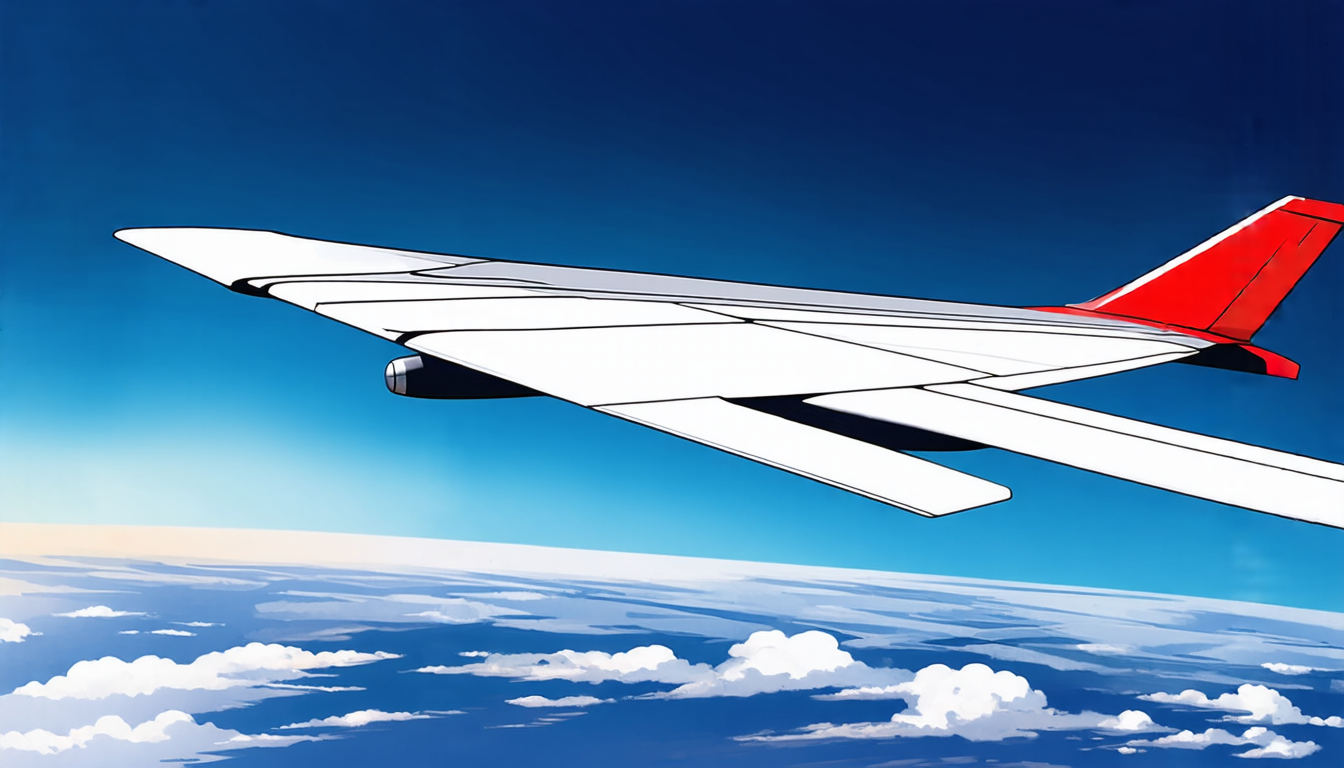
One of the most promising applications of this method is in the field of aerodynamics. By accurately modeling the behavior of air around aircraft wings and other objects, engineers can design more efficient and stable vehicles. This could lead to significant advances in fields like aviation and wind energy.
In addition to its practical applications, the new technique also has important theoretical implications. It challenges our understanding of the fundamental limits of computational fluid dynamics and raises new questions about the nature of turbulence and shock waves.
The researchers are now working to further refine the technique and explore its potential applications. They are also collaborating with other experts in the field to develop new methods for solving complex mathematical problems.
Overall, this breakthrough has the potential to transform our understanding of the physical world and open up new avenues for research and innovation.
Cite this article: “New Technique Revolutionizes Solving Complex Mathematical Problems”, The Science Archive, 2025.
Mathematical Problems, Hyperbolic Conservation Laws, Cartesian Meshes, Computational Fluid Dynamics, Aerodynamics, Plasma Physics, Turbulence, Shock Waves, Lagrange Interpolation, High-Order Extrapolation





