

Wednesday 19 March 2025
The intricate patterns and shapes that appear in fractals have long fascinated mathematicians and scientists alike. One of the most well-known examples of a fractal is the Koch snowflake, a shape formed by adding triangles to a triangle over and over again. But now, researchers have developed a new way of creating these shapes, one that yields some surprising results.
The traditional method for constructing the Koch snowflake involves starting with an equilateral triangle and then repeatedly adding smaller triangles to its edges. However, this approach has some limitations. For instance, it’s difficult to control the shape of the resulting curve, and the process can become quite complex as the number of iterations increases.
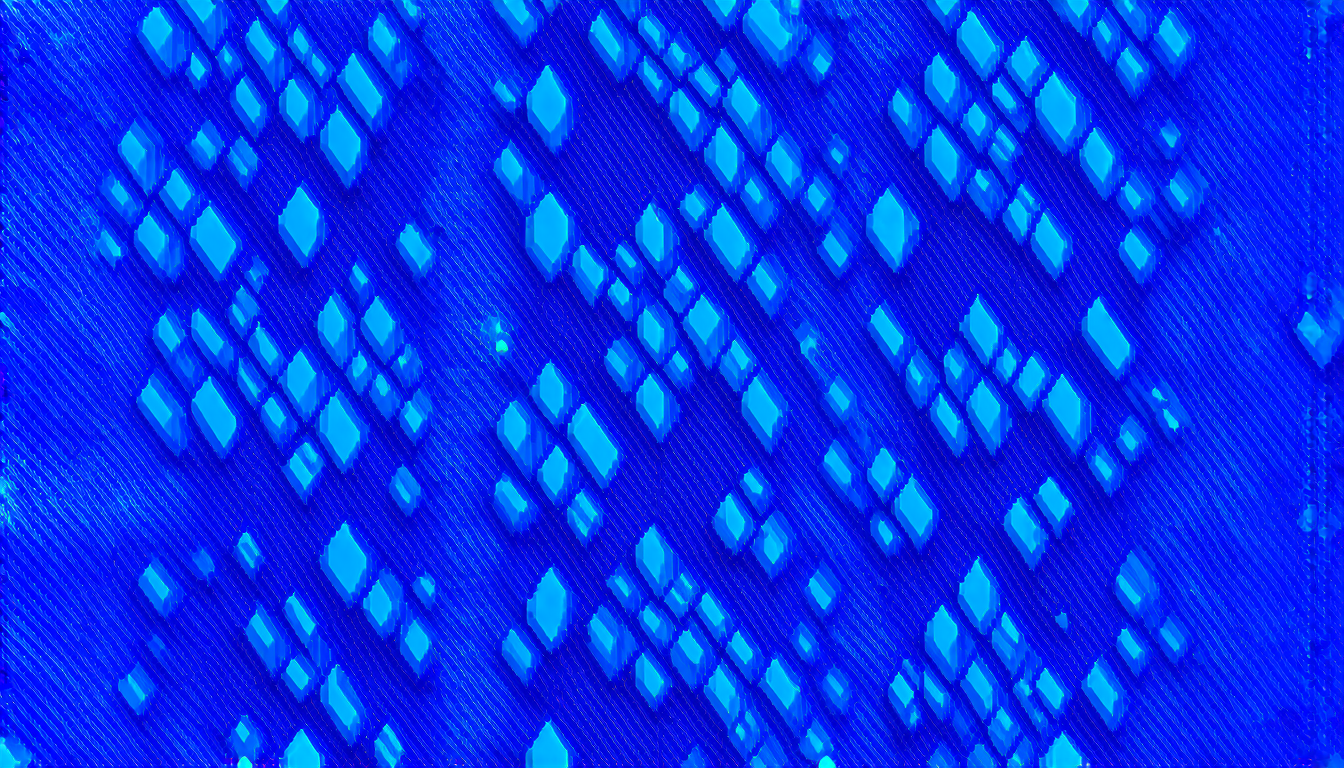
Enter the gasket construction method, which offers a fresh perspective on building fractals. Instead of starting with a triangle, researchers use a rhombus – a shape with four sides of equal length – as the foundation for their design. They then add smaller rhombi to its edges in a specific pattern, creating a self-similar curve that repeats at different scales.
The advantages of this approach are numerous. For one, it allows for greater control over the shape of the resulting curve, making it possible to create a wider range of fractal patterns. Additionally, the gasket construction method is more efficient than traditional methods, requiring fewer iterations to achieve similar results.
But perhaps the most interesting aspect of the gasket construction method is its ability to produce fractals with unique properties. For example, researchers have found that the Hausdorff dimension – a measure of a shape’s complexity – can vary depending on the ratio of the rhombi used in the construction process. This means that by adjusting this ratio, it’s possible to create fractals with different levels of complexity and self-similarity.
The implications of these findings are far-reaching. Fractals have many practical applications in fields such as computer graphics, engineering, and medicine, where they can be used to model complex systems and processes. By developing new methods for creating fractals, researchers hope to unlock even more potential uses for these fascinating shapes.
In the future, scientists plan to continue exploring the properties of fractals created using the gasket construction method. They’re also working on adapting this approach to other areas of mathematics and science, where it could be used to model complex systems and make new discoveries.
Cite this article: “New Method for Creating Fractals Yields Surprising Results”, The Science Archive, 2025.
Fractals, Koch Snowflake, Gasket Construction Method, Rhombus, Self-Similarity, Hausdorff Dimension, Complexity, Computer Graphics, Engineering, Medicine.
Reference: Robert C. Sargent, “A gasket construction of the Koch snowflake and variations” (2025).





