

Wednesday 19 March 2025
Researchers have made significant strides in developing a new approach to multitask learning, which enables machines to learn and retain knowledge across various tasks simultaneously. This innovative method, known as Vision-Language Models (VLMs), has far-reaching implications for artificial intelligence and autonomous systems.
The traditional approach to machine learning involves training models on individual tasks, which can lead to catastrophic forgetting – a phenomenon where the model forgets previously learned information when faced with new tasks. VLMs aim to overcome this limitation by leveraging knowledge distillation and projection regularization techniques.
In essence, VLMs are designed to learn from multiple tasks simultaneously, allowing them to retain knowledge across various domains. This is achieved through the use of a memory buffer, which stores samples from previous tasks. The model then uses these stored samples to fine-tune its performance on new tasks, ensuring that it doesn’t forget previously learned information.
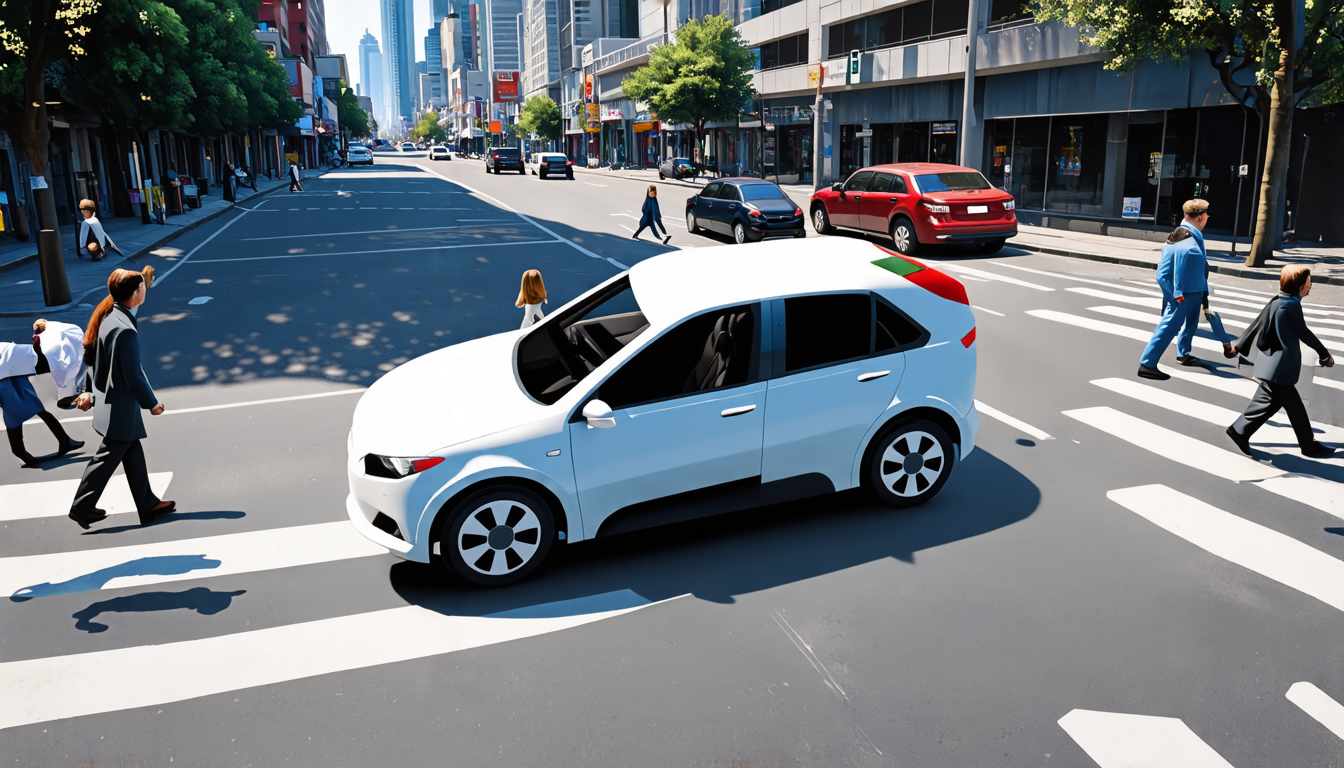
The VLM approach has been tested in several autonomous driving scenarios, including perception, prediction, planning, and behavior tasks. In each of these scenarios, the model was trained on a series of tasks, and its performance was evaluated across various metrics.
One of the key findings is that VLMs are able to retain knowledge across tasks, even when faced with complex and dynamic environments. For example, in the perception task, the model was able to identify pedestrian status correctly across multiple scenarios, including varying lighting conditions and occlusions.
However, not all results were without fault. In some cases, the model’s outputs deviated from the expected results, likely due to the complexity of the scene or the presence of noise in the data. For instance, in one scenario, the model incorrectly identified an object as moving when it was actually stationary.
Despite these challenges, the VLM approach holds significant promise for artificial intelligence and autonomous systems. By enabling machines to learn and retain knowledge across multiple tasks, this technology has the potential to revolutionize industries such as transportation, healthcare, and finance.
The implications of VLMs are far-reaching, with potential applications in areas such as:
* Autonomous vehicles: VLMs could enable self-driving cars to learn and adapt to various driving scenarios, improving their safety and performance.
* Healthcare: By analyzing medical data from multiple patients, VLMs could help doctors identify patterns and make more accurate diagnoses.
* Finance: VLMs could be used to analyze financial data from multiple sources, enabling investors to make more informed decisions.
Cite this article: “Multitask Learning with Vision-Language Models”, The Science Archive, 2025.
Machine Learning, Artificial Intelligence, Autonomous Systems, Vision-Language Models, Multitask Learning, Knowledge Distillation, Projection Regularization, Memory Buffer, Perception, Prediction





