

Wednesday 19 March 2025
The mathematicians have been at it again, tinkering with the fundamental building blocks of our universe – graphs and hypergraphs. These abstract structures are used to model everything from social networks to transportation systems, but they’ve always had a few secrets hidden away in their mathematical machinery.
A recent paper has shed light on one of these secrets: a property called cancellation, which allows mathematicians to simplify complex calculations by canceling out certain terms. This might not sound like much, but it’s a crucial step forward for researchers working with hypergraphs – the more general and powerful cousin of graphs.
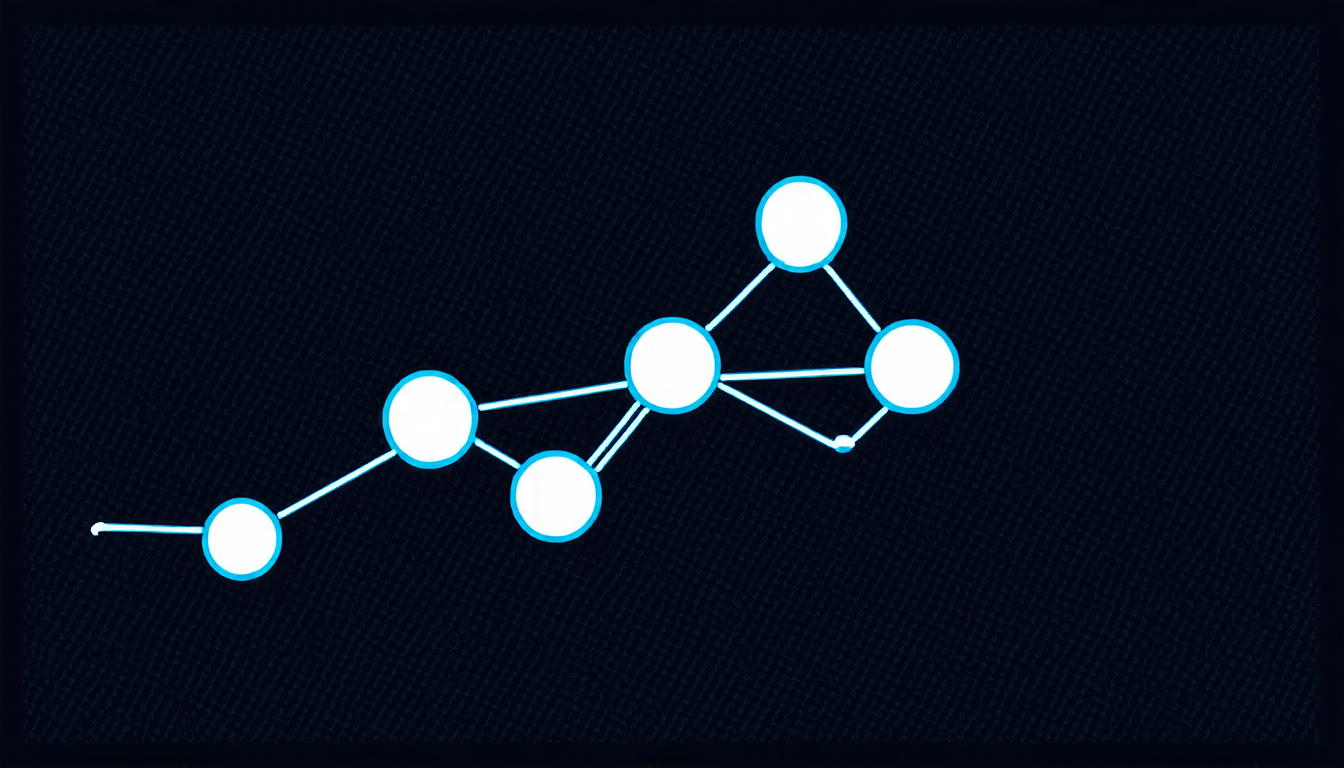
Hypergraphs are used to model complex systems where relationships between objects can be multiple and varied. For example, in a social network, a person might have multiple friends, each with their own set of acquaintances. Hypergraphs allow mathematicians to represent these relationships as edges connecting different nodes, making it easier to analyze the structure of the system.
The problem is that hypergraphs can get very complicated, very quickly. As the number of objects and relationships grows, the calculations required to understand the system become increasingly complex. This is where cancellation comes in – a property that allows mathematicians to simplify these calculations by canceling out certain terms.
The researchers used a combination of algebraic and combinatorial techniques to prove that cancellation holds for hypergraphs. They showed that under certain conditions, the characteristic polynomial of a hypergraph (a mathematical object that describes its structure) can be simplified by canceling out certain terms. This simplification has significant implications for researchers working with hypergraphs.
One of the most exciting applications of this result is in the study of network topology. By simplifying the calculations required to analyze complex networks, mathematicians can gain a deeper understanding of how they function and how they might fail. This could have important implications for fields like epidemiology, where understanding the spread of diseases through networks is crucial.
The paper’s results also have implications for computer science, particularly in the field of algorithms. By simplifying calculations, researchers can develop more efficient algorithms that can process large amounts of data more quickly and accurately.
In short, this paper has opened up new possibilities for researchers working with hypergraphs and complex systems. The ability to simplify calculations using cancellation is a major step forward, and it’s likely to have significant implications across a range of fields.
Cite this article: “Unlocking the Secrets of Hypergraphs: A Breakthrough in Simplifying Complex Calculations”, The Science Archive, 2025.
Graphs, Hypergraphs, Mathematics, Cancellation, Algebraic Techniques, Combinatorial Methods, Network Topology, Epidemiology, Algorithms, Computer Science
Reference: Joshua Cooper, Utku Okur, “Partitions of an Eulerian Digraph into Circuits” (2025).





