

Wednesday 19 March 2025
The study of rigidity and partial rigidity in dynamical systems has long been a topic of interest among mathematicians and physicists. Recently, researchers have made significant progress in understanding these concepts, particularly in the context of Cantor dynamical systems.
Cantor systems are a type of symbolic dynamics that describe the behavior of complex systems. They are characterized by the use of infinite sequences of symbols to represent the states of the system. In recent years, mathematicians have developed various methods for studying these systems, including the use of Bratteli diagrams and Vershik maps.
Rigidity refers to the property of a dynamical system that is invariant under certain transformations. In other words, it means that the system remains unchanged even when viewed from different perspectives. Partial rigidity, on the other hand, refers to the property of a system that is rigid only under certain conditions or in certain contexts.
The study of rigidity and partial rigidity has important implications for our understanding of complex systems. For example, it can help us understand how these systems evolve over time and how they respond to changes in their environment. It can also provide insights into the behavior of individual components within the system.
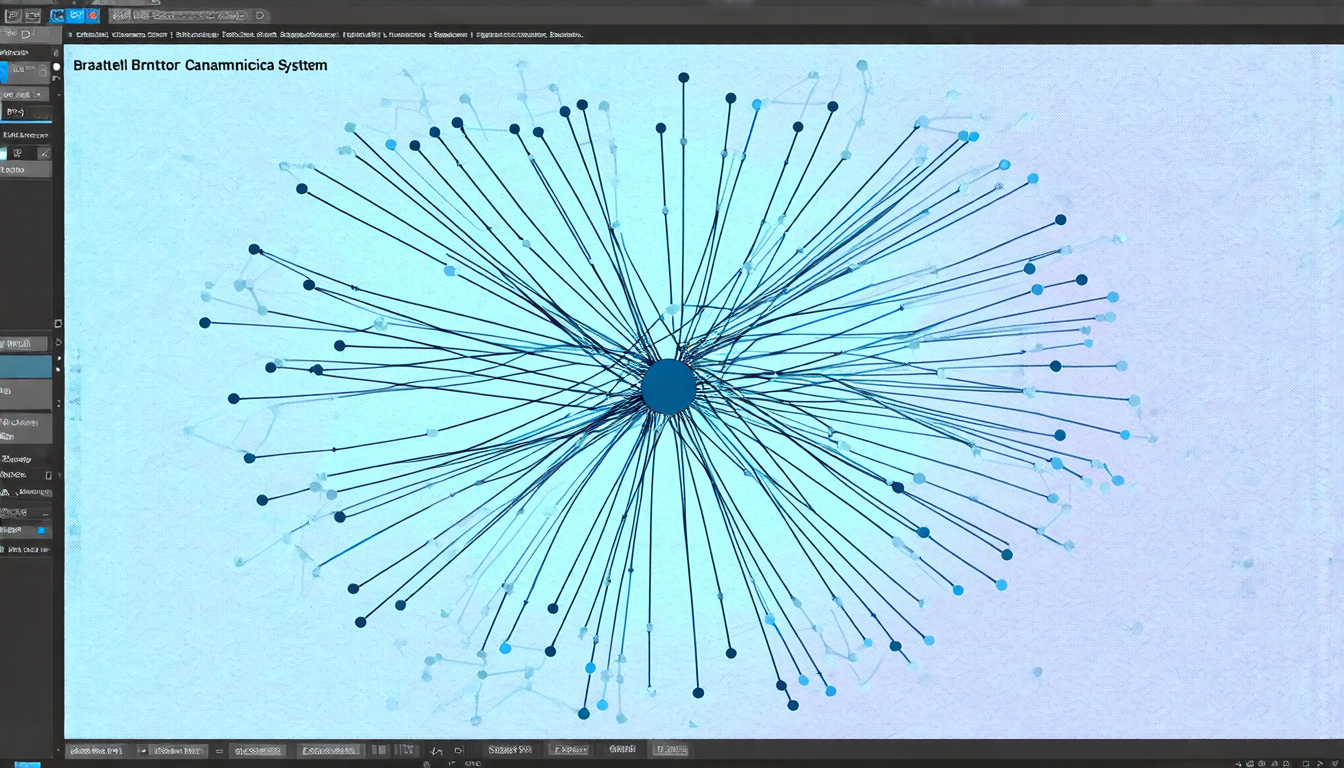
In recent years, researchers have made significant progress in developing methods for studying rigidity and partial rigidity in Cantor dynamical systems. One approach has been to use Bratteli diagrams, which are a type of graph that represents the structure of the system. By analyzing these diagrams, mathematicians can gain insights into the properties of the system and how it responds to different inputs.
Another approach has been to use Vershik maps, which are a type of transformation that is used to study the behavior of Cantor systems. These maps have been shown to be useful for understanding the rigidity and partial rigidity of these systems.
In addition to these methods, researchers have also developed various algorithms and computational tools for studying rigidity and partial rigidity in Cantor dynamical systems. These tools can be used to analyze large amounts of data and identify patterns that may not be immediately apparent.
Overall, the study of rigidity and partial rigidity in Cantor dynamical systems is an active area of research with important implications for our understanding of complex systems. By developing new methods and tools for studying these concepts, mathematicians and physicists can gain insights into the behavior of these systems and how they respond to different inputs.
Cite this article: “Rigidity and Partial Rigidity in Cantor Dynamical Systems: Recent Advances and Implications”, The Science Archive, 2025.
Rigidity, Partial Rigidity, Cantor Dynamical Systems, Symbolic Dynamics, Bratteli Diagrams, Vershik Maps, Complex Systems, Dynamical Systems, Graph Theory, Computational Tools
Reference: Henk Bruin, Olena Karpel, Piotr Oprocha, Silvia Radinger, “Rigidity and Toeplitz systems” (2025).





