

Wednesday 19 March 2025
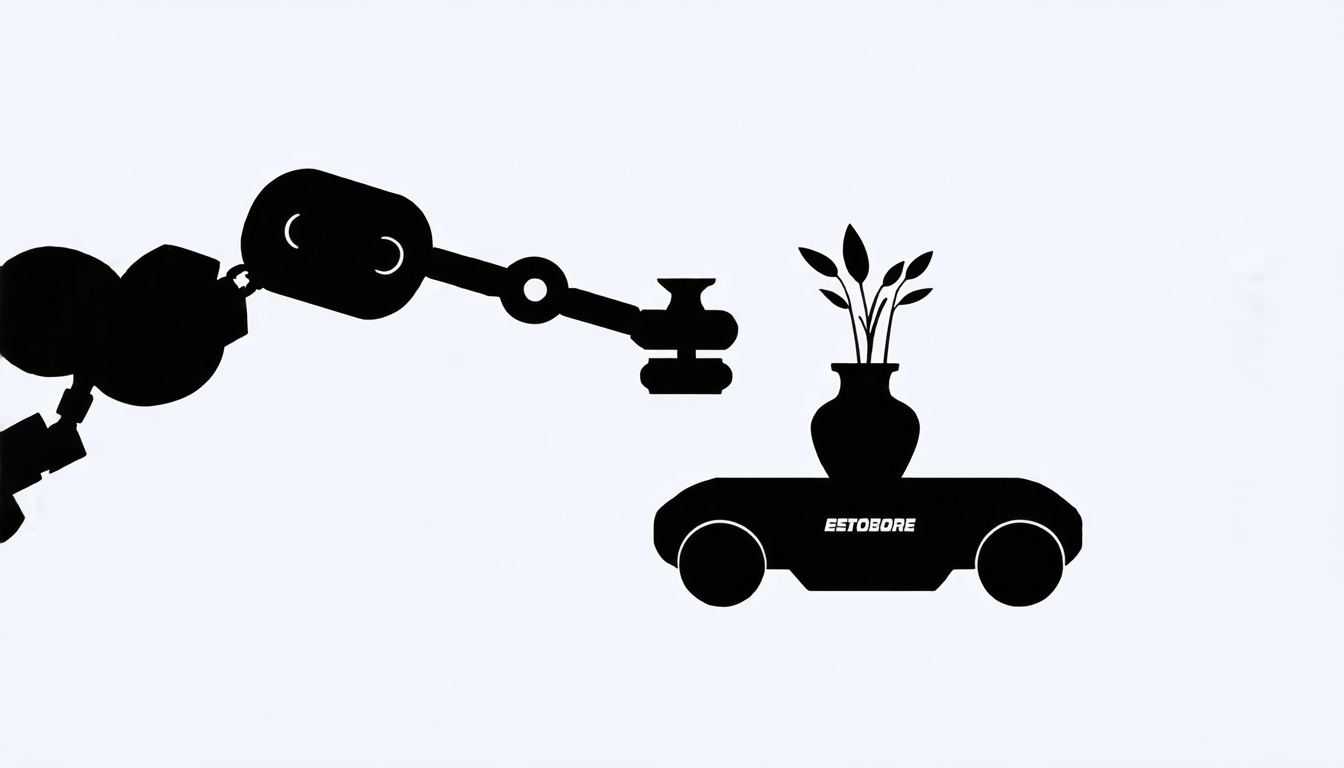
A new type of gripper has been developed that uses inflatable pads to adjust its grip on objects, offering a level of precision and versatility previously unseen in robotic grasping technology.
The device, designed by researchers at the University of Toronto, consists of a series of soft, flexible pads that can be inflated or deflated to change their shape and texture. By controlling the pressure inside these pads, the gripper can adapt to different types of objects and surfaces, allowing it to grasp delicate items with precision or hold onto rougher surfaces with ease.
One of the key innovations behind this technology is the way in which the pads are designed to change shape when inflated or deflated. By creating small recesses and protrusions on the surface of the pads, the researchers have created a series of micro-scale textures that can be used to adjust the grip on an object.
For example, when grasping a delicate item such as a plastic tube, the gripper can deflate the pads to create a smooth, flat surface that won’t scratch or damage the object. Meanwhile, when dealing with a rougher surface such as wood or metal, the pads can be inflated to create a series of small bumps and ridges that provide extra grip.
The researchers have also developed a system for detecting when an object has been successfully grasped, using changes in pressure inside the pads to determine whether the gripper has made contact with an object. This allows the device to automatically adjust its grip as needed, ensuring that it can hold onto objects securely without applying too much force.
One of the most exciting potential applications of this technology is in the field of soft robotics, where robots are designed to interact with humans and other living things in a more gentle and flexible way. By allowing these robots to adapt their grip on different types of objects and surfaces, the researchers hope that they will be able to perform tasks such as picking up delicate items or manipulating fragile materials with greater precision and control.
The development of this technology is also expected to have implications for the field of manufacturing, where it could be used to create more flexible and adaptable robotic assembly lines. By allowing robots to adjust their grip on different types of objects and surfaces, manufacturers may be able to improve efficiency and reduce waste in their production processes.
Overall, this new gripper represents a significant step forward in the development of soft robotics technology, offering a level of precision and versatility that could have far-reaching implications for a wide range of applications.
Cite this article: “Soft Robotics Gripper: A New Era in Precision Grasping Technology”, The Science Archive, 2025.
Soft Robotics, Gripper, Robotic Grasping, Inflatable Pads, Precision, Versatility, Adaptive Grasp, Micro-Scale Textures, Object Detection, Manufacturing





