

Wednesday 19 March 2025
As humans, we’ve always been fascinated by the concept of artificial intelligence and its potential to revolutionize our daily lives. But what happens when AI is used in conjunction with another complex system – like a combinatorial optimization problem? In a recent study, researchers explored this very question, creating an innovative algorithm called CCDO-RL that combines reinforcement learning with combinatorial optimization.
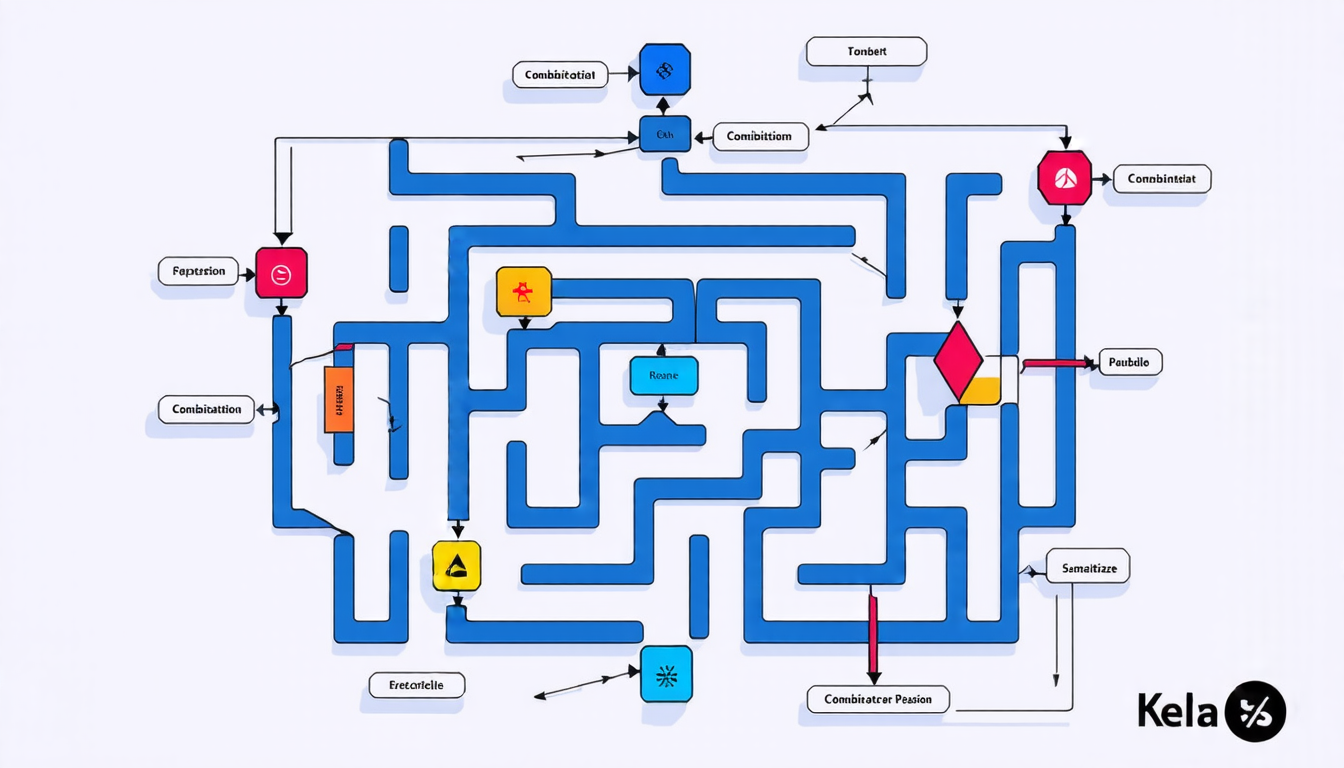
Combinatorial optimization problems are notoriously tricky to solve, as they involve finding the most efficient solution from a vast array of possibilities. Think of it like trying to find the shortest path through a maze – but instead of just navigating left and right, you have to consider multiple variables and constraints all at once. It’s no wonder that these types of problems often require significant computational power and human intuition.
Enter CCDO-RL, an algorithm designed specifically to tackle this type of problem. By combining reinforcement learning with combinatorial optimization, the researchers created a system that can learn from its mistakes and adapt to new situations. In other words, it’s like teaching a machine to solve mazes, but instead of just following a predetermined path, it learns to navigate through the maze based on trial and error.
The researchers tested their algorithm on three different types of combinatorial optimization problems – the Adversarial Covering Salesman Problem (ACSP), the Adversarial Capacitated Vehicle Routing Problem (ACVRP), and the Patrolling Game (PG). In each case, they compared CCDO-RL’s performance to that of a traditional reinforcement learning algorithm.
The results were impressive. CCDO-RL consistently outperformed its competitors, finding more efficient solutions in all three problem domains. But what’s even more remarkable is that it did so while adapting to changing circumstances – something that traditional algorithms often struggle with.
So how does this work? In simple terms, CCDO-RL uses a combination of machine learning and combinatorial optimization techniques to find the best solution. It starts by training on a set of problems, where it learns to identify patterns and relationships between different variables. Then, when faced with a new problem, it uses its learned knowledge to generate a range of potential solutions – and then iteratively refines those solutions based on feedback from the environment.
The implications of this research are far-reaching. In fields like logistics, transportation, and finance, combinatorial optimization problems are common and often critical.
Cite this article: “AI-Powered Combinatorial Optimization: A Breakthrough in Solving Complex Problems”, The Science Archive, 2025.
Artificial Intelligence, Reinforcement Learning, Combinatorial Optimization, Algorithm, Machine Learning, Problem-Solving, Maze, Shortest Path, Logistics, Transportation, Finance.





