

Wednesday 19 March 2025
A new approach to modeling fluid flow in complex systems has been developed, with significant implications for fields such as environmental science and engineering.
The study, published recently, focuses on the interaction between free-flowing fluids and porous media, like soil or rock. This is a crucial aspect of many natural processes, from the movement of pollutants through groundwater to the design of efficient filtration systems.
The problem is that current models often fail to accurately capture this interaction, particularly when dealing with complex flows and heterogeneous media. To address this issue, researchers have developed a new hybrid- dimensional model that combines the benefits of different approaches.
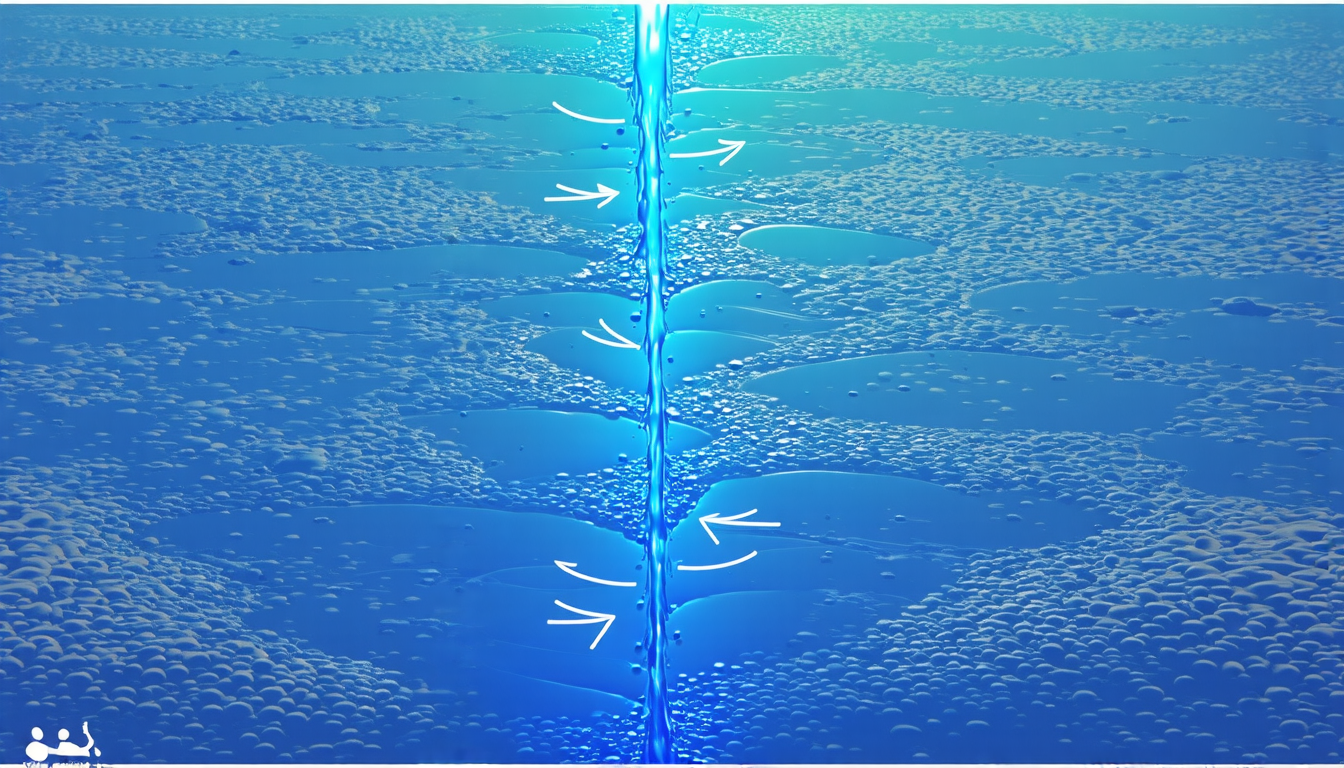
The key innovation lies in the way the model treats the interface between the free-flowing fluid and the porous medium. Traditional models often rely on simplified assumptions or empirical formulas to describe this interaction, but these can be inaccurate or even misleading. The new approach, by contrast, uses a more nuanced description that takes into account the complex geometry of the system.
The researchers tested their model using two benchmark problems, which involved simulating the flow of fluids through porous media with different properties. They compared the results to those obtained using existing models and found significant improvements in accuracy.
One of the key advantages of the new approach is its ability to handle arbitrary flow directions, which can be crucial in many real-world applications. For example, when designing a filtration system, it’s essential to ensure that fluids can flow freely through the pores without clogging or bypassing the filter.
The study also highlights the potential for this new model to be used in a wide range of fields beyond environmental science and engineering. Its ability to capture complex flows and interactions could be valuable in areas such as biology, chemistry, and materials science.
While there is still much work to be done to refine and apply this new approach, the results suggest that it has significant potential for advancing our understanding of complex fluid flows and improving our ability to model and predict these phenomena.
Cite this article: “New Hybrid-Dimensional Model Reveals More Accurate Fluid Flow in Complex Systems”, The Science Archive, 2025.
Fluid Flow, Porous Media, Environmental Science, Engineering, Groundwater, Filtration Systems, Complex Flows, Heterogeneous Media, Hybrid-Dimensional Model, Fluid Dynamics.





