

Wednesday 19 March 2025
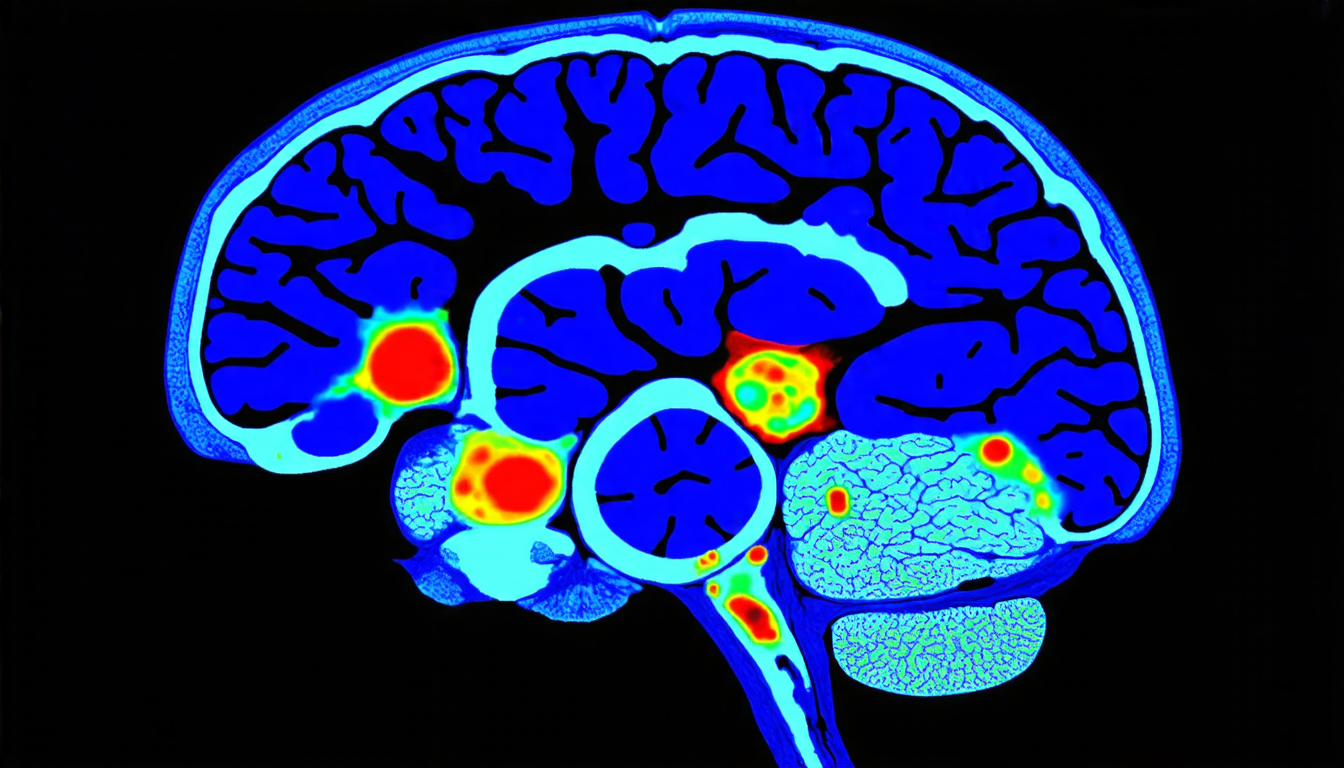
A novel deep learning approach has been developed for classifying brain tumors using MRI images, boasting impressive accuracy and efficiency. The model’s architecture combines advanced techniques such as separable convolutions and squeeze-and-excitation blocks to enhance feature extraction and model generalization.
The team behind the research utilized a composite dataset comprising 7,023 MRI images of the human brain, classified into four categories: glioma, meningioma, no tumor, and pituitary. After rigorous preprocessing, including resizing and normalization, the model was trained on the dataset using a combination of convolutional and fully connected layers.
The key innovation lies in the incorporation of separable convolutions, which significantly reduce the number of parameters required while maintaining high accuracy. This is achieved by splitting the standard convolution operation into depthwise and pointwise convolutions, allowing the model to capture complex patterns more efficiently.
Additionally, squeeze-and-excitation blocks are used to recalibrate channel-wise feature responses, enabling the model to focus on the most relevant features and improve its overall performance. The architecture also employs batch normalization and dropout regularization techniques to stabilize the learning process and prevent overfitting.
The results demonstrate a significant improvement in brain tumor classification accuracy compared to existing models. The proposed model achieved a validation accuracy of 99.22% and a test accuracy of 98.44%, outperforming other approaches by approximately 0.5% to 1.0% across various metrics.
Furthermore, the model’s performance was evaluated on a test set comprising 1,311 images, yielding a remarkable test loss of 0.2829 and a test accuracy of 98.44%. These results underscore the effectiveness of the proposed approach in accurately classifying brain tumors from MRI images.
The implications of this research are significant, as accurate diagnosis and classification of brain tumors can lead to improved patient outcomes and more effective treatment planning. The model’s ability to generalize well across different datasets and tumor types further solidifies its potential for real-world applications.
While the study’s results are impressive, there is still room for improvement. Future work could involve expanding the dataset to include more diverse MRI images, exploring more sophisticated architectures, or incorporating multi-modal data to enhance model performance.
Overall, this novel deep learning approach has the potential to revolutionize brain tumor classification and diagnosis, offering a powerful tool for medical professionals to accurately diagnose and treat patients with brain tumors.
Cite this article: “Deep Learning Model for Accurate Brain Tumor Classification from MRI Images”, The Science Archive, 2025.
Brain Tumor Classification, Mri Images, Deep Learning, Convolutional Neural Networks, Separable Convolutions, Squeeze-And-Excitation Blocks, Image Processing, Medical Imaging, Tumor Diagnosis, Machine Learning.





