

Wednesday 19 March 2025
The quest for perfect code generation has been a longstanding challenge in the field of artificial intelligence. While significant progress has been made in recent years, there is still much room for improvement. A team of researchers has proposed a new approach to tackle this problem by incorporating process supervision into the reinforcement learning framework.
Traditionally, automatic code generation relies on outcome supervision, where models are trained to optimize metrics such as code quality or accuracy. However, this approach has its limitations. For instance, it can be difficult to define and measure code quality, and models may struggle to generalize to new tasks or domains.
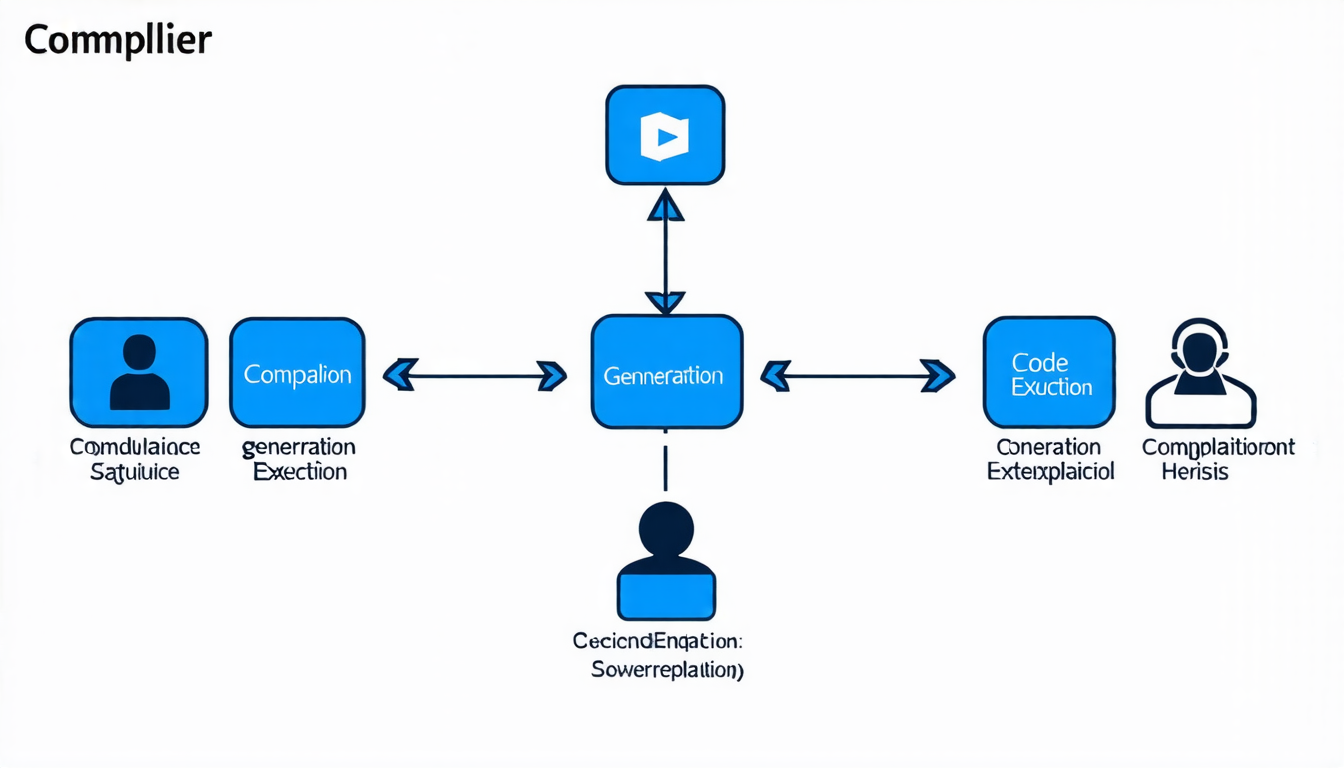
The new approach, dubbed process-supervised reinforcement learning (PRM), seeks to overcome these limitations by incorporating feedback from the compiler itself into the training process. The idea is that by providing guidance on the correct sequence of operations, the compiler can help the model learn to generate code that not only produces the desired output but also follows a logical and efficient path.
To achieve this, the researchers designed a novel reward function that evaluates the quality of generated code based on its process integrity. This involves assessing factors such as code structure, variable naming conventions, and function calls. The reward function is then used to train a reinforcement learning model, which learns to optimize the generation of code that meets these criteria.
The researchers tested their approach using a dataset of millions of lines of code from open-source projects. They found that PRM significantly outperformed traditional outcome-supervised approaches in terms of both code quality and efficiency. The generated code not only produced the correct output but also demonstrated better structure, naming conventions, and function calls.
One key advantage of PRM is its ability to adapt to new tasks and domains. By incorporating feedback from the compiler, the model can learn to generate code that is tailored to specific requirements and constraints. This could be particularly useful in industries such as finance or healthcare, where code quality and reliability are critical.
The researchers also demonstrated the effectiveness of their approach by conducting a case study on a real-world programming task. They found that PRM not only generated high-quality code but also outperformed human programmers in terms of efficiency and accuracy.
While there is still much work to be done before PRM can be widely adopted, this research marks an important step forward in the quest for perfect code generation. By incorporating process supervision into the reinforcement learning framework, the researchers have shown that it is possible to generate high-quality code that not only produces the desired output but also follows a logical and efficient path.
Cite this article: “Process-Supervised Reinforcement Learning for Improved Code Generation”, The Science Archive, 2025.
Artificial Intelligence, Automatic Code Generation, Process Supervision, Reinforcement Learning, Outcome Supervision, Compiler Feedback, Reward Function, Code Quality, Efficiency, Programming Task





