

Wednesday 19 March 2025
The quest for efficient optimization in dynamic environments has long been a challenge for researchers and engineers. In an effort to tackle this complex problem, scientists have developed a new approach that combines graph neural networks with decision transformers to create GNN- DT.
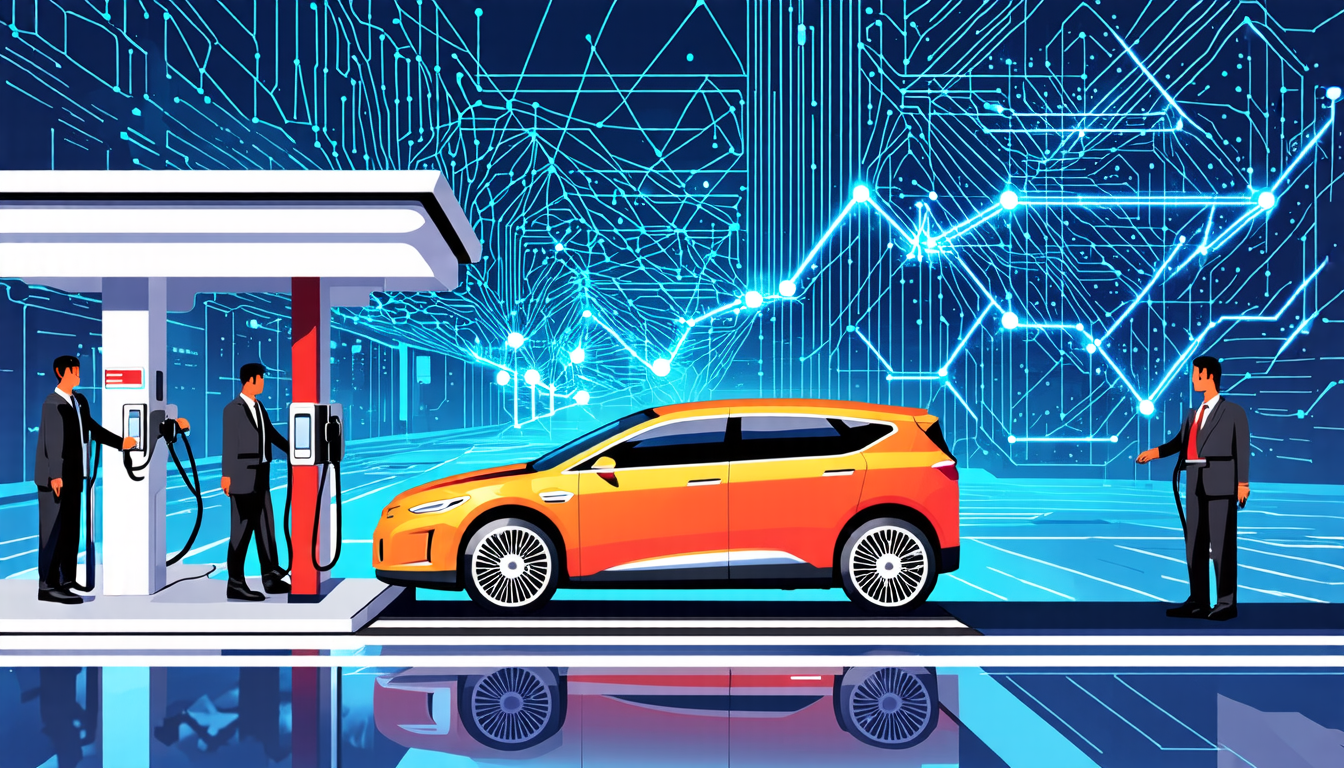
GNN-DT is designed to optimize the charging of electric vehicles (EVs) in real-time, taking into account factors such as electricity prices, battery capacity, and charging speeds. The system uses data from previous charging sessions to learn how to make decisions about when and where to charge EVs, minimizing energy consumption and costs.
The key innovation behind GNN-DT is its ability to handle dynamic environments, where the optimization landscape continuously evolves. Traditional methods struggle with this challenge, as they require accurate knowledge of future events or rely on complex mathematical models that are difficult to implement in real-time.
GNN-DT addresses this issue by using graph neural networks (GNNs) to learn patterns and relationships within the data. GNNs have been shown to be highly effective in modeling complex systems and predicting outcomes, making them an ideal choice for this application.
The decision transformer component of GNN-DT is responsible for generating action sequences that optimize the charging process. This is achieved through a series of transformations, where each transformation takes into account the current state of the system and generates a set of possible actions.
One of the most significant advantages of GNN-DT is its ability to adapt to changing conditions in real-time. For example, if electricity prices fluctuate, the system can adjust its charging strategy accordingly, minimizing energy costs and reducing the strain on the grid.
The results of the study demonstrate the effectiveness of GNN-DT in optimizing EV charging operations. The system was able to achieve a user satisfaction rate of 99.3%, with an average power violation of just 21.7 kW. This is a significant improvement over traditional methods, which often struggle to maintain optimal performance.
The implications of this research are far-reaching, with potential applications in areas such as smart grids, logistics optimization, and autonomous systems. As the world continues to evolve towards a more sustainable future, innovative solutions like GNN-DT will play an increasingly important role in helping us get there.
In a world where energy efficiency is becoming increasingly critical, the development of GNN-DT represents a major step forward in our ability to optimize complex systems and reduce waste.
Cite this article: “Optimizing Electric Vehicle Charging with Graph Neural Networks and Decision Transformers”, The Science Archive, 2025.
Electric Vehicles, Graph Neural Networks, Decision Transformers, Optimization, Charging, Real-Time, Energy Efficiency, Smart Grids, Logistics, Sustainability





