

Wednesday 19 March 2025
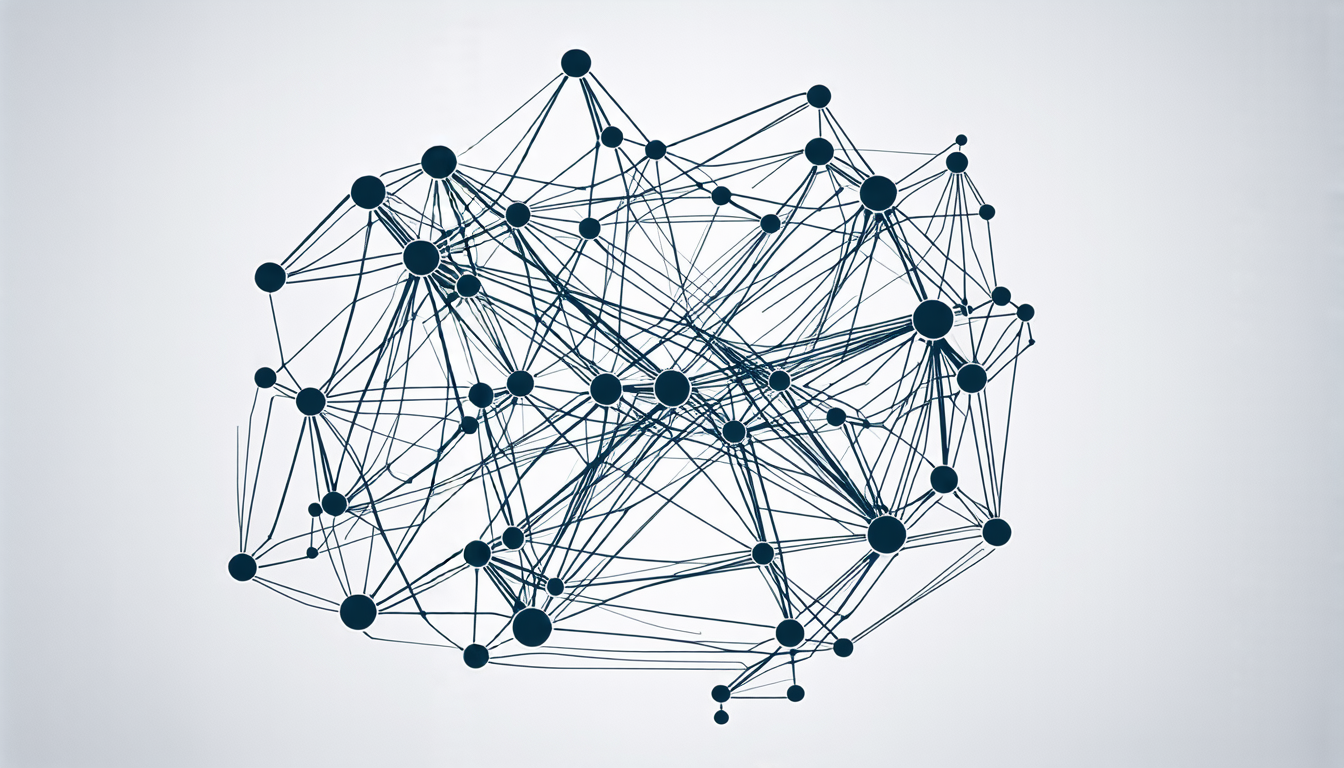
The study of concurrent systems and modal logics has long been a fascination for computer scientists and mathematicians alike. These systems, which can be thought of as complex networks of interacting components, are used to model and analyze various types of phenomena, from the behavior of physical systems to the workings of digital circuits.
In recent years, researchers have made significant progress in developing new tools and techniques for studying these systems. One of the key advances has been the development of universal coalgebra, a framework that allows scientists to abstract away many of the details of specific systems and focus on their underlying structure.
Universal coalgebra is based on the idea that certain types of systems can be characterized by their behavior under various operations, such as composition and iteration. By studying these operations, researchers can gain insights into the properties and behaviors of the systems themselves.
One of the key benefits of universal coalgebra is that it allows researchers to develop general theories that apply across a wide range of different systems. This has been particularly useful in the study of concurrent systems, where traditional approaches often rely on specific assumptions about the behavior of individual components.
In recent work, researchers have used universal coalgebra to develop new notions of simulation and bisimulation for concurrent systems. These concepts are important because they allow scientists to compare and analyze different systems, even if they are very complex or have many interacting components.
The researchers’ approach is based on the idea that two systems are considered equivalent if they can be transformed into one another through a series of simple operations, such as composing or iterating over their individual components. By studying these transformations, scientists can gain insights into the properties and behaviors of the systems themselves.
In addition to its applications in concurrent systems, universal coalgebra has also been used to study other types of complex systems, including probabilistic and weighted transition systems. These systems are important because they can be used to model and analyze a wide range of real-world phenomena, from the behavior of biological populations to the workings of financial markets.
The researchers’ work is part of a broader effort to develop new tools and techniques for studying complex systems. By developing more powerful and flexible frameworks like universal coalgebra, scientists hope to gain deeper insights into these systems and develop new methods for analyzing and predicting their behavior.
Overall, the study of universal coalgebra and its applications in concurrent systems is an exciting area of research that has the potential to lead to major advances in our understanding of complex systems.
Cite this article: “Unlocking Insights: Universal Coalgebra and Complex Systems”, The Science Archive, 2025.
Concurrent Systems, Modal Logics, Universal Coalgebra, Complex Networks, Interacting Components, Physical Systems, Digital Circuits, Simulation, Bisimulation, Probabilistic Transition Systems





