

Wednesday 19 March 2025
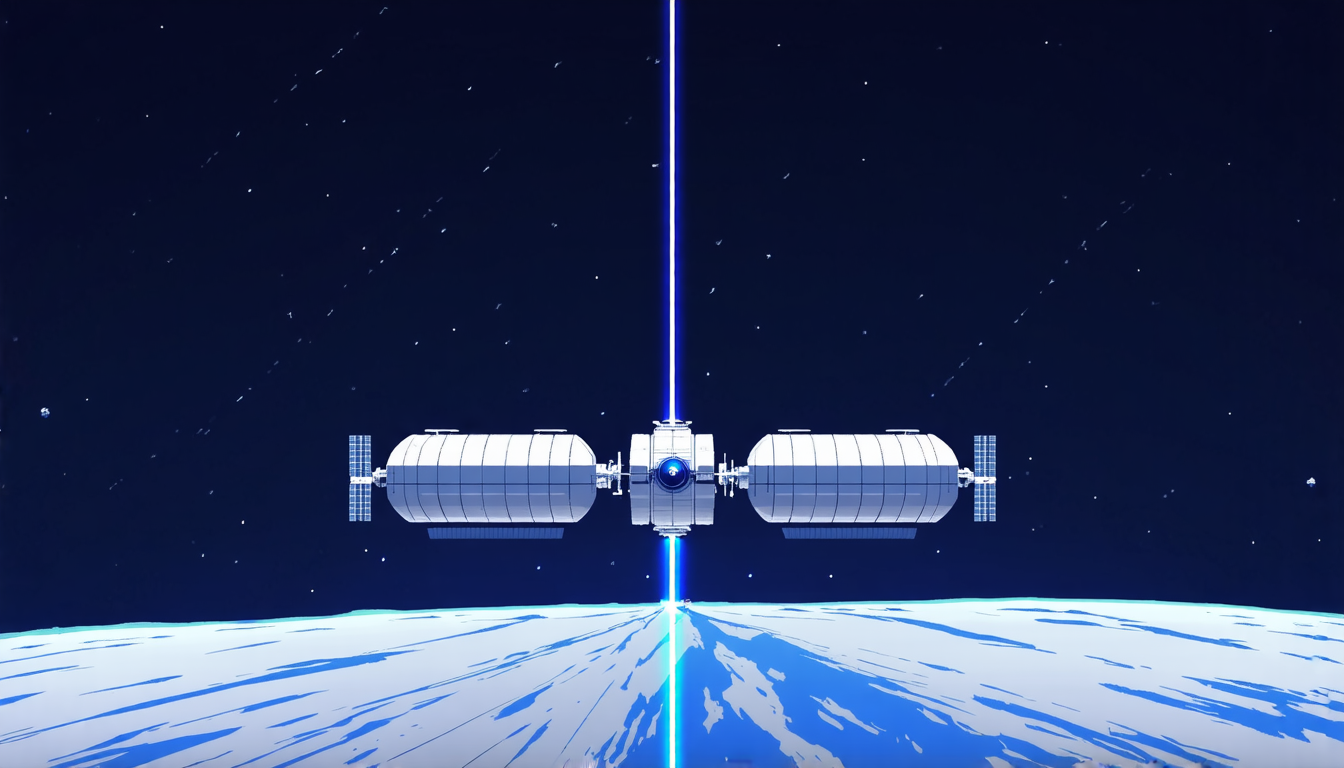
The Laser Interferometer Space Antenna (LISA) is a space-based gravitational wave detector that’s been in development for years, and scientists are working tirelessly to ensure its success. One of the key challenges they’re facing is called tilt-to-length coupling noise, or TTL noise for short.
TTL noise occurs when the misalignment of the test masses in LISA’s interferometer causes unwanted signals that interfere with the gravitational wave detection process. It’s a bit like trying to listen to a faint whisper in a noisy room – the background noise can drown out the signal you’re looking for.
To combat this problem, researchers have been exploring different methods for calculating the phase signals used to measure the test masses’ positions. The two main contenders are the complex sum and the averaged phase, both of which aim to reduce TTL noise by minimizing the impact of misalignments.
The team behind LISA has simulated the performance of these two signal formulations using three different methods, with cross-checked results to ensure accuracy. What they found was that the averaged phase method consistently outperforms the complex sum in reducing TTL noise, regardless of the type of misalignment or the level of angular jitter (which is a measure of how much the spacecraft moves).
But what does this mean for LISA’s chances of detecting gravitational waves? In short, it means that the team can now focus on developing more effective strategies to minimize TTL noise and improve the overall sensitivity of the detector. This could involve tweaking the design of the test masses themselves, or perhaps implementing new techniques for compensating for misalignments.
The implications are significant – LISA is poised to detect gravitational waves in the millihertz range, which is a region that’s still largely unexplored. By reducing TTL noise and improving sensitivity, scientists will be able to study these waves with unprecedented precision, gaining valuable insights into the behavior of black holes and other extreme cosmic phenomena.
The researchers have also tested the non-linear TTL contributions in LISA’s test mass interferometer, finding that they are negligible for the current expected levels of angular jitter. This is a crucial result, as it means that the team can focus on optimizing the detector without worrying about non-linear effects causing problems down the line.
In all, this study represents an important step forward in the development of LISA and its ability to detect gravitational waves. By refining their methods for calculating phase signals and minimizing TTL noise, scientists are one step closer to unlocking the secrets of the universe.
Cite this article: “Advances in LISAs Gravitational Wave Detection: Minimizing TTL Noise”, The Science Archive, 2025.
Lisa, Gravitational Waves, Tilt-To-Length Coupling Noise, Ttl Noise, Interferometer, Test Masses, Phase Signals, Angular Jitter, Black Holes, Millihertz Range





