

Wednesday 19 March 2025
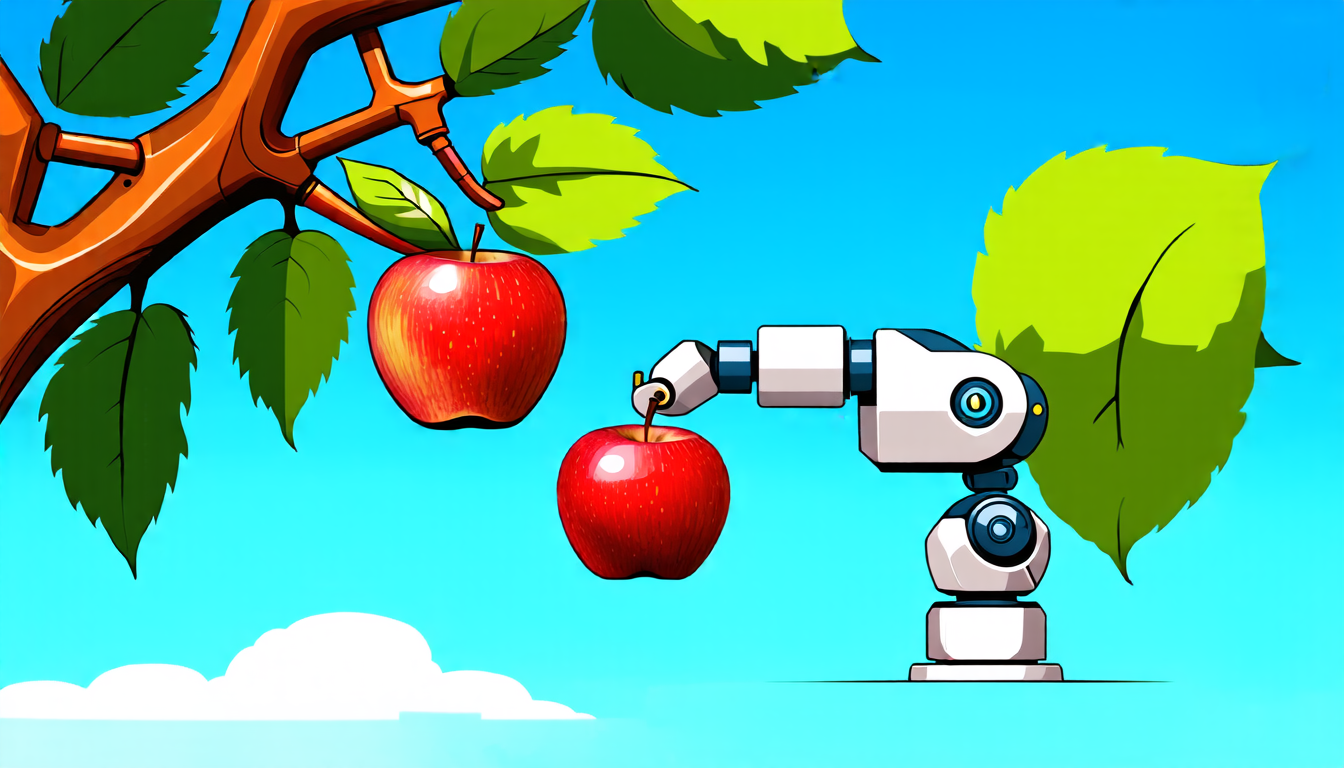
A team of researchers has made a significant breakthrough in developing an innovative system for selectively harvesting apples based on their ripeness and size. The approach uses advanced computer vision techniques, deep learning algorithms, and a robotic arm to identify and pick only the most suitable fruits.
The system is designed to work within apple orchards, where it can accurately detect the ripeness of each fruit using a combination of color, shape, and texture analysis. This information is then used to determine which fruits are ready for harvest, allowing the robot to selectively collect them while leaving unripe or undersized apples on the tree.
The researchers used a large dataset of Fuji apple images to train their deep learning model, which was able to accurately classify fruits as ripe or unripe with an impressive 95% accuracy rate. The model also proved effective in estimating fruit size, with an average error margin of just 1 millimeter.
To put this technology into practice, the researchers designed a robotic arm that can move along a tree row and use its vision system to detect and pick apples. The arm is equipped with a vacuum-based harvesting mechanism that gently removes the fruit from the tree without damaging it.
The potential benefits of this system are significant. By selectively harvesting only ripe and suitable fruits, farmers can reduce waste and increase their overall yield. This approach also eliminates the need for manual sorting and grading, which can be time-consuming and labor-intensive.
In addition to its practical applications, this technology has the potential to transform our understanding of fruit ripening and development. By analyzing the visual characteristics of apples at different stages of maturity, scientists may uncover new insights into the underlying biology of fruit growth and senescence.
The researchers plan to continue refining their system through further testing and experimentation. They hope to integrate additional sensors and features, such as temperature and humidity monitoring, to provide even more accurate assessments of apple ripeness and quality.
As this technology continues to evolve, it may pave the way for the development of similar systems for other types of fruits and crops. The potential impact on global food production and supply chains could be significant, with farmers and consumers alike benefiting from increased efficiency, reduced waste, and improved fruit quality.
Cite this article: “Automated Apple Harvesting System Uses AI-Powered Vision to Selectively Pick Ripe Fruits”, The Science Archive, 2025.
Apple Harvesting, Computer Vision, Deep Learning, Robotic Arm, Fruit Ripeness, Size Estimation, Selective Harvesting, Precision Agriculture, Agricultural Technology, Food Production.





