

Wednesday 19 March 2025
For years, researchers have been trying to teach machines how to navigate complex environments without bumping into things. It’s a challenge that has stumped even the most advanced artificial intelligence systems – until now.
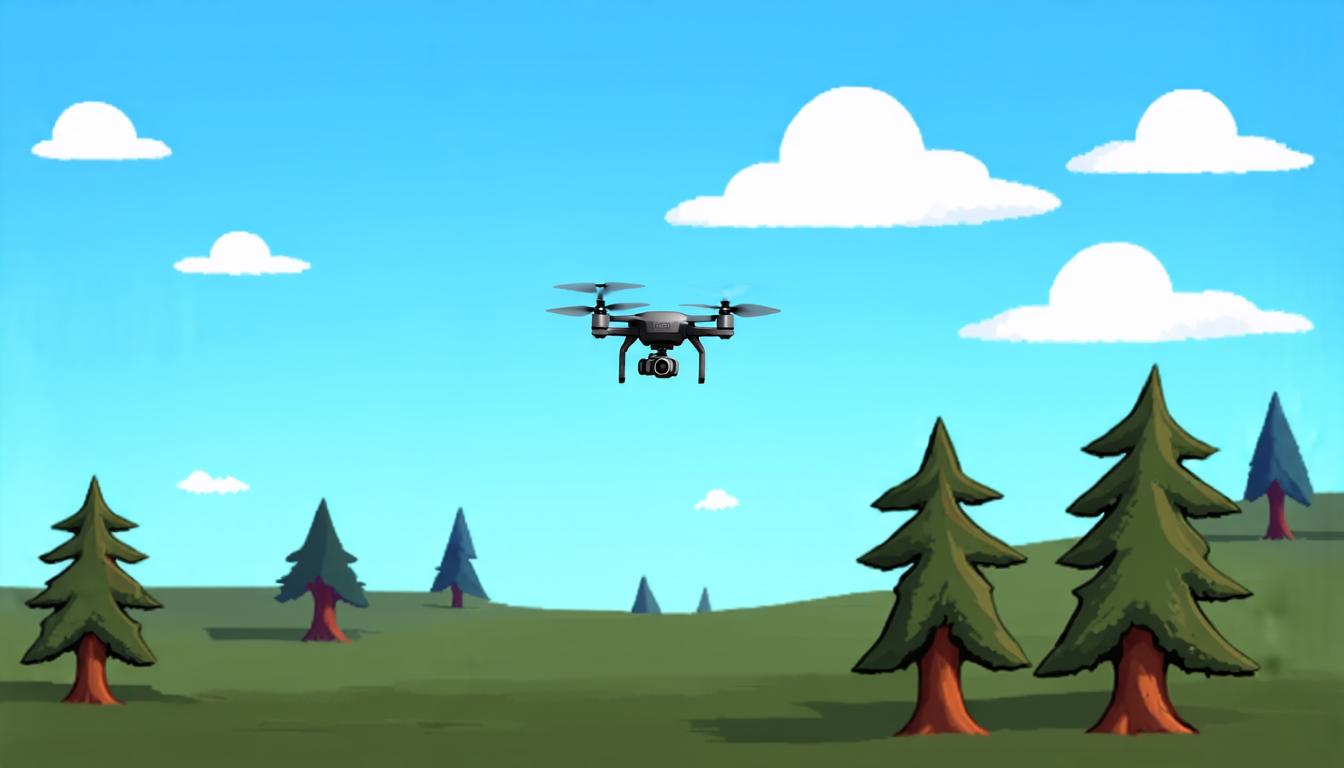
A team of scientists has made a breakthrough in developing an autonomous drone that can fly through cluttered spaces with ease. The key innovation lies in a new algorithm that allows the drone to learn from its mistakes and adapt to changing environments.
The researchers used a type of machine learning called inverse reinforcement learning, which is like teaching a child how to ride a bike by showing them how to avoid obstacles rather than telling them exactly what to do. This approach has been shown to be more effective in complex situations where traditional algorithms struggle.
The team trained their drone using a combination of simulations and real-world experiments. They created a virtual environment that mimicked the challenges of flying through a forest or urban landscape, complete with obstacles like trees and buildings. The drone was then tasked with navigating this space without crashing.
To make things more realistic, the researchers added random elements to the simulation, such as wind and uneven terrain. This helped the drone learn how to adapt to unexpected situations and make adjustments on the fly.
The results were impressive – the drone was able to navigate through even the most complex environments with ease, avoiding obstacles with precision. The team’s algorithm allowed it to learn from its mistakes and adjust its course in real-time, making it an effective solution for a wide range of applications.
One of the most exciting potential uses of this technology is in search and rescue missions. Imagine being able to send a drone into a disaster zone and having it quickly locate survivors without getting stuck or crashing into debris. This could be a game-changer for emergency responders, allowing them to save more lives and respond faster to crises.
The researchers are already working on refining their algorithm and exploring new applications for the technology. With its potential uses ranging from search and rescue to environmental monitoring, this breakthrough has the potential to make a real difference in our world.
Cite this article: “Autonomous Drone Breakthrough: Navigating Complex Environments with Ease”, The Science Archive, 2025.
Artificial Intelligence, Autonomous Drone, Machine Learning, Inverse Reinforcement Learning, Obstacle Avoidance, Navigation, Simulation, Search And Rescue, Environmental Monitoring, Robotics





