

Wednesday 19 March 2025
Scientists have been working on developing a new framework that combines artificial intelligence, knowledge graphs, and human feedback to help robots learn new tasks more efficiently. The goal is to create assistive agents that can interact and collaborate with humans in various application domains.
The framework uses large language models (LLMs) to generate action sequences for completing tasks. These LLMs are trained on vast amounts of text data and can understand natural language instructions. However, they often lack the domain-specific knowledge required to complete complex tasks.
To address this limitation, the researchers have developed a knowledge graph (KG) that contains prior knowledge about objects, object attributes, and action capabilities. This KG is used to refine the LLM’s predictions and ensure that the robot takes into account specific task requirements.
When faced with an unfamiliar task, the robot first generates an initial action sequence using the LLM. If this sequence fails or produces unexpected outcomes, the robot solicits human feedback to correct errors and refine its knowledge. This process is repeated until the task is completed successfully.
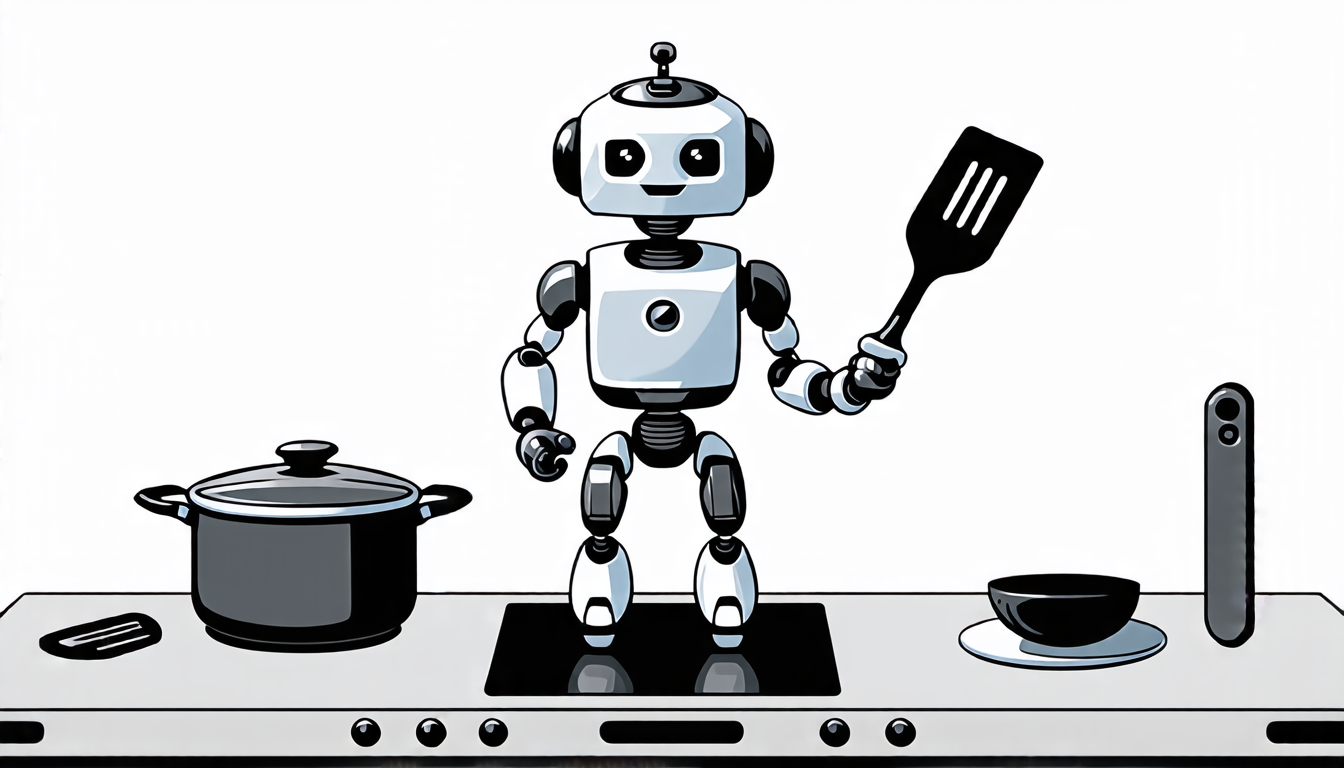
The researchers have tested their framework in two simulated domains: cooking and cleaning. In both cases, they found that the combination of LLMs and KGs significantly improved task completion rates compared to using only one or the other. The human feedback component also played a crucial role in refining the robot’s knowledge and adapting to new tasks.
One of the key advantages of this framework is its ability to adapt to new classes of tasks without extensive tuning or comprehensive domain-specific knowledge. This makes it potentially useful for applications where robots need to learn complex tasks quickly, such as in search and rescue scenarios or industrial manufacturing settings.
The researchers are now working on refining their framework by incorporating more advanced LLMs and KGs. They also plan to test the system in real-world environments, where the robot will interact with humans and other agents to complete tasks.
Overall, this research has the potential to revolutionize the way robots learn new tasks and interact with humans. By combining the strengths of AI, knowledge graphs, and human feedback, scientists may be able to create more efficient and effective assistive agents that can help us in a wide range of applications.
Cite this article: “Robots Learn New Tasks with AI-Powered Assistive Agents”, The Science Archive, 2025.
Artificial Intelligence, Knowledge Graphs, Human Feedback, Robots, Assistive Agents, Task Completion, Language Models, Domain-Specific Knowledge, Adaptive Learning, Search And Rescue.





