

Wednesday 19 March 2025
In a finding that sheds new light on the formation of giant planets, scientists have discovered that binary star systems may be more conducive to the creation of these massive worlds than previously thought.
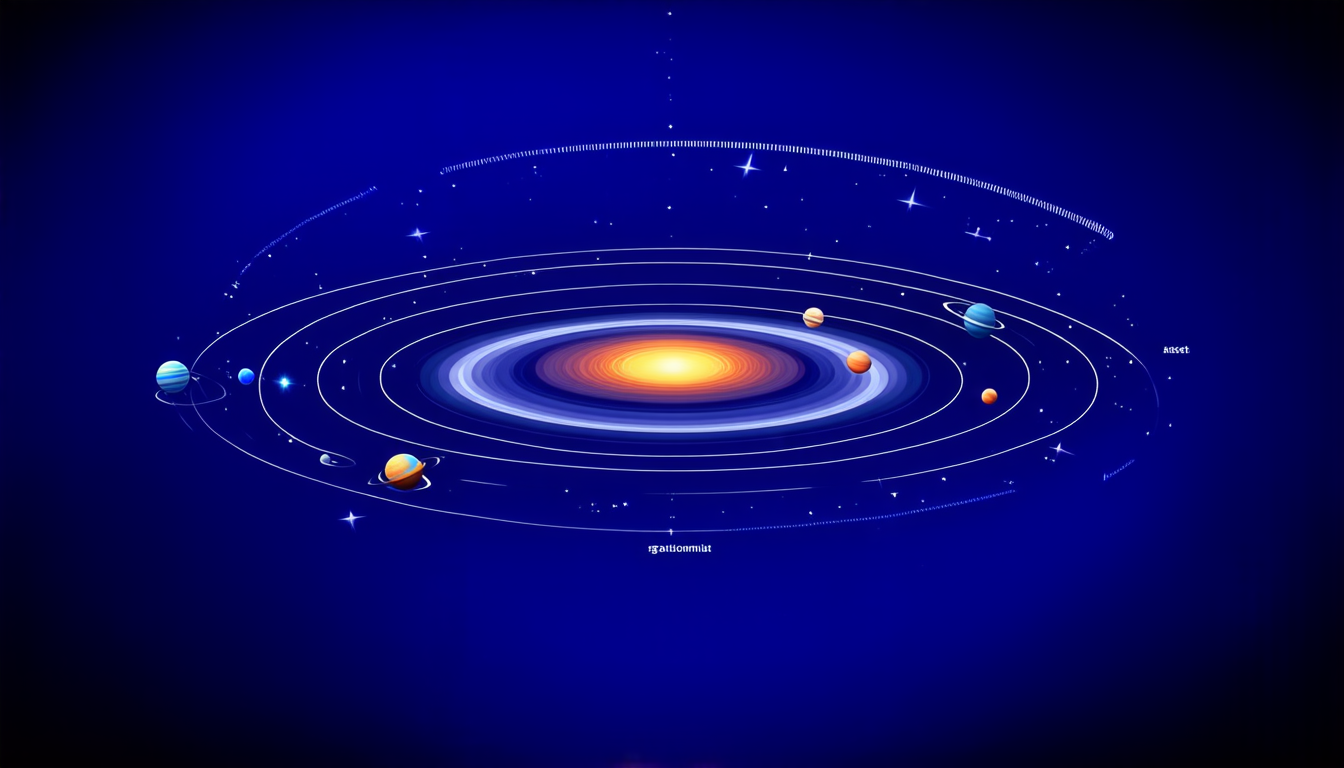
The research suggests that when two stars are closely orbiting each other in a binary system, the gravitational forces at play can create a unique environment for the formation of gas giants. In particular, the study found that the presence of a large circumbinary disc, which is a disk of gas and dust surrounding the binary star system, can provide the necessary building blocks for giant planets to form.
The researchers used computer simulations to model the behavior of these systems, taking into account factors such as the mass of the stars, their separation, and the properties of the circumbinary disc. They found that when the conditions are right, the gravitational forces between the two stars can create a region known as the tidal gap, where the density of gas and dust is high enough to allow for the formation of planetesimals – small bodies that eventually coalesce into planets.
The study suggests that these planetesimals can then migrate inward through the circumbinary disc, driven by the gravitational forces of the stars. This migration can lead to the formation of giant planets, potentially even those as massive as Jupiter or Saturn.
One of the key findings of the research is that the presence of a large circumbinary disc can extend the lifetime of the circumprimary disc – the disk of gas and dust surrounding one of the two stars. This increased lifespan allows for more time for planetesimals to form and migrate inward, increasing the chances of giant planet formation.
The results have significant implications for our understanding of how binary star systems give rise to planetary populations. In particular, they suggest that close binaries may be more likely to host gas giants than previously thought, which could help explain why some exoplanet systems appear to have multiple gas giants orbiting their parent stars.
The study also highlights the importance of considering the role of circumbinary discs in the formation of giant planets. While these disks are often overlooked in favor of more direct mechanisms, such as core accretion or disk instability, they may play a crucial role in shaping the planetary population of binary star systems.
Overall, this research provides new insights into the complex interplay between stars and their surrounding environments, shedding light on the intricate dance that leads to the creation of giant planets.
Cite this article: “Binary Star Systems May Foster Giant Planets”, The Science Archive, 2025.
Binary Star Systems, Giant Planets, Circumbinary Discs, Planetesimals, Gravitational Forces, Tidal Gap, Migration, Jupiter, Saturn, Exoplanet Systems
Reference: Francesco Marzari, Gennaro D’Angelo, “Dust supply to slose binary systems” (2025).





