

Wednesday 19 March 2025
Scientists have been fascinated by the intricate patterns and structures that emerge in complex systems, from the swirling shapes of clouds to the vibrant colors of butterfly wings. In a recent study, researchers have shed new light on the formation of these mesmerizing patterns in a type of optical resonator.
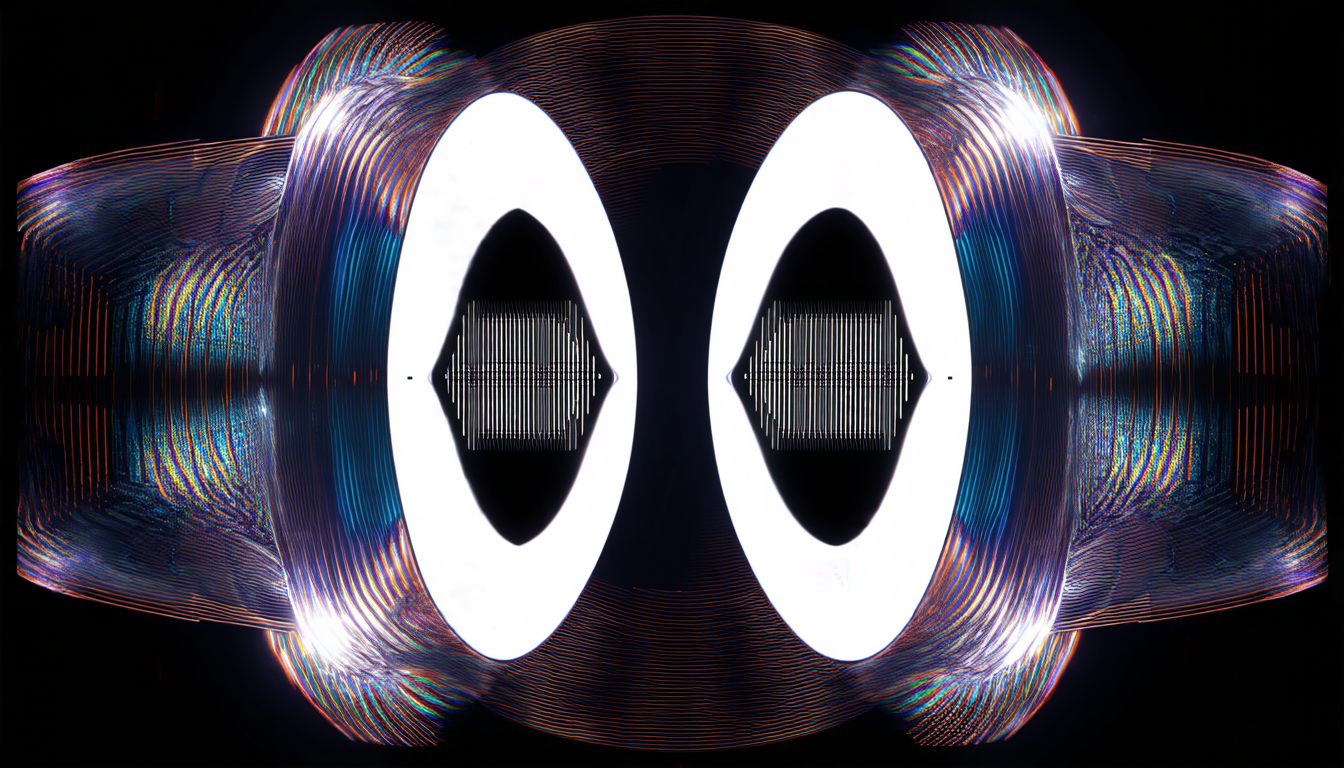
Optical resonators are devices that trap and amplify light, often used in applications such as telecommunications and spectroscopy. One common type is the Fabry-Perot resonator, which consists of two mirrors facing each other with a gap between them. When light enters this cavity, it bounces back and forth, creating an intense field that can be harnessed for various purposes.
Researchers have long known that when the conditions are just right, these optical resonators can produce intricate patterns, such as frequency combs – a series of closely spaced spectral lines. These combs are prized for their ability to generate precise frequencies, making them useful for applications like spectroscopy and precision timing.
But how do these patterns form? To answer this question, scientists turned to the Lugiato-Lefever equation, a mathematical model that describes the behavior of light in optical resonators. By solving this equation using advanced numerical methods, researchers were able to simulate the formation of frequency combs in Fabry-Perot resonators.
The results were stunning. The simulations revealed that the combs are not just random patterns, but rather emerge from a complex interplay between the cavity’s geometry, the properties of the light, and the resonator’s nonlinear behavior. In other words, the patterns arise from the intricate dance of light and matter within the resonator.
To understand how this works, consider a Fabry-Perot resonator as a kind of optical drum. When light enters the cavity, it sets off a series of vibrations that can grow in intensity over time. As these vibrations interact with each other, they begin to form patterns – in this case, frequency combs.
But what’s truly remarkable is that these patterns can be controlled and tuned by adjusting the resonator’s parameters. By tweaking the distance between the mirrors, for example, scientists can manipulate the spacing of the spectral lines within the comb. This precision control opens up new possibilities for applications like spectroscopy, where precise frequencies are essential.
The study’s findings not only deepen our understanding of optical resonators but also pave the way for new innovations in fields like telecommunications and precision timing.
Cite this article: “Unraveling the Mysteries of Optical Resonators: A Study on Pattern Formation and Control”, The Science Archive, 2025.
Optical Resonators, Frequency Combs, Fabry-Perot Resonator, Lugiato-Lefever Equation, Numerical Methods, Nonlinear Behavior, Geometry, Spectroscopy, Precision Timing, Telecommunications.





