

Wednesday 19 March 2025
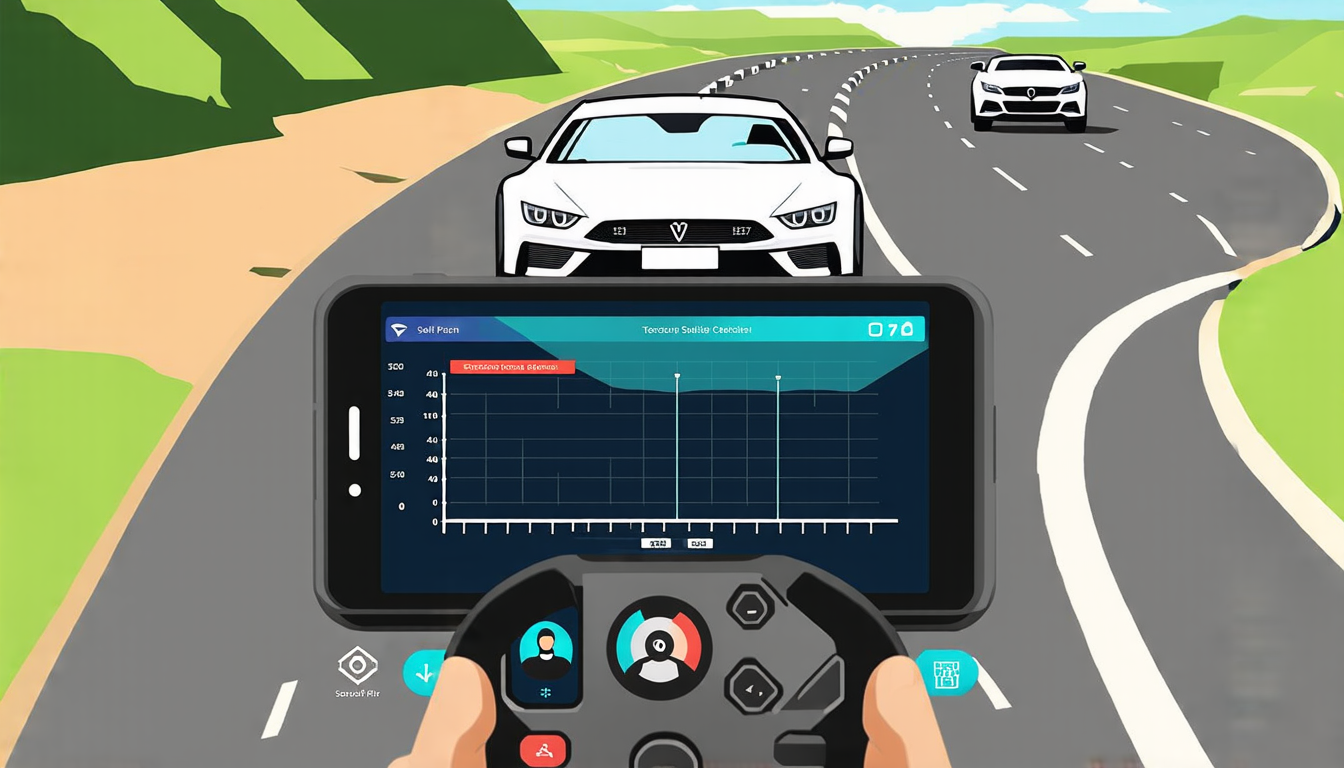
A team of researchers has made a significant breakthrough in the development of autonomous vehicles, introducing a novel approach that enables human operators to remotely assist self-driving cars in complex scenarios.
The system, which uses arbitration graphs to integrate teleoperation and automated driving, allows for seamless collaboration between humans and machines. By modifying planner constraints, remote operators can extend the operational design domain of the vehicle at runtime, enabling it to navigate situations that would otherwise require human intervention.
In simulations, the researchers demonstrated the effectiveness of their approach by resolving scenarios such as false-positive obstacles and blocked lanes. The system’s ability to adapt to changing environments and ensure safe trajectories has significant implications for the development of autonomous vehicles.
One of the key challenges in deploying autonomous vehicles is addressing situations where the vehicle is unable to find a valid solution on its own. This can occur when the environment is complex or unpredictable, or when the vehicle encounters unexpected obstacles. Teleoperation systems, which allow humans to remotely control or assist autonomous vehicles, have been proposed as a solution to this problem.
However, traditional teleoperation approaches are limited by their reliance on direct human intervention. By contrast, the arbitration graph approach allows for indirect human involvement, enabling operators to modify planner constraints rather than directly controlling the vehicle’s actions.
This subtle distinction has significant advantages. For one, it reduces the workload on remote operators, who can focus on providing high-level guidance rather than making split-second decisions about steering and acceleration. It also improves safety by minimizing the risk of human error and reducing the need for complex communication between humans and machines.
The researchers’ approach is based on a hierarchical decision-making framework that integrates arbitration graphs with existing planning algorithms. The system’s core component, the teleoperation behavior component, is responsible for modifying planner constraints in response to remote operator input.
Through simulation, the team demonstrated the effectiveness of their approach by resolving scenarios such as false-positive obstacles and blocked lanes. In each scenario, the remote operator was able to modify planner constraints to extend the operational design domain of the vehicle, enabling it to navigate the situation safely.
The implications of this research are significant. By enabling humans to remotely assist autonomous vehicles in complex scenarios, the system has the potential to improve safety, reduce workload on remote operators, and expand the capabilities of self-driving cars.
As researchers continue to develop autonomous vehicles, the need for effective teleoperation systems will only grow more pressing.
Cite this article: “Remote Human Assistance Enables Autonomous Vehicles to Navigate Complex Scenarios”, The Science Archive, 2025.
Autonomous Vehicles, Teleoperation, Self-Driving Cars, Arbitration Graphs, Planner Constraints, Remote Operators, Human-Machine Collaboration, Simulation, Operational Design Domain, Safety.





