

Wednesday 19 March 2025
For decades, scientists have been searching for materials that can exhibit multiple types of conductivity at the same time. This phenomenon, known as direction-dependent conduction polarity (DDCP), has long been considered a holy grail in the field of condensed matter physics.
Recently, researchers made a significant breakthrough in this area by discovering a material that can exhibit DDCP. The material, called chromium antimonide (CrSb), is a type of semiconductor that can be tuned to have different types of conductivity depending on the direction of the current flow.
The discovery of CrSb was made possible through the use of advanced computational techniques and experimental methods. Researchers used density functional theory (DFT) calculations to simulate the behavior of electrons in CrSb, and then verified their findings using experiments.
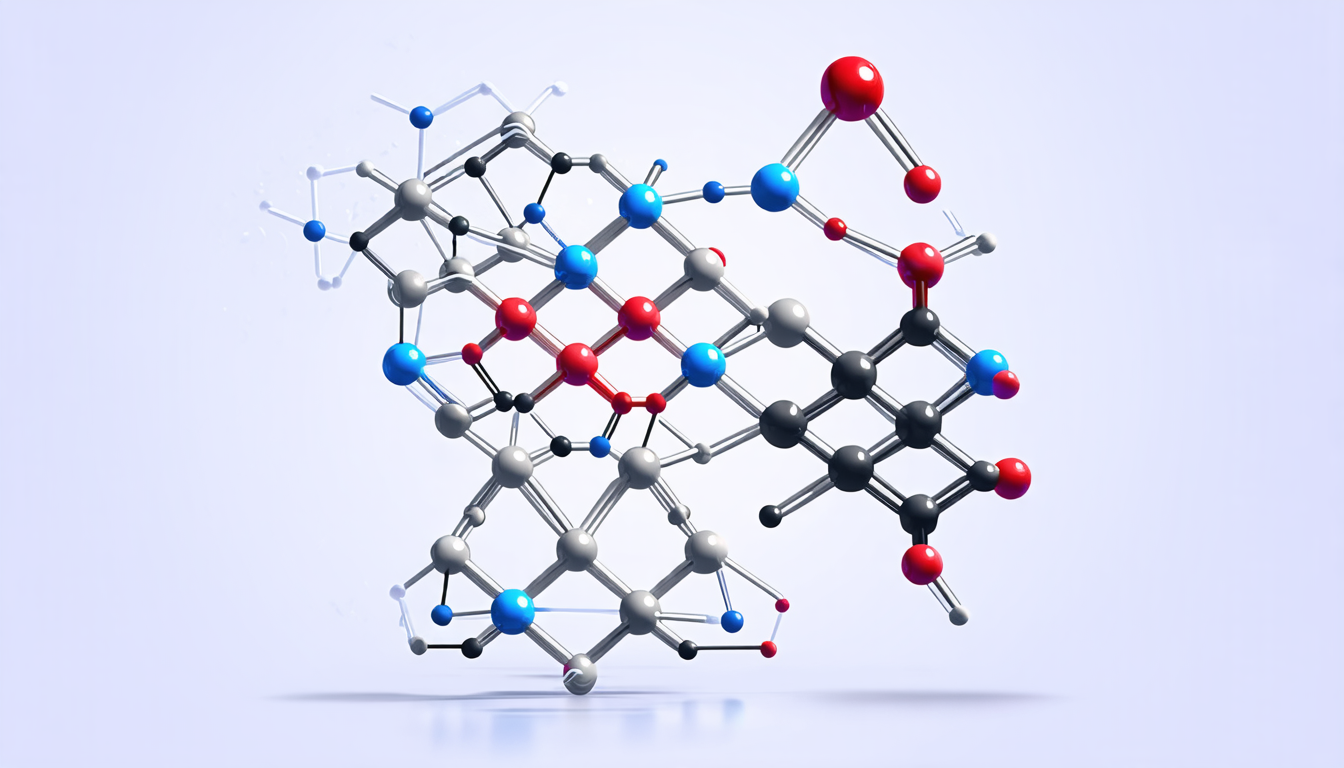
CrSb is a fascinating material because it has a unique crystal structure that allows it to exhibit multiple types of conductivity. The material’s crystal lattice is made up of layers of chromium and antimony atoms, which are arranged in a specific pattern.
When an electric current flows through CrSb, the electrons move through the material in a way that depends on the direction of the current flow. In one direction, the electrons behave like they are moving through a metal, while in another direction, they behave like they are moving through a semiconductor.
This ability to change its conductivity depending on the direction of the current flow makes CrSb an extremely useful material for a wide range of applications. For example, it could be used to create more efficient thermoelectric devices that can convert waste heat into electricity.
The discovery of CrSb has also opened up new avenues for research in the field of condensed matter physics. Scientists are now eager to study this material further and explore its properties in greater detail.
One of the most exciting aspects of CrSb is its potential to be used in the development of new types of electronic devices. For example, it could be used to create ultra-fast transistors that can process information more quickly than current devices.
The discovery of CrSb is a significant breakthrough in the field of condensed matter physics and has opened up new possibilities for research and application. It is an exciting time for scientists who are working on this material, as they continue to uncover its secrets and explore its potential uses.
Cite this article: “Breakthrough in Condensed Matter Physics: Discovery of Direction-Dependent Conduction Polarity Material CrSb”, The Science Archive, 2025.
Condensed Matter Physics, Direction-Dependent Conduction Polarity, Chromium Antimonide, Semiconductor, Conductivity, Crystal Structure, Thermoelectric Devices, Electronic Devices, Transistors, Density Functional Theory.





