

Thursday 20 March 2025
Scientists have made a significant breakthrough in understanding how large language models, like the ones used by chatbots and virtual assistants, can learn and reason about complex tasks. These AI systems are designed to understand and respond to human language, but they often struggle when faced with abstract concepts or nuanced instructions.
Researchers have developed a new approach that combines two different types of neural networks to create a more comprehensive model. The first network, called the Variational Autoencoder (VAE), is trained to compress complex information into a compact representation. This allows the AI system to focus on the most important aspects of the task and ignore irrelevant details.
The second network, called the Variational Inference Bot (VIB), is trained to generate instructions that can be followed by humans or other machines. By combining these two networks, scientists have created a model that can learn complex tasks through instruction-based training.
In one experiment, researchers tested their new approach on a dataset of 1600+ natural language processing tasks. They found that the AI system was able to generalize its knowledge to unseen tasks with remarkable accuracy. This means that once the AI has learned how to follow instructions for a particular task, it can apply that knowledge to similar tasks without additional training.
The implications of this research are significant. For example, it could enable chatbots and virtual assistants to understand more complex requests and provide more accurate responses. It could also allow humans to teach machines new skills by providing them with clear instructions, rather than relying on trial-and-error learning.
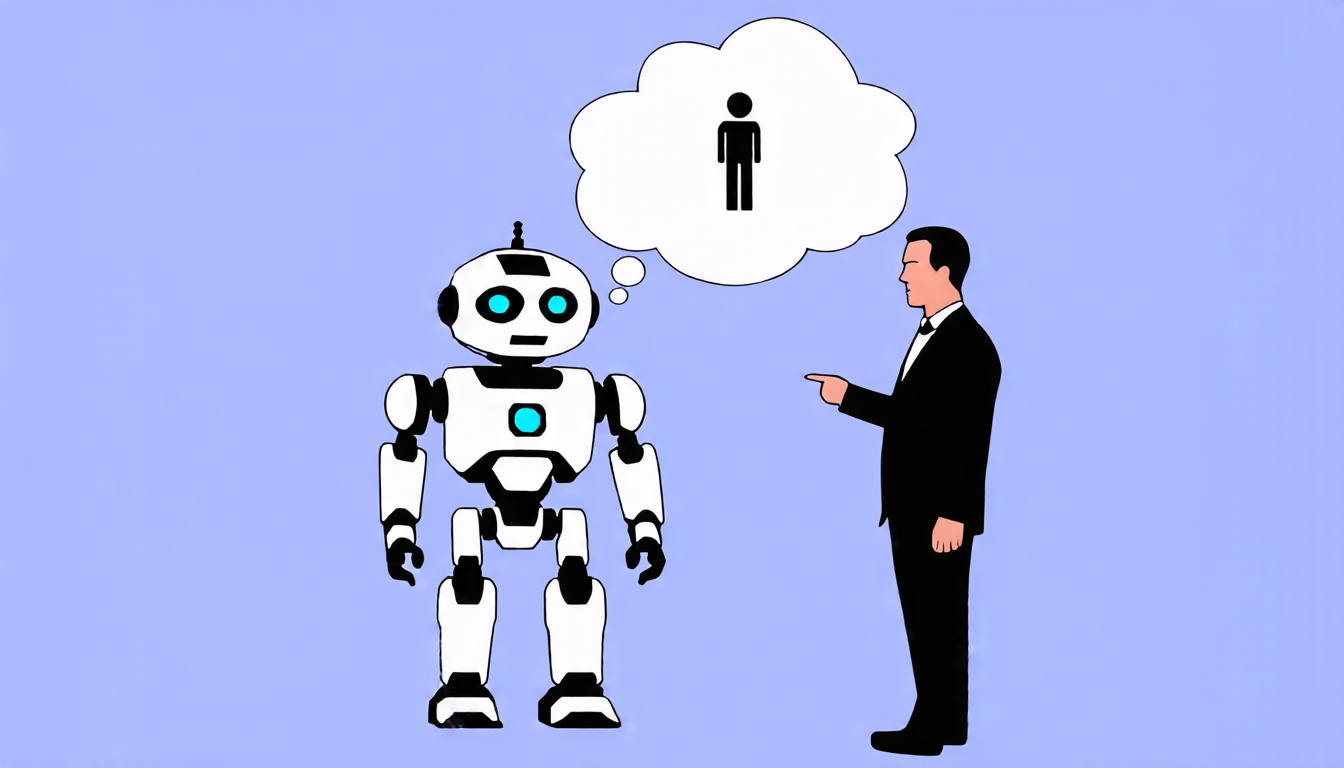
One of the most interesting aspects of this research is its potential to improve human-AI collaboration. By allowing AI systems to learn through instruction-based training, scientists hope to create machines that can work more effectively alongside humans. This could enable humans and machines to solve complex problems together, like diagnosing diseases or optimizing supply chains.
The researchers behind this study have also explored the limitations of their approach. They found that while the AI system was able to generalize its knowledge to unseen tasks, it still struggled with abstract concepts and nuanced instructions. This suggests that there is still much work to be done in developing AI systems that can understand complex human language.
Despite these challenges, the potential benefits of this research are clear. By enabling AI systems to learn through instruction-based training, scientists may have taken a significant step towards creating machines that can work more effectively alongside humans.
Cite this article: “Unlocking Complex Tasks with Instruction-Based Learning in AI Systems”, The Science Archive, 2025.
Large Language Models, Neural Networks, Variational Autoencoder, Variational Inference Bot, Instruction-Based Training, Natural Language Processing, Chatbots, Virtual Assistants, Human-Ai Collaboration, Machine Learning.





