

Thursday 20 March 2025
The world of cyber-physical energy systems is a complex web of interconnected components, where a single malicious attack can have far-reaching consequences for the grid and its users. In recent years, researchers have been working to develop more sophisticated models that can accurately simulate the impact of these attacks on the system as a whole.
One such approach has been developed by a team of researchers at the Digital Energy Fraunhofer FIT and IAEW at RWTH Aachen University. Their methodology involves using Semantic Web technologies, specifically SHACL, to create a graph model of the cyber-physical energy system. This model is then used to analyze the impact of different attack scenarios on the system.
The team’s approach begins by importing a pre-existing model of the power grid into their framework. This model is then augmented with additional information about the control infrastructure and functional actors, such as home energy management systems (HEMS) and smart appliances. The graph model is used to represent the relationships between these components and how they interact with one another.
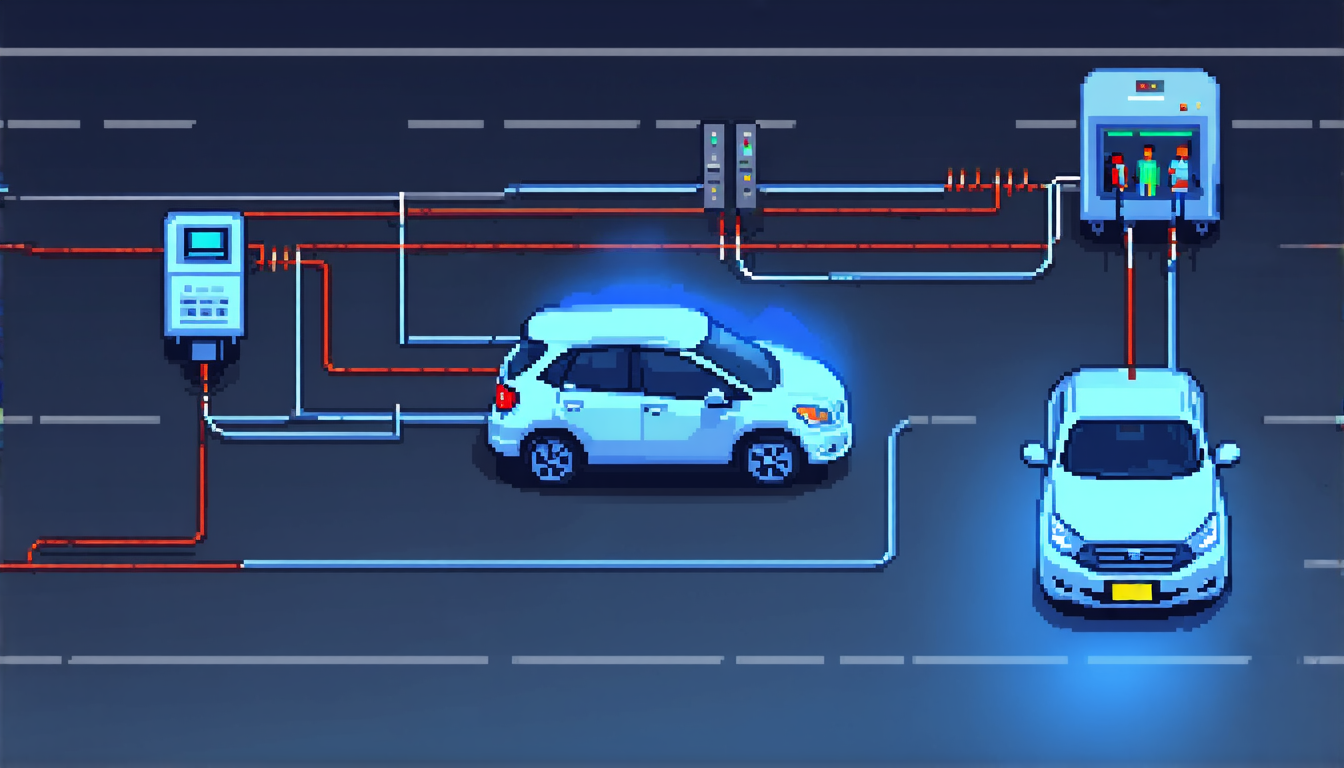
Once the model is complete, the team can use it to simulate different attack scenarios. For example, they might simulate an attacker gaining access to a HEMS provider’s backend system, allowing them to manipulate the charging schedules of connected electric vehicles. The model would then predict the impact of this attack on the grid, including changes in load and voltage levels.
The researchers have demonstrated their approach using a benchmark case from SimBench, a widely used dataset for testing smart grid simulations. Their results show that even relatively simple attacks can have significant effects on the grid, including changes in loading patterns and voltage levels.
One of the key benefits of this approach is its ability to model complex systems and predict the impact of different attack scenarios. This allows utility companies and grid operators to develop more targeted security measures and better prepare for potential cyber threats.
The team’s work also highlights the importance of integrating Semantic Web technologies into energy system modeling and simulation. By using SHACL, they were able to create a highly flexible and scalable model that can easily be extended or modified as new information becomes available.
As the grid continues to evolve and become increasingly dependent on advanced technology, the need for sophisticated models like this one will only continue to grow. By developing more accurate and realistic simulations of the cyber-physical energy system, researchers can help ensure a safer and more resilient future for our power infrastructure.
Cite this article: “Simulating Cyber-Physical Attacks on the Energy Grid”, The Science Archive, 2025.
Cyber-Physical Energy Systems, Grid Modeling, Semantic Web Technologies, Shacl, Smart Grids, Power Grid, Attack Scenarios, Simulation, Security Measures, Utility Companies





