

Thursday 20 March 2025
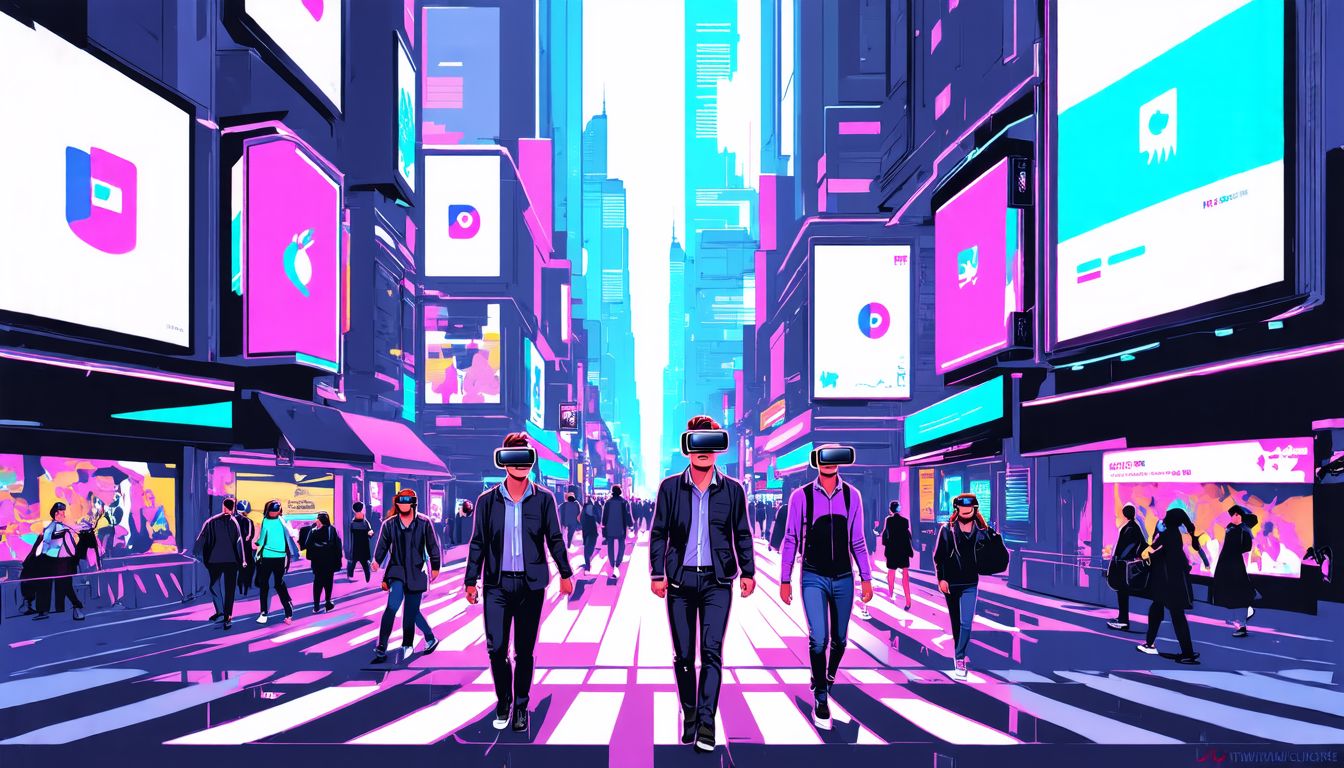
The latest advancements in Extended Reality (XR) technology have brought us one step closer to creating immersive virtual worlds that blur the lines between reality and fantasy. A new framework, dubbed LLMER, has been developed to craft interactive XR environments using JSON data generated by Large Language Models (LLMs).
In traditional XR systems, users interact with virtual objects and characters through hand gestures or voice commands. However, these interactions can be limited by the complexity of the underlying code and the processing power required to render realistic graphics. LLMER addresses this issue by leveraging LLMs to generate JSON data that can be used to create virtual objects and animations within the XR scene.
The system consists of three main components: a Context Library, an LLM Wrapper, and multiple modules designed for various XR tasks. The Context Library provides essential contextual information adapted to the user’s request, while the LLM Wrapper processes natural language inputs and generates JSON data based on the user’s commands. This data is then used by the modules to create virtual objects and animations that respond to the user’s interactions.
One of the key advantages of LLMER is its ability to reduce the complexity of XR environments. By projecting the complex generation problem into a more compact subspace, the system can generate context-relevant structured JSON data, which can then be executed by various designed modules to create virtual objects and animations. This approach also eliminates the need for users to clarify similar requests repeatedly, resulting in substantial time savings.
The effectiveness of LLMER was tested through an IRB-approved user study with eight participants. The results showed a significant reduction in consumed tokens for each user request (over 80%) compared to state-of-the-art approaches, as well as a substantial decrease in task completion time (around 60%). Participants also provided positive feedback on the system’s usability, immersion, and overall experience.
While LLMER has shown promising results, there are still areas that require further exploration. For instance, the scalability of the system across different hardware platforms and XR devices remains an open question. Additionally, the integration of LLMER with other AI technologies, such as natural language processing and computer vision, could potentially unlock new possibilities for XR applications.
As XR technology continues to evolve, it’s clear that the future of virtual reality lies in the ability to create immersive and interactive environments that respond to our every command. With advancements like LLMER, we’re one step closer to achieving this goal.
Cite this article: “Unlocking Immersive XR Environments with Large Language Models”, The Science Archive, 2025.
Extended Reality, Large Language Models, Json Data, Virtual Reality, Interactive Environments, Natural Language Processing, Computer Vision, Xr Technology, Immersive Experience, Contextual Information





