
Thursday 20 March 2025
Scientists have made a significant breakthrough in the field of machine learning, developing a new algorithm that can accurately predict complex patterns in data. The algorithm, known as the robust and conjugate Gaussian process (RCGP), uses a combination of mathematical techniques to identify outliers and improve the accuracy of predictions.
In traditional Gaussian processes, a statistical model is used to make predictions based on past data. However, these models are often sensitive to outliers, which can have a significant impact on the accuracy of predictions. The RCGP algorithm addresses this issue by using a robust statistical method that can identify and correct for outliers in the data.
The algorithm works by first identifying potential outliers in the data using a novel centering function. This function is designed to detect unusual patterns in the data, such as sudden changes or anomalies. Once the outliers have been identified, the algorithm uses a conjugate prior distribution to update the model and improve its accuracy.
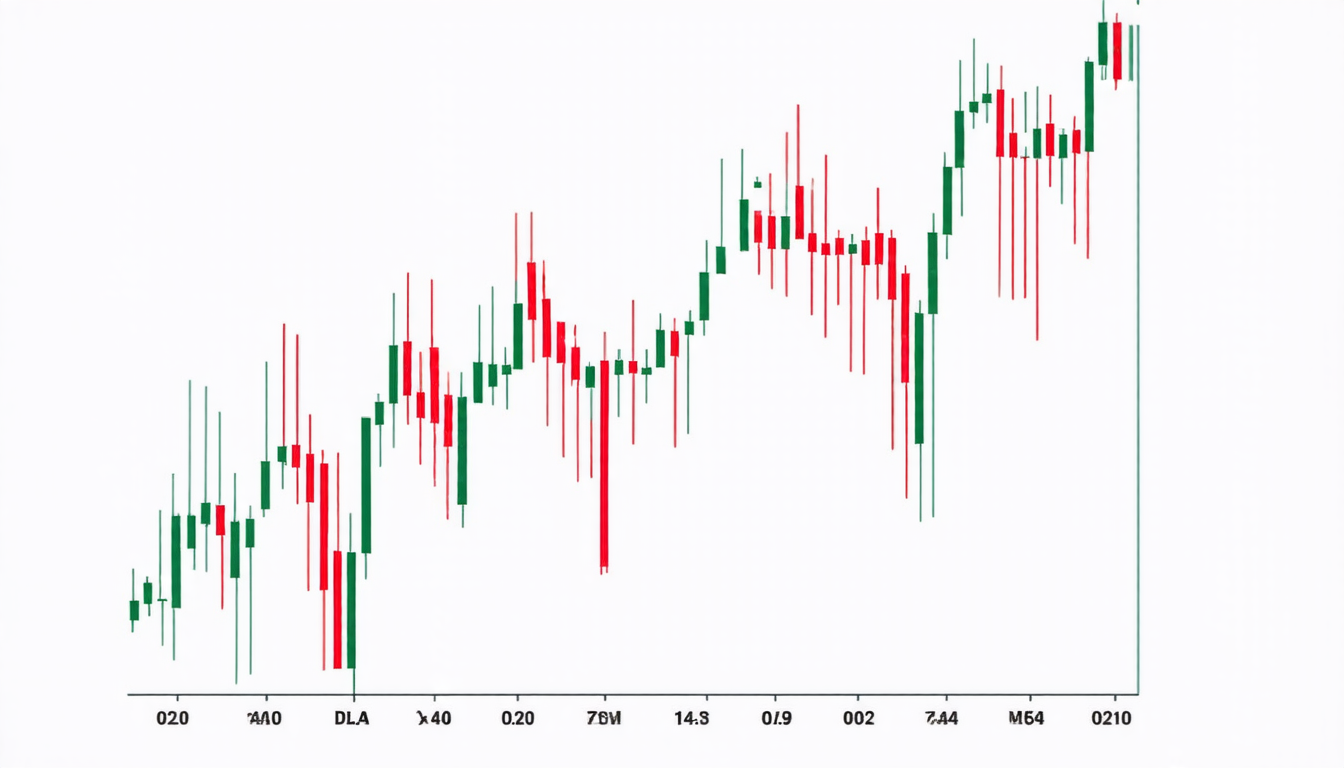
The RCGP algorithm has been tested on several real-world datasets, including financial markets and weather forecasting. In each case, the algorithm was able to accurately predict complex patterns in the data, even when faced with significant amounts of noise or outliers.
One of the key advantages of the RCGP algorithm is its ability to adapt to changing conditions. Unlike traditional Gaussian processes, which require a fixed set of hyperparameters, the RCGP algorithm can adjust its parameters based on new data. This makes it particularly useful for applications where the underlying patterns in the data are likely to change over time.
The implications of this breakthrough are significant, as they have the potential to revolutionize a wide range of fields. For example, in finance, the ability to accurately predict complex patterns in financial markets could be used to make more informed investment decisions. In weather forecasting, the algorithm could be used to improve predictions and provide early warnings for severe weather events.
The RCGP algorithm is not without its limitations, however. One of the main challenges facing the developers was the need to balance the trade-off between accuracy and computational efficiency. The algorithm requires a significant amount of computational resources to run, which can make it difficult to use in real-time applications.
Despite this challenge, the developers are optimistic about the potential of the RCGP algorithm. They believe that it has the potential to be used in a wide range of applications, from finance and weather forecasting to healthcare and environmental monitoring. As the algorithm continues to evolve and improve, it is likely to have a significant impact on many different fields.
Cite this article: “Scientists Develop Breakthrough Algorithm to Accurately Predict Complex Patterns in Data”, The Science Archive, 2025.
Machine Learning, Gaussian Processes, Robust And Conjugate Gaussian Process (Rcgp), Algorithm, Pattern Recognition, Data Prediction, Outliers Detection, Statistical Modeling, Mathematical Techniques, Computational Efficiency.