

Thursday 20 March 2025
Scientists have long been searching for ways to efficiently process and analyze large amounts of data, particularly in fields such as computer networks and social media. One major challenge is the sheer volume of information that needs to be processed, which can quickly overwhelm even the most powerful computers.
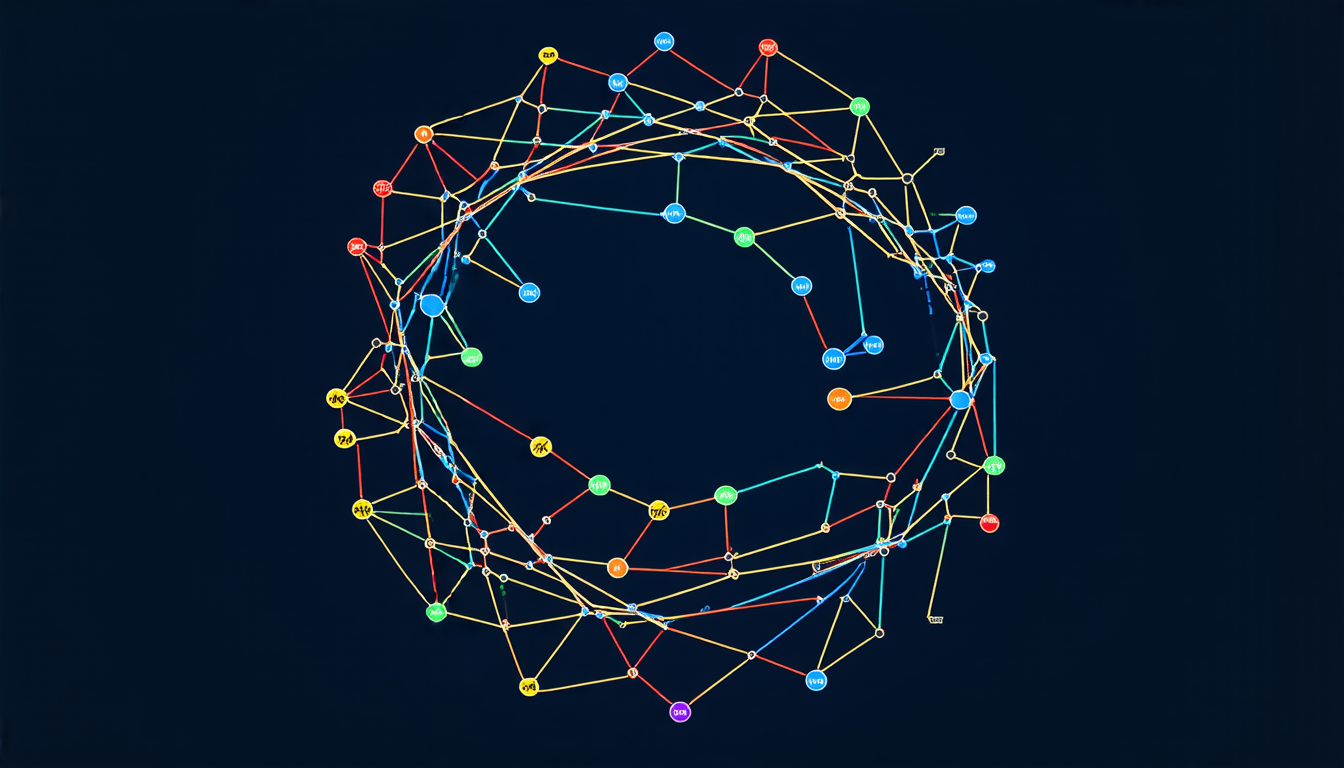
To address this issue, researchers have developed a new algorithm that compresses graphs, which are mathematical representations of connections between objects or entities. This compression technique, called Clique Partitioning-based Graph Compression (CPGC), is designed to speed up processing times and reduce storage needs for large-scale graph data.
The CPGC algorithm works by identifying clusters of nodes in the graph that are highly connected and then compressing those clusters into smaller representations. This process reduces the number of edges in the graph, making it easier to analyze and process.
One key advantage of CPGC is its ability to preserve the path information within the original graph. Path information refers to the sequence of connections between nodes that allows data to flow through the graph. By preserving this information, the compressed graph can still be used as input for other algorithms, such as matching and shortest path calculations.
To test the effectiveness of CPGC, researchers applied it to a range of large-scale graphs, including social networks and computer networks. The results showed significant reductions in processing times, with some compressions resulting in speedups of up to 105 times faster than traditional methods.
Another benefit of CPGC is its ability to handle graphs with varying densities. In many real-world applications, graphs have different levels of connectivity between nodes, which can make compression challenging. However, the CPGC algorithm is able to adapt to these varying densities and still achieve effective compression.
The researchers also explored the extension of CPGC to non-bipartite graphs, which are common in many fields such as biology and finance. They showed that by transforming non-bipartite graphs into bipartite graphs using a simple transformation, CPGC can be applied to these types of graphs as well.
The potential applications of CPGC are vast, from optimizing network traffic flow to improving recommendation systems. As the volume of data continues to grow, efficient compression techniques like CPGC will become increasingly important for processing and analyzing large-scale graph data.
Overall, the development of CPGC represents a significant step forward in the field of graph compression.
Cite this article: “Efficient Graph Compression Algorithm for Large-Scale Data Processing”, The Science Archive, 2025.
Graph Compression, Algorithm, Graph Data, Large-Scale Data, Computer Networks, Social Media, Path Information, Bipartite Graphs, Non-Bipartite Graphs, Compression Technique





