

Thursday 20 March 2025
Recently, a team of researchers has made significant advancements in the field of computer vision and robotics. They have developed a new method for reconstructing complex 3D environments using neural networks and lidar sensors. This approach, known as SiLVR, combines the strengths of both modalities to create highly accurate and detailed maps.
The process begins with a lidar sensor, which scans its surroundings and creates a point cloud of reflected laser light. This data is then fed into a neural network, which uses it to generate a radiance field – a mathematical representation of how light behaves in the environment. The network also incorporates visual information from cameras to improve the accuracy of the reconstruction.
One of the key innovations of SiLVR is its ability to handle large-scale environments. By using a hierarchical approach, the system can break down complex scenes into smaller submaps and process them independently. This allows it to scale up to massive datasets, such as those found in urban areas or industrial complexes.
Another important aspect of SiLVR is its uncertainty estimation. As with any machine learning model, there is always some degree of error in the results. By quantifying this uncertainty, the system can identify areas where the reconstruction is less reliable and focus on improving those regions.
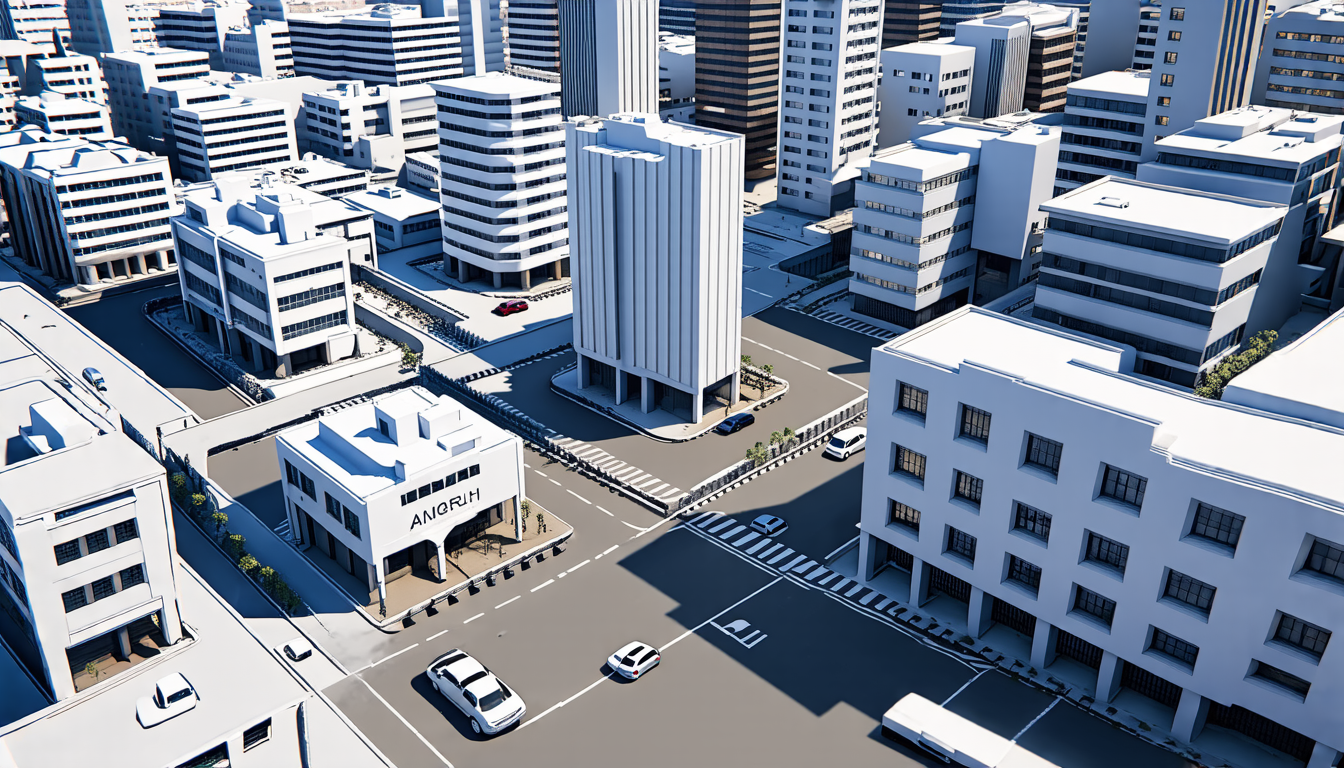
The researchers have tested SiLVR on a variety of datasets, including urban scenes, industrial facilities, and even aerial surveys. The results are impressive, with the system accurately reconstructing complex structures and environments. In some cases, it has achieved photorealistic textures and accurate surface normals – essential for tasks such as autonomous navigation or robotic inspection.
One potential application of SiLVR is in the field of robotics. By providing highly accurate maps of their surroundings, robots could navigate complex environments more effectively and perform tasks with greater precision. This could be particularly useful in industries such as manufacturing, where precise location tracking is critical.
Another area where SiLVR could have a significant impact is in the development of autonomous vehicles. By generating detailed 3D models of road networks and urban environments, self-driving cars could improve their navigation and decision-making abilities. This could lead to safer and more efficient transportation systems.
Overall, SiLVR represents a major step forward in the field of computer vision and robotics. Its ability to handle large-scale environments, quantify uncertainty, and generate high-quality maps makes it an attractive solution for a wide range of applications.
Cite this article: “SiLVR: A Revolutionary Method for 3D Environment Reconstruction”, The Science Archive, 2025.
Computer Vision, Robotics, Lidar Sensors, Neural Networks, 3D Reconstruction, Radiance Field, Uncertainty Estimation, Machine Learning, Autonomous Navigation, Photorealistic Textures





