

Thursday 20 March 2025
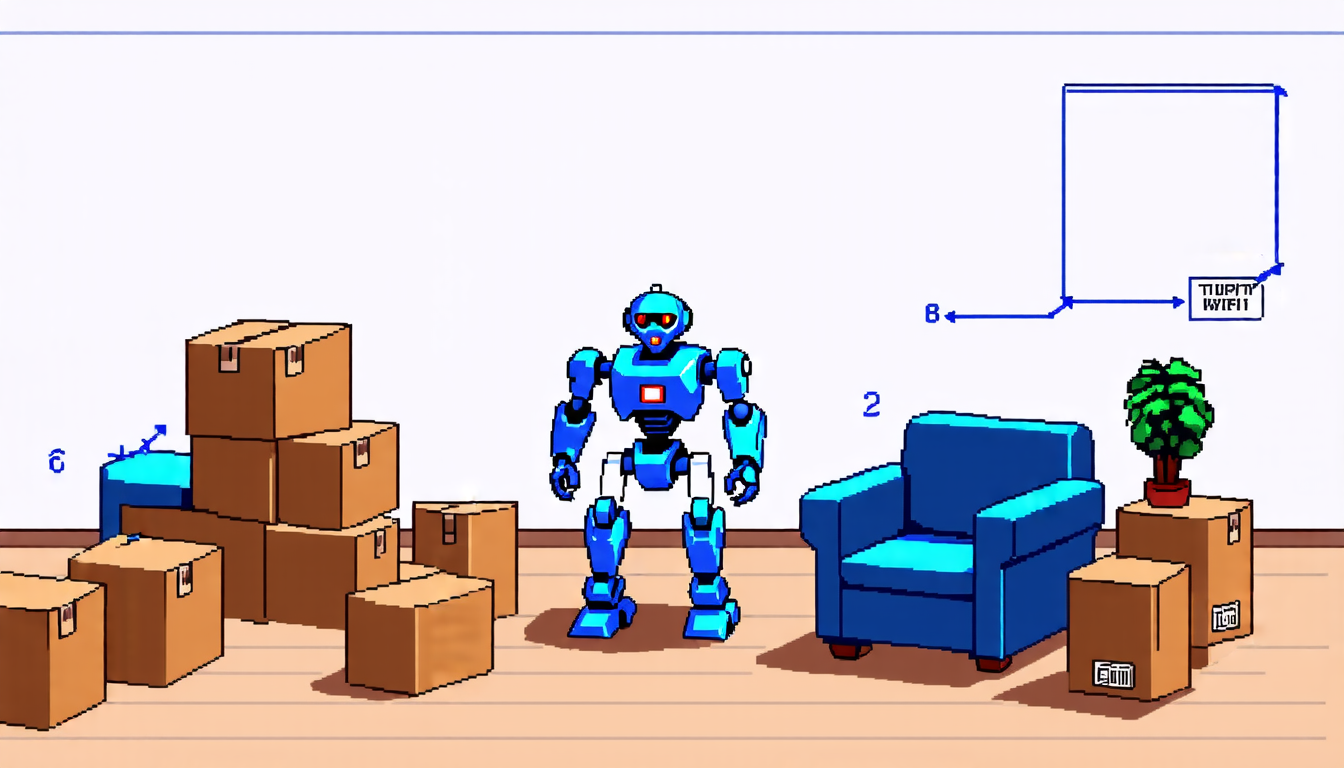
Scientists have made a significant breakthrough in developing a new system for robots to navigate complex environments, such as indoor spaces or obstacle-filled terrain. The innovative approach combines computer vision and machine learning techniques to enable robots to efficiently plan their path while avoiding collisions.
The key component of this system is the use of neural signed distance fields (SDFs), which are a type of 3D representation that allows computers to understand the shape and layout of an environment. By leveraging this technology, researchers have been able to create a robust and flexible framework for robot navigation.
In traditional navigation systems, robots rely on pre-mapped environments or use sensors to detect obstacles in real-time. However, these approaches can be limited by their reliance on precise mapping data or the ability to detect all potential obstacles. The new system addresses these limitations by using SDFs to generate a continuous and accurate representation of the environment.
The SDF approach is particularly useful for indoor environments, where robots may encounter complex layouts, multiple levels, and varying degrees of clutter. By integrating computer vision and machine learning algorithms, the system can quickly adapt to changing environments and optimize its navigation plan accordingly.
One of the most significant advantages of this system is its ability to handle dynamic obstacles, such as moving people or objects. The SDF representation allows the robot to anticipate potential collisions and adjust its path in real-time, ensuring a safe and efficient journey.
The researchers have tested their system using various scenarios, including navigating through cluttered rooms and avoiding pedestrians in busy areas. The results demonstrate impressive accuracy and adaptability, with the robot able to successfully navigate complex environments while minimizing collisions.
This innovation has far-reaching implications for the development of autonomous robots, which could be used in a wide range of applications, from warehousing and logistics to search and rescue operations. By enabling robots to efficiently and safely navigate complex environments, this technology paves the way for greater autonomy and flexibility in these areas.
The system’s potential is further amplified by its ability to learn and adapt over time. As the robot gathers more data and experiences new environments, it can refine its navigation strategy and improve its performance. This continuous learning capability ensures that the robot remains effective even in unfamiliar or dynamic situations.
In addition to its practical applications, this research also contributes to our understanding of how computers perceive and interact with their environment. The development of SDFs as a representation for computer vision has significant implications for fields such as robotics, computer graphics, and artificial intelligence.
Cite this article: “Breakthrough in Robot Navigation: A Novel System Combining Computer Vision and Machine Learning”, The Science Archive, 2025.
Robotics, Navigation, Computer Vision, Machine Learning, Neural Networks, Obstacle Avoidance, Autonomous Robots, Mapping, 3D Representation, Robotics Applications





