

Thursday 20 March 2025
The quest for more accurate digital pathology analysis has taken a significant leap forward with the development of PathMIL, a new framework designed to improve instance-level learning in whole-slide images. By leveraging coarse-to-fine self-distillation, researchers have created a model that can effectively learn from bag-level supervision and achieve state-of-the-art performance on various classification tasks.
For those unfamiliar, digital pathology involves analyzing large, high-resolution images of tissue samples to diagnose diseases such as cancer. However, these images often contain thousands of instances, making it challenging for machine learning algorithms to identify the relevant features for classification. This is where PathMIL comes in – by applying a coarse-to-fine approach, the framework can learn to focus on specific instances within each bag and improve overall performance.
The key innovation behind PathMIL is its use of self-distillation, which allows the model to refine its predictions through multiple iterations. In each iteration, the model produces an output that is used as input for the next iteration, effectively distilling the knowledge gained from previous passes. This process enables the model to learn more nuanced representations of the instances within each bag.
To test PathMIL’s effectiveness, researchers evaluated it on several benchmarking tasks, including subtype classification and tumour/normal classification. The results were impressive – with an average AUC score of 0.9152 for estrogen receptor (ER) positivity and 0.8524 for progesterone receptor (PR) positivity.
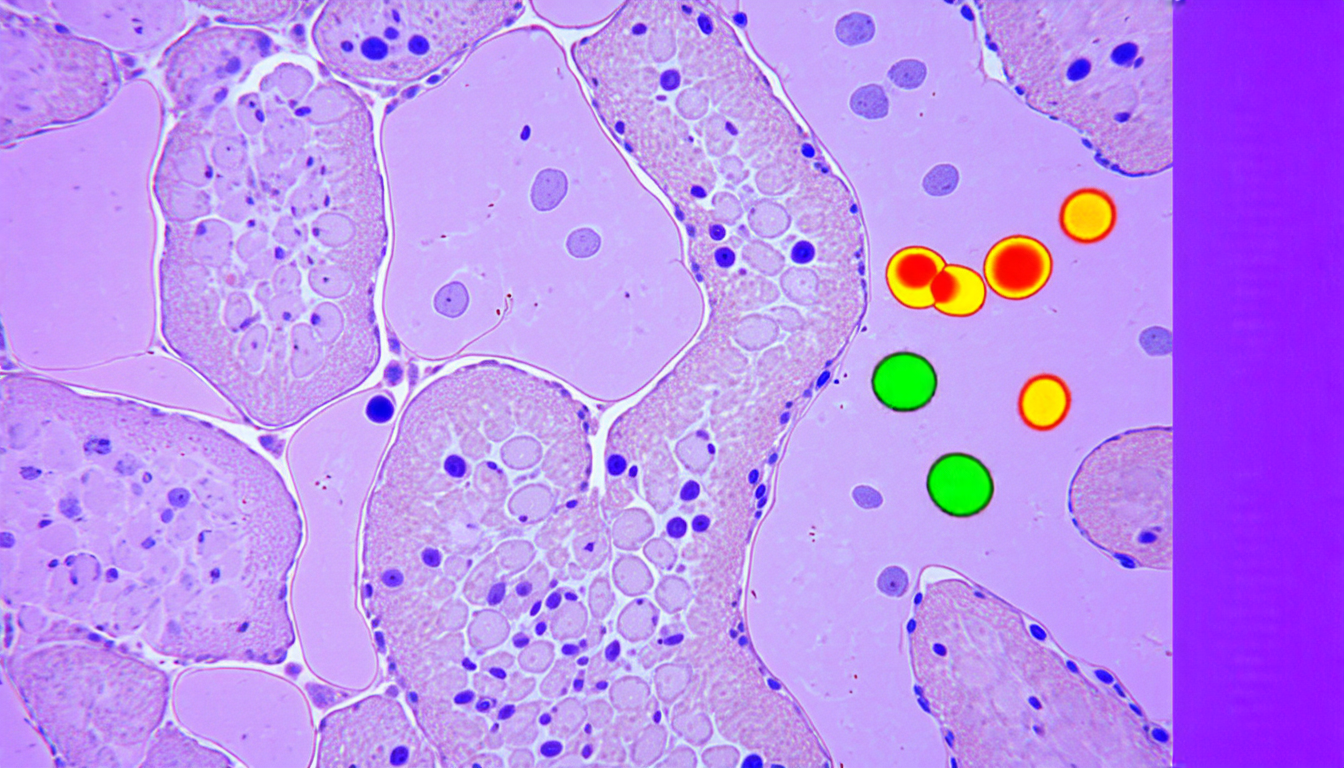
One of the most compelling aspects of PathMIL is its ability to generate attention maps, which visualize the model’s focus on specific instances within each bag. These heatmaps provide valuable insights into how the model is processing the images and can help researchers identify potential areas for improvement.
To further illustrate the framework’s capabilities, researchers applied it to a synthetic MNIST dataset, where they demonstrated instance-level learnability by classifying individual digits within a bag-level classification task. This experiment not only validated PathMIL’s ability to learn from bag-level supervision but also showcased its potential for multi-class classification.
The implications of PathMIL are significant – as digital pathology continues to play an increasingly important role in disease diagnosis, the need for accurate and efficient analysis methods has never been greater. By improving instance-level learning, PathMIL offers a powerful tool for researchers and clinicians alike, enabling them to extract more valuable insights from whole-slide images.
Cite this article: “PathMIL: A Framework for Improved Instance-Level Learning in Digital Pathology”, The Science Archive, 2025.
Digital Pathology, Machine Learning, Instance-Level Learning, Whole-Slide Images, Pathmil, Self-Distillation, Coarse-To-Fine Approach, Bag-Level Supervision, Classification Tasks, Attention Maps





