

Thursday 20 March 2025
Researchers have made a significant breakthrough in the field of inverse problems, which involve using data to reconstruct the underlying causes of physical phenomena. Inverse problems are crucial in many areas of science and engineering, such as medical imaging, seismology, and climate modeling.
The new approach, developed by a team of scientists, allows them to reconstruct two potentials simultaneously for a Schrödinger equation with mixed boundary conditions. This is a significant improvement over previous methods that could only handle one potential at a time.
To understand the significance of this achievement, let’s dive into the basics of inverse problems and the Schrödinger equation. The Schrödinger equation is a fundamental concept in quantum mechanics, which describes how particles behave in response to external forces. Inverse problems involve using data from experiments or observations to reconstruct the underlying potential that drives these behaviors.
In this case, the researchers focused on a specific type of Schrödinger equation called a non-conservative one, where the potential is not constant over time. This makes the problem much more challenging, as it requires considering both spatial and temporal variations in the potential.
The new approach uses a combination of mathematical techniques, including Carleman estimates and Lipschitz stability analysis. Carleman estimates are a way to bound the solution of an equation using the data, while Lipschitz stability analysis ensures that small changes in the data do not lead to large errors in the reconstructed potential.
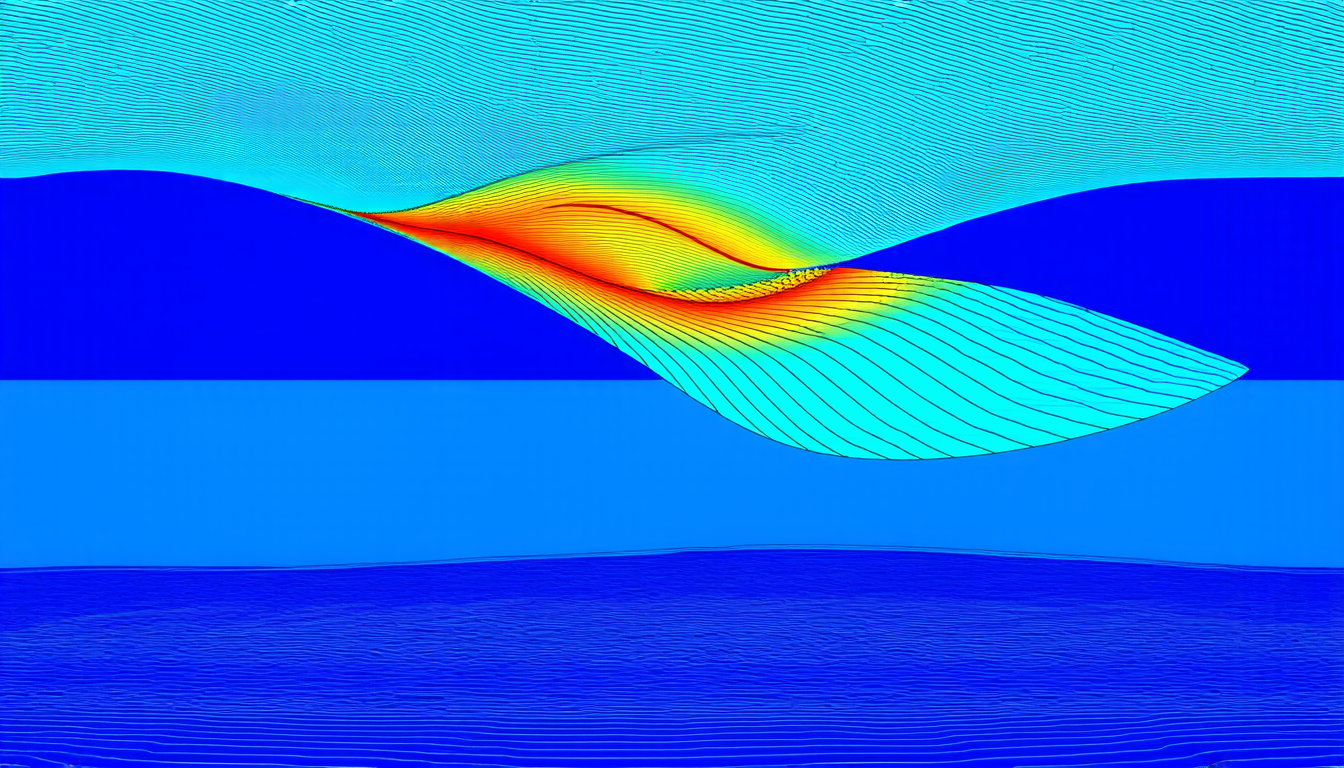
The researchers applied their method to a numerical simulation of a wave propagating through a medium with a dynamic boundary condition. They showed that their approach can accurately reconstruct both potentials, even when the data is noisy or incomplete.
This breakthrough has significant implications for many fields where inverse problems are used. For example, in medical imaging, it could enable more accurate reconstruction of internal structures from external measurements. In seismology, it could improve our ability to locate and characterize earthquakes.
The researchers’ approach also opens up new possibilities for controlling complex systems. By reconstructing the potential that drives a system’s behavior, scientists can gain insights into how to manipulate or stabilize the system.
Overall, this achievement represents a major step forward in the field of inverse problems and has significant implications for many areas of science and engineering.
Cite this article: “Breakthrough in Inverse Problems Enables Simultaneous Reconstruction of Multiple Potentials”, The Science Archive, 2025.
Inverse Problems, Schrödinger Equation, Quantum Mechanics, Non-Conservative Systems, Carleman Estimates, Lipschitz Stability Analysis, Numerical Simulations, Wave Propagation, Medical Imaging, Seismology





