

Thursday 20 March 2025
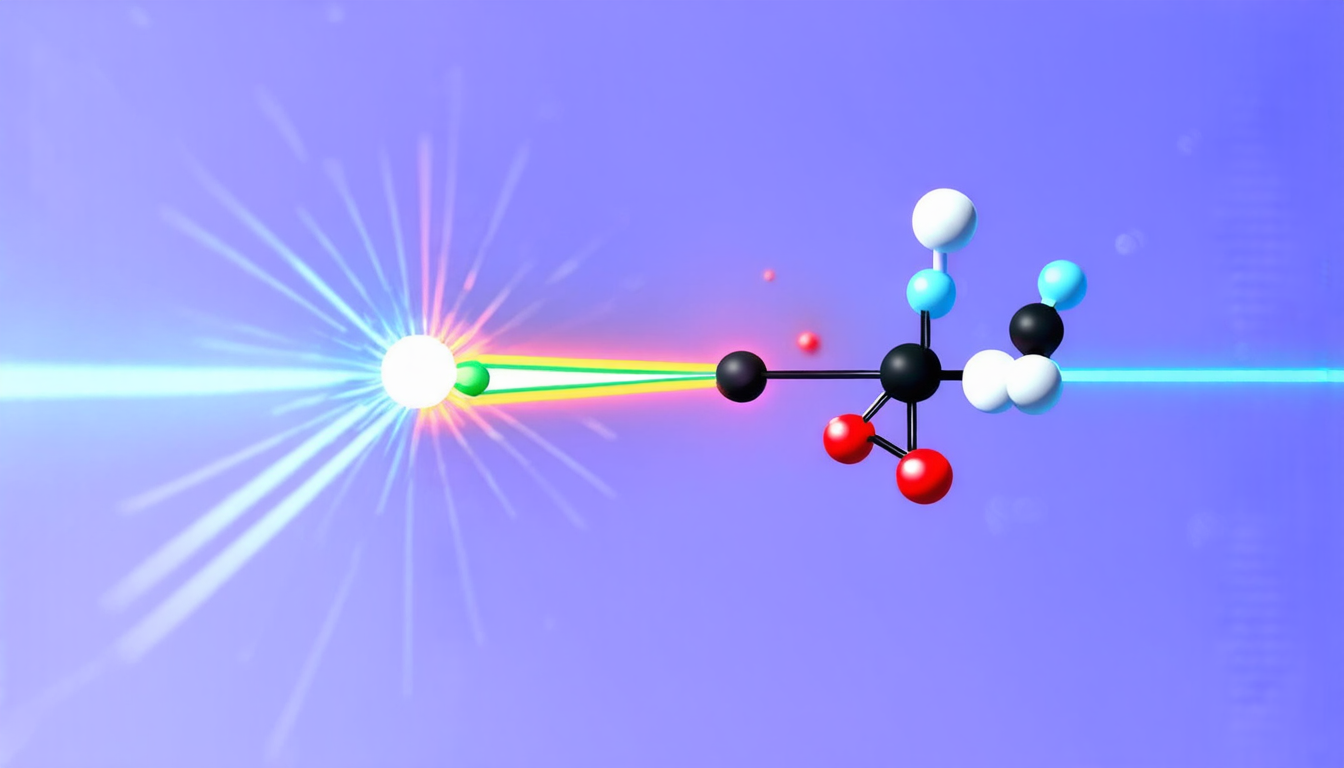
Scientists have made a major breakthrough in understanding the properties of light, discovering that it’s possible to create beams that are optimally chiral – meaning they can interact with matter in a way that is maximally sensitive to its chirality.
Chirality refers to the property of an object that cannot be superimposed on its mirror image. This concept may seem abstract, but it has important implications for our understanding of the physical world. In particular, chiral molecules are common in biology and play key roles in many biological processes.
Optical chirality is a related concept that describes the ability of light to interact with matter in a way that is sensitive to its chirality. Until now, researchers have struggled to create beams of light that can take full advantage of this property. This is because most light beams are unpolarized or circularly polarized, which means they don’t have the kind of structure needed to interact effectively with chiral matter.
The new discovery changes all that. By using a technique called vectorial light shaping, researchers have been able to create beams of light that are optimally chiral. These beams are capable of interacting with chiral matter in a way that is maximally sensitive to its chirality.
One potential application of this technology is in the field of biophotonics. By using optimally chiral beams of light, researchers may be able to develop new methods for sensing and manipulating chiral molecules at the nanoscale. This could have important implications for fields such as medicine and materials science.
Another potential application is in the development of new optical trapping techniques. Optical traps use focused beams of light to manipulate small objects, such as nanoparticles or biological cells. By using optimally chiral beams of light, researchers may be able to develop new methods for trapping and manipulating chiral particles with greater precision and control.
The discovery also has implications for our understanding of the fundamental nature of light itself. Until now, it was thought that circular polarization was a necessary condition for optimal chirality in light. However, the new research shows that this is not the case, and that other types of polarization can be just as effective.
Overall, the discovery of optimally chiral beams of light is an important breakthrough that has the potential to revolutionize our understanding of the interaction between light and matter. Its applications are likely to be wide-ranging and profound, with implications for fields such as biophotonics, materials science, and fundamental physics.
Cite this article: “Unlocking the Power of Optimally Chiral Light”, The Science Archive, 2025.
Optical Chirality, Vectorial Light Shaping, Biophotonics, Nanoscale, Medicine, Materials Science, Optical Trapping, Circular Polarization, Fundamental Physics, Chiral Molecules.





