
Thursday 20 March 2025
Mathematicians have long been fascinated by a fundamental problem in geometry, known as Bohr’s inequality. The question is deceptively simple: what’s the largest circle that can fit inside another circle without touching its edges? Sounds easy, but solving it requires some serious brainpower.
The answer lies in the world of complex numbers, where mathematicians use equations to describe shapes and patterns. By manipulating these equations, they’ve discovered new ways to calculate the size of the inner circle, which is crucial for understanding geometry and its many applications in science and engineering.
Recently, a team of researchers made significant progress in solving Bohr’s inequality. They developed a series of mathematical formulas that can be used to determine the maximum size of the inner circle for any given outer circle. It’s like having a secret recipe for measuring shapes!
The breakthrough is particularly exciting because it has far-reaching implications for fields such as computer graphics, engineering, and even medical imaging. Think about it: if you’re designing a new smartphone or building a bridge, knowing exactly how to calculate the size of curved surfaces can make all the difference between success and failure.
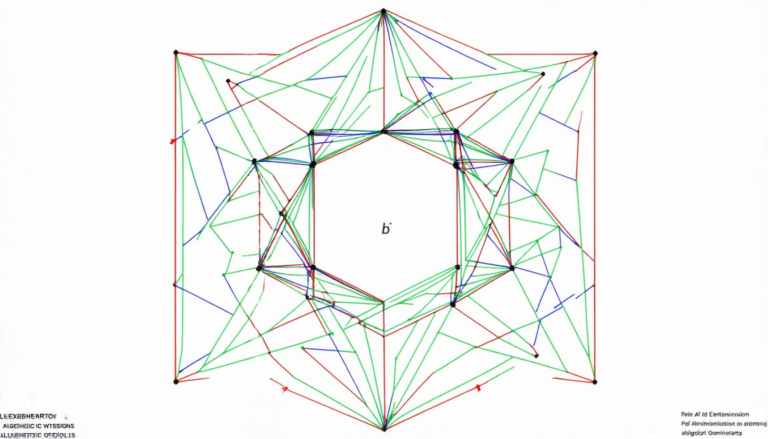
One of the most impressive aspects of this research is its ability to generalize Bohr’s inequality for different types of shapes. Traditionally, mathematicians have focused on circles and spheres, but these new formulas can be applied to more complex shapes, like ellipses or polyhedrons.
This means that engineers can now use these formulas to design more efficient structures, like buildings with curved walls or medical devices with intricate surfaces. The possibilities are endless!
The team’s work is also shedding light on the fundamental properties of geometry itself. By understanding how shapes interact and relate to each other, mathematicians can gain insights into the underlying structure of our universe.
In short, this research represents a major milestone in the world of mathematics, with far-reaching implications for science, engineering, and beyond. It’s a testament to human ingenuity and our never-ending quest to understand the intricacies of the world around us.
Cite this article: “Unlocking the Secrets of Geometry”, The Science Archive, 2025.
Geometry, Bohr’S Inequality, Circles, Complex Numbers, Mathematics, Formulas, Shapes, Computer Graphics, Engineering, Medical Imaging