

Thursday 20 March 2025
The intricate world of mathematics is often shrouded in complexity, making it difficult for non-experts to grasp its concepts and applications. However, recent research has shed light on a fascinating area known as positive matching decomposition, which may seem abstract but holds significant implications.
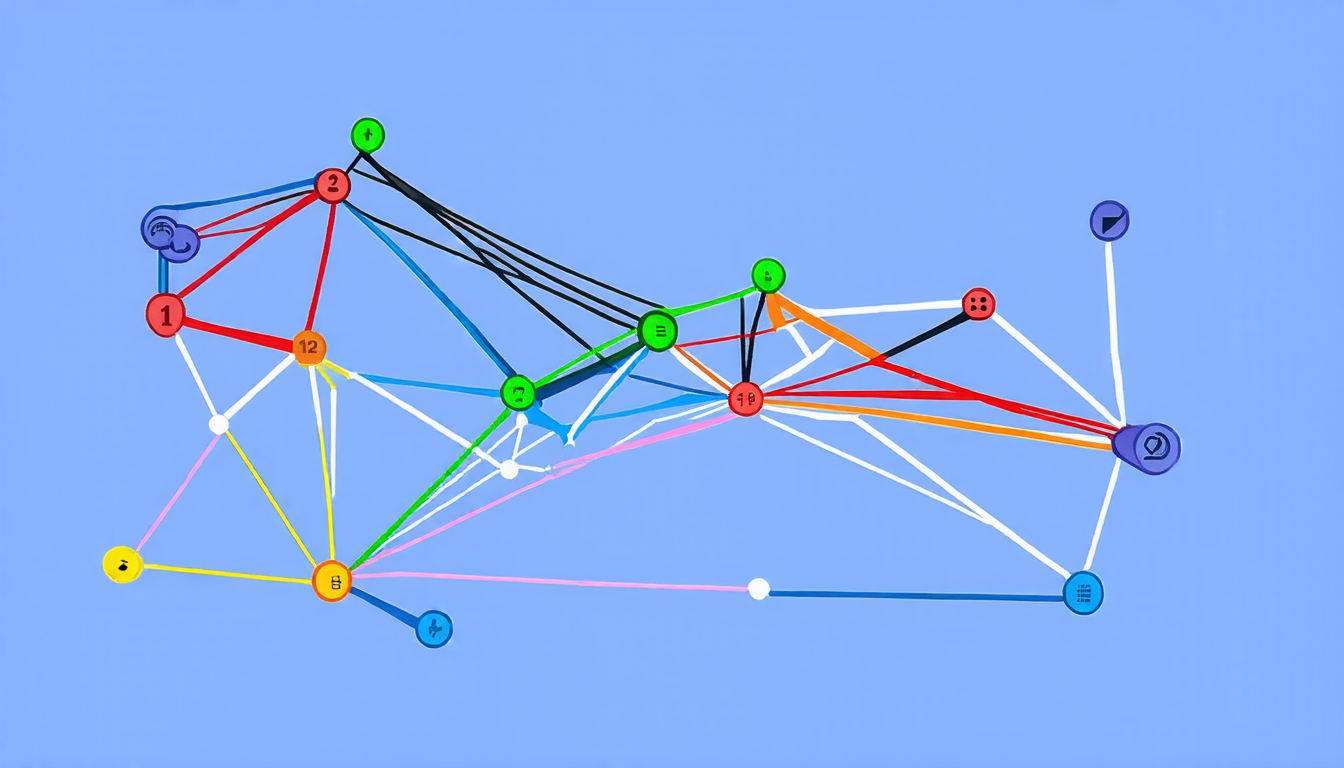
Positive matching decomposition (PMD) refers to the process of breaking down a graph into smaller subgraphs, each with a specific property. In this case, the property is that every edge in these subgraphs belongs to a perfect matching, meaning that there are no isolated vertices or edges left over. This concept may seem straightforward, but it has far-reaching implications for fields such as computer science, biology, and social networks.
Researchers have been working tirelessly to understand the properties of PMD in various graph structures. One area of particular interest is the Cartesian product of graphs, which is a mathematical operation that combines two or more graphs into a new one. The study of PMD in these products has revealed some surprising patterns and connections.
For instance, researchers have discovered that certain combinations of graphs exhibit a unique property: they can be decomposed into precisely six parts, each with its own matching structure. This phenomenon was observed in the Cartesian product of two cycles, known as Cm□Cn, where m and n are integers greater than or equal to three.
These findings may seem esoteric, but they have significant implications for real-world applications. In computer science, understanding PMD can help optimize network communication protocols and improve data transmission efficiency. In biology, it can aid in the analysis of complex biological networks, such as protein interactions or gene regulatory pathways.
The study of PMD is also closely tied to the concept of hypergraphs, which are mathematical structures that generalize graphs by allowing edges to connect more than two vertices. Researchers have discovered connections between PMD and hypergraph theory, opening up new avenues for exploring complex systems and networks.
One of the most significant challenges in understanding PMD lies in its computational complexity. As graph sizes increase, the number of possible decompositions grows exponentially, making it difficult to find efficient algorithms for solving this problem. Researchers are working on developing more effective methods for tackling these complexities, which will have far-reaching implications for fields such as data science and artificial intelligence.
As researchers continue to delve deeper into the mysteries of PMD, they are uncovering new patterns and connections that challenge our understanding of complex systems. While the math may seem abstract, the practical applications are undeniable.
Cite this article: “Unlocking the Secrets of Positive Matching Decomposition”, The Science Archive, 2025.
Positive Matching Decomposition, Graph Theory, Computer Science, Biology, Social Networks, Network Communication Protocols, Data Transmission Efficiency, Hypergraphs, Computational Complexity, Algorithm Development





