

Thursday 20 March 2025
As robots become increasingly prevalent in our daily lives, ensuring their safety is crucial. Humans and robots coexisting in the same space can lead to unpredictable outcomes, making it vital to develop reliable methods for preventing accidents. A team of researchers has made a significant step towards achieving this goal by developing an algorithm that can anticipate and prevent collisions between humans and robots.
The algorithm, called Projected Safe Set Algorithm (p-SSA), is designed to ensure the safety of both humans and robots in complex environments where multiple constraints need to be satisfied simultaneously. This is particularly challenging when dealing with humanoid robots, which have many movable parts that can collide with each other or with obstacles.
Traditional safe control methods often rely on simplifying the problem by reducing the complexity of the environment or the robot’s movements. However, these approaches can lead to infeasible solutions when faced with complex scenarios. p-SSA takes a different approach by incorporating a safety index that evaluates the distance between the robot and potential obstacles.
The algorithm works by projecting the robot’s movement onto a safe set, which is defined as the region where all constraints are satisfied. This projection ensures that the robot stays within the safe set at all times, preventing collisions from occurring in the first place. The p-SSA also incorporates a relaxation method to handle cases where the original control constraints become infeasible.
The researchers demonstrated the effectiveness of their algorithm by testing it on a humanoid robot performing various tasks, such as reaching for objects and avoiding obstacles. In each scenario, the p-SSA successfully prevented collisions from occurring while allowing the robot to complete its tasks.
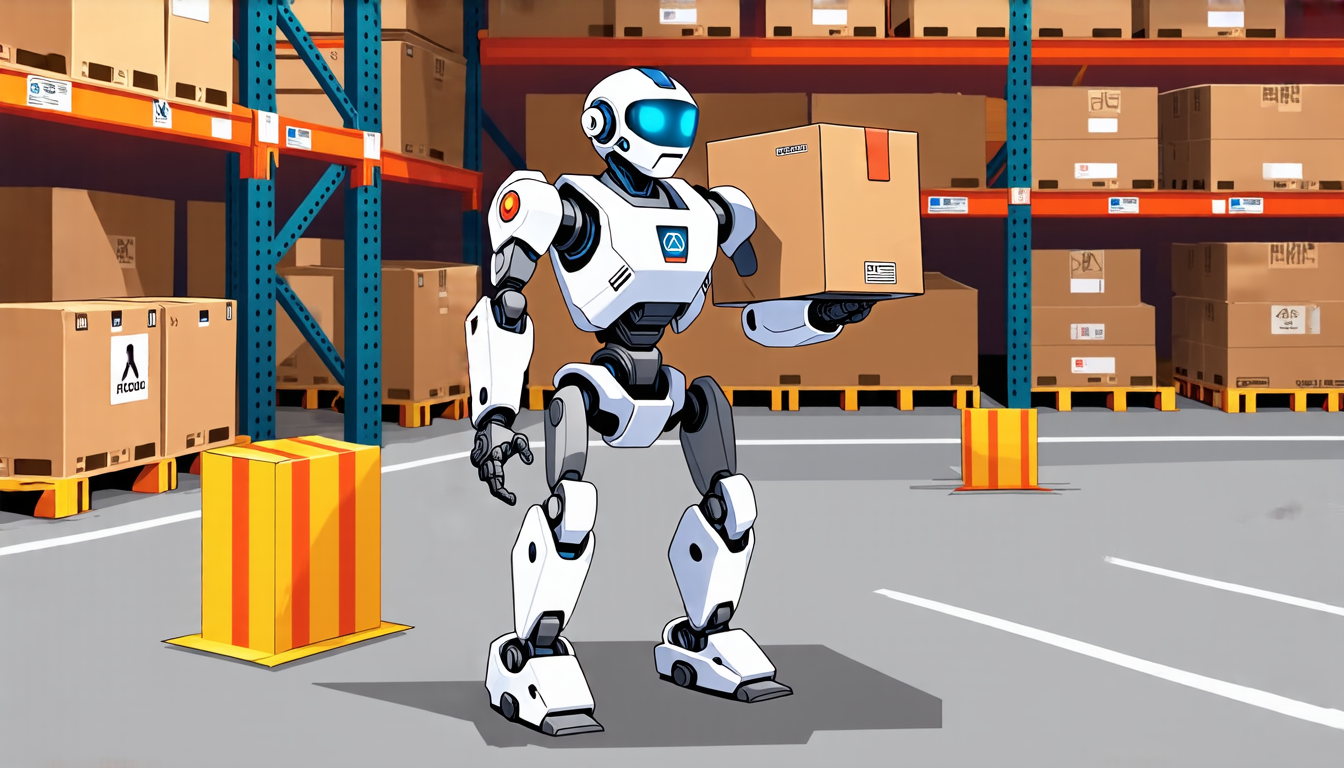
One of the key advantages of the p-SSA is its ability to handle complex environments with multiple constraints. This makes it particularly well-suited for applications where robots need to operate in dynamic and unpredictable settings, such as warehouses or construction sites.
The development of the p-SSA has significant implications for the future of robotics. As robots become increasingly integrated into our daily lives, ensuring their safety is critical to maintaining public trust. The p-SSA provides a reliable method for preventing accidents and ensuring that humans and robots can coexist safely.
In addition to its practical applications, the p-SSA also has potential implications for fields such as autonomous vehicles and industrial automation. As these systems become more complex, the need for robust safety algorithms will only continue to grow.
The researchers’ work demonstrates the importance of interdisciplinary collaboration in advancing robotics research.
Cite this article: “Algorithmic Safety: Preventing Collisions Between Humans and Robots”, The Science Archive, 2025.
Robotics, Safety, Algorithm, Collision Prevention, Human-Robot Interaction, Control Methods, Complexity Reduction, Constraint Satisfaction, Reliability, Interdisciplinary Research





