

Thursday 20 March 2025
The quest for a universal language of chemistry has taken a significant step forward, as researchers have developed a machine that can execute any chemical reaction programme. This achievement marks a major breakthrough in the field, enabling the automated synthesis of complex molecules and opening up new possibilities for pharmaceuticals, materials science and beyond.
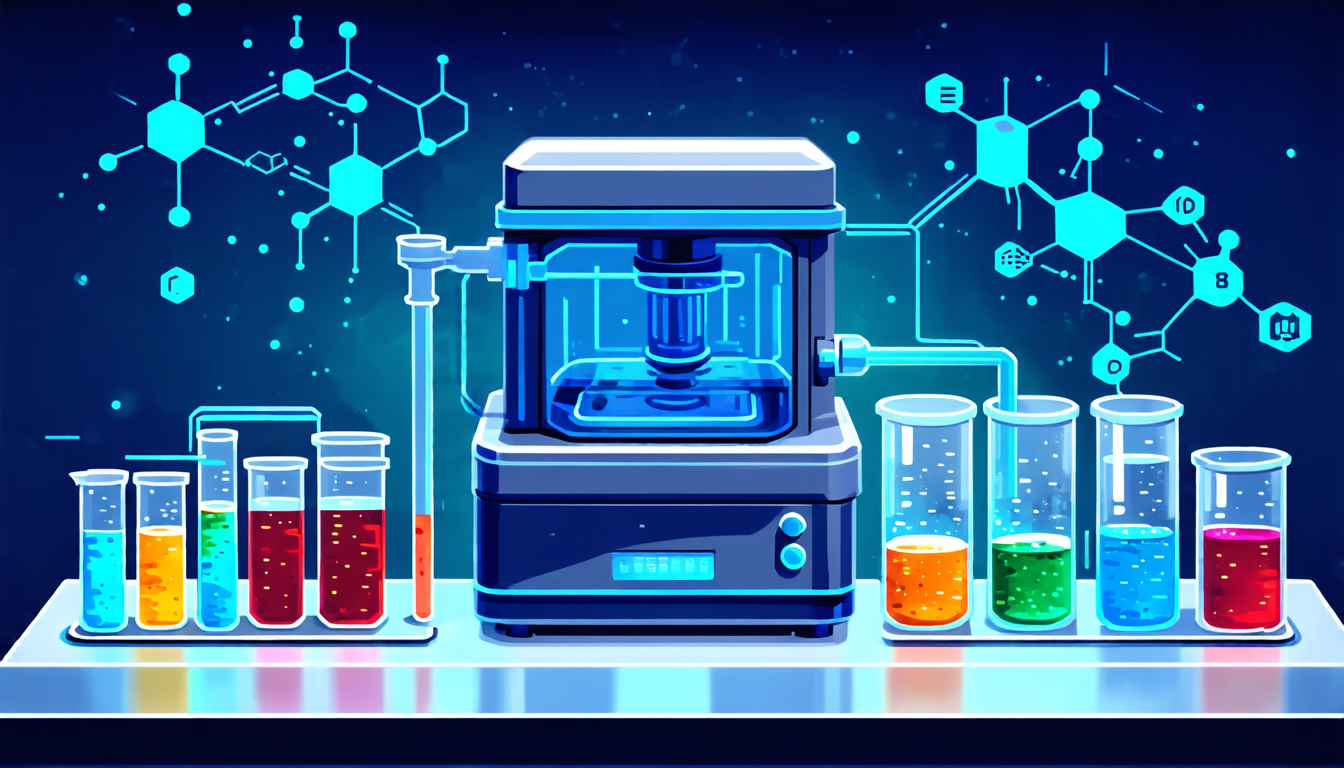
At its core, the device is a type of Turing-complete machine, capable of simulating any algorithm or computation. In this case, the machine is programmed to execute chemical reactions, using a custom-designed language that allows chemists to specify the conditions under which a reaction should take place.
The key innovation here is the integration of computer programming with physical chemistry. By combining these two disciplines, researchers have created a platform that can automate complex chemical synthesis procedures, freeing scientists from the need to manually monitor and adjust reactions in real-time.
One of the most impressive aspects of this technology is its ability to adapt to changing conditions during a reaction. This is achieved through the use of sensors and feedback loops, which allow the machine to dynamically adjust parameters such as temperature, pressure and reagent concentrations in response to changes in the reaction.
This level of flexibility has significant implications for chemical synthesis, where even small variations in conditions can have a major impact on the outcome of a reaction. By automating these processes, researchers hope to improve yields, reduce waste and increase the efficiency of their work.
The potential applications of this technology are vast. In pharmaceuticals, for example, it could enable the rapid development of new drugs and therapies. In materials science, it could lead to the creation of novel materials with unique properties. And in synthetic biology, it could allow researchers to design and build complex biological systems from scratch.
While there is still much work to be done before this technology becomes widely available, the potential benefits are clear. By combining the precision of computer programming with the power of chemical reactions, scientists have taken a major step towards unlocking the secrets of matter itself.
Cite this article: “Machine Revolutionizes Chemical Synthesis”, The Science Archive, 2025.
Chemistry, Machine Learning, Automation, Chemical Reactions, Synthesis, Pharmaceuticals, Materials Science, Synthetic Biology, Turing-Complete, Programming.





