
Thursday 20 March 2025
For centuries, surgeons have been struggling to find a reliable and efficient way to close wounds in the gastrointestinal tract. The traditional methods of suturing and stapling can be time-consuming, require advanced manual skills, and even lead to potentially life-threatening complications such as leaks.
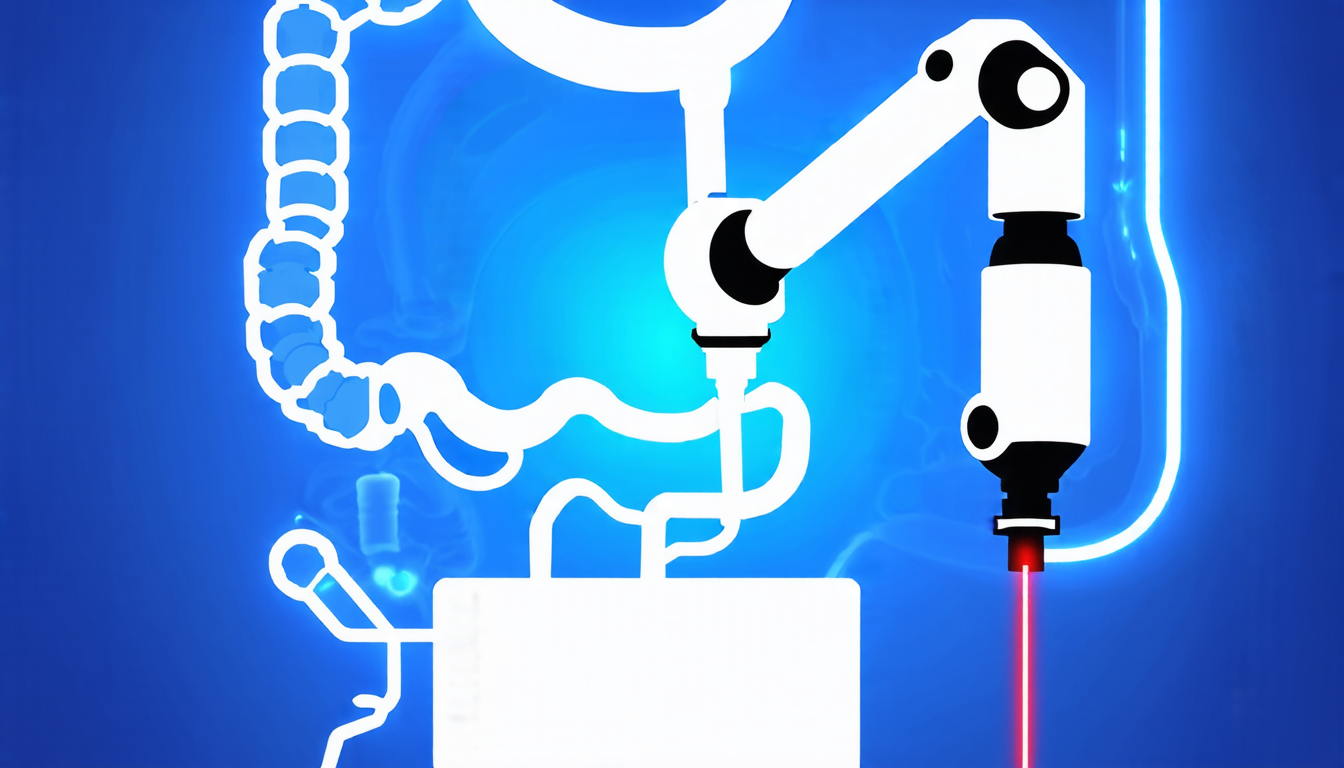
A team of researchers from Ben-Gurion University has made significant strides in addressing this issue by developing a robot-assisted laser tissue soldering system. This innovative technology uses a robotic arm to apply a precisely controlled amount of heat to the wound site, melting a special albumin-based solder that bonds the tissues together.
The system’s development was motivated by the need for a more reliable and efficient method of closing gastrointestinal wounds. Conventional suturing techniques can be prone to human error, and even experienced surgeons may struggle with complex procedures. The robot-assisted laser tissue soldering system aims to eliminate these errors by providing precise control over the soldering process.
The system consists of a robotic arm that is equipped with a laser fiber, which is used to apply heat to the wound site. The temperature of the solder is precisely controlled using a radiometer, ensuring that it reaches the optimal bonding temperature for the albumin-based solder.
In a series of experiments, the researchers tested the system’s ability to close wounds in porcine bowel tissue. The results showed that the robot-assisted laser tissue soldering system was able to achieve strong and durable bonds, with no signs of leakage or tissue damage.
The researchers also examined the histology of the bonded tissues, which revealed a healthy regeneration process and minimal inflammation. This suggests that the system may be suitable for use in human patients, where it could potentially reduce the risk of complications and improve patient outcomes.
The development of this robot-assisted laser tissue soldering system has significant implications for the field of surgery. It provides a reliable and efficient method for closing gastrointestinal wounds, which could lead to improved patient outcomes and reduced healthcare costs.
In addition to its potential applications in surgery, this technology could also be used in other fields where bonding tissues is necessary, such as in orthopedic or cardiovascular procedures.
The researchers are now working to refine the system and prepare it for clinical trials. If successful, this innovative technology could revolutionize the way surgeons approach gastrointestinal wound closure, providing a safer and more effective method for patients around the world.
Cite this article: “Robot-Assisted Laser Tissue Soldering System for Gastrointestinal Wound Closure”, The Science Archive, 2025.
Robot-Assisted, Laser Tissue Soldering, Gastrointestinal Wounds, Surgery, Bonding, Tissues, Suturing, Stapling, Complications, Healthcare Costs.