

Thursday 20 March 2025
The study of mathematical structures has been a cornerstone of mathematics for centuries, and yet, new insights into their properties are still being uncovered. Recently, researchers have made significant progress in understanding the relationships between different types of mathematical structures, including those that can be expanded or restricted in various ways.
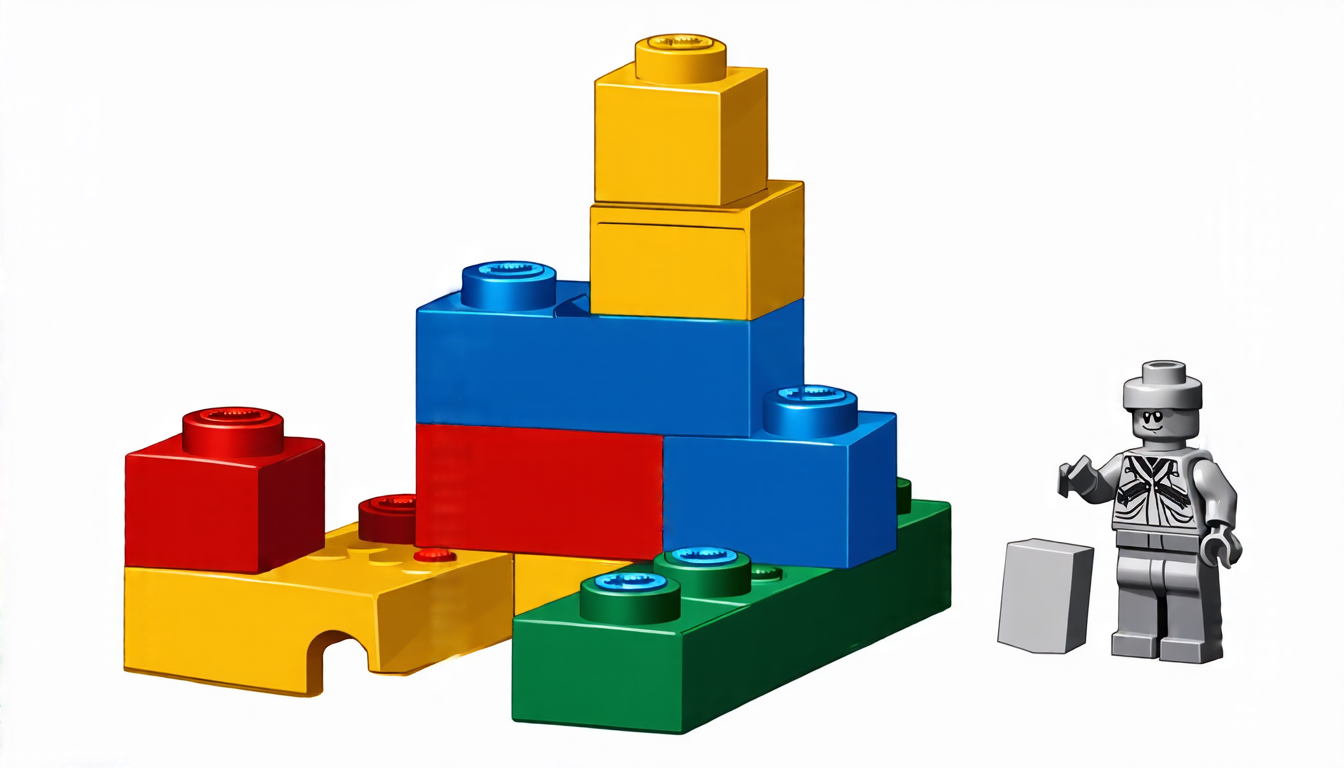
One fascinating aspect of these studies is the concept of hierarchies. These are chains of mathematical structures that can be built by combining existing ones through expansions and restrictions. Think of it like a game of Legos, where you start with a basic structure and then add new pieces to create something more complex. Each new piece changes the properties of the structure, but in a predictable way.
The researchers have been able to identify patterns in these hierarchies that allow them to predict how different structures will behave when combined. This is a major breakthrough, as it means that mathematicians can now use this knowledge to create new mathematical structures with specific properties.
One of the most interesting findings is that certain types of structures are stable, meaning that they remain unchanged even when expanded or restricted in various ways. This stability is crucial for many applications in mathematics and computer science, where predictable behavior is essential.
On the other hand, some structures are unstable, meaning that their properties change dramatically when combined with other structures. This can be useful in certain situations, such as when trying to create new mathematical objects with unique properties.
Another important aspect of these studies is the concept of categoricity. This refers to the property of a structure being uniquely determined by its language and signature. In other words, if you have two structures that are both described using the same language and signature, then they must be equivalent in some way.
The researchers have shown that certain types of structures are categorical, meaning that there is only one possible structure with a given language and signature. This has significant implications for many areas of mathematics and computer science, where uniqueness is often crucial.
In addition to these findings, the study of mathematical structures has also led to new insights into the properties of countable models. These are mathematical objects that can be described using a finite amount of information, but still have infinite size.
The researchers have shown that certain types of structures can have multiple countable models with different properties. This is an important finding, as it means that mathematicians can now create new mathematical objects with unique properties by combining existing ones in specific ways.
Overall, the study of mathematical structures has led to a deeper understanding of their properties and relationships.
Cite this article: “Unraveling the Hierarchies of Mathematical Structures”, The Science Archive, 2025.
Mathematical Structures, Hierarchies, Expansions, Restrictions, Patterns, Stability, Instability, Categoricity, Countable Models, Unique Properties





